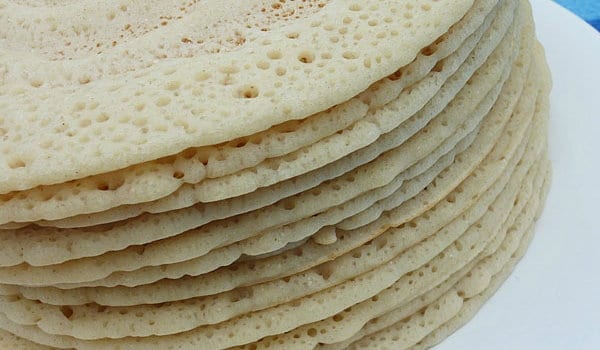
A soft, spongy fermented pancake similar to injera, served at every Somali meal. Torn into pieces and used to scoop stews, or drizzled with butter and sugar for breakfast.
Nutrition & Info
Allergen Warnings
Equipment Needed
Presentation Guide
Vessel: large flat plate
Garnishes: drizzle of sesame oil, honey
Accompaniments: suqaar, stewed lentils
Instructions
-
1
Combine the flour, cornmeal, instant yeast, sugar, and salt in a large mixing bowl, then gradually pour in the warm water while whisking continuously until a smooth, lump-free batter forms with a consistency similar to thin pancake batter.
-
2
Cover the bowl tightly with plastic wrap and place it in a warm spot in the kitchen, allowing the batter to ferment for at least four hours or ideally overnight, until the surface is bubbly and the batter has a pleasantly tangy aroma.
-
3
After fermentation, stir the batter gently as it will have thickened, adding a small splash of warm water if needed to return it to a pourable consistency that flows easily from a ladle but is not as thin as crepe batter.
-
4
Heat a large non-stick skillet or crepe pan over medium heat without any oil or butter, pour about half a cup of batter into the center, and quickly swirl the pan in a circular motion to spread the batter into a thin, even round.
-
5
Cook the canjeero on one side only for two to three minutes until the surface is covered with small holes and bubbles, the edges begin to curl slightly, and the top appears dry and set while the bottom develops a light golden color.
-
6
Slide the cooked canjeero onto a plate without flipping, and repeat with the remaining batter, stacking the finished pieces, then serve either folded with butter and sugar drizzled on top for breakfast, or torn into pieces alongside rich stews and sauces for lunch or dinner.
Did You Know?
Canjeero is eaten at every meal in Somali households. For breakfast, it's served with butter and sugar, drizzled with tea.
Chef's Notes
Equipment Tips
- non-stick skillet
- mixing bowl
- ladle
Garnishing
drizzle of sesame oil, honey
Accompaniments
suqaar, stewed lentils
The Story Behind Canjeero
The Story: Canjeero (also spelled laxoox or lahoh) is a spongy, fermented flatbread that serves as the foundation of Somali breakfast and a versatile accompaniment throughout the day. Made from a batter of flour (traditionally sorghum, now often wheat or a blend) mixed with water or yogurt and allowed to ferment overnight, canjeero develops a distinctive sour tang and honeycomb-like surface of tiny air holes. The fermentation technique connects to ancient grain-processing traditions across the Horn of Africa and the broader Afro-Arabian culinary world.
On the Calendar: Canjeero is eaten daily at breakfast, typically drizzled with ghee and sugar or sesame oil, or topped with liver, suqaar (diced meat), or eggs. It is a constant at the Somali table, present from morning through evening.
Then & Now: The basic technique of fermenting grain batter and cooking it on a flat surface has remained unchanged for centuries. Modern Somali cooks may use wheat flour for convenience, but the fermentation process that produces the characteristic sourness and spongy texture remains essential. In the diaspora, canjeero connects Somali families to their food heritage.
Legacy: Canjeero is the daily bread of Somalia, a fermented flatbread that carries the sour, nourishing taste of ancient Horn of Africa grain traditions into every morning meal.
Comments (2)
Log in to leave a comment.
The cultural background adds so much context. Beautiful dish.
This recipe is absolutely divine! The flavors are perfectly balanced.