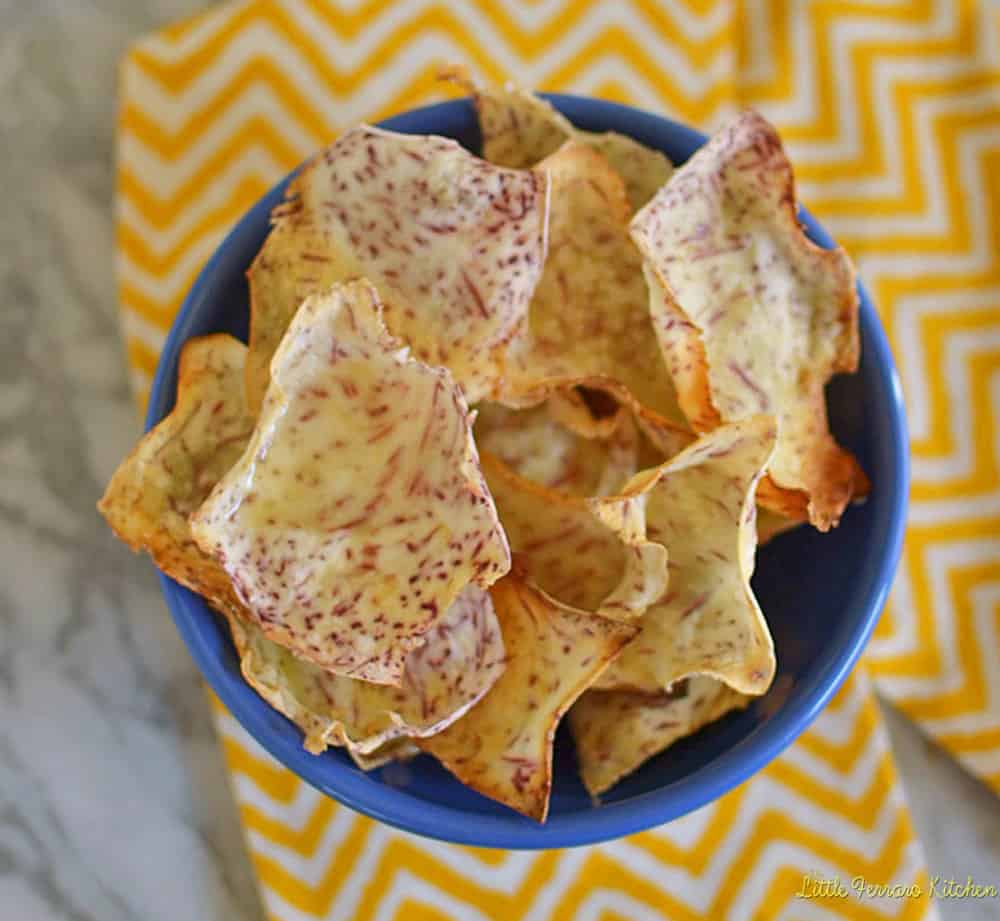
Crispy Fried Taro Slices, or 'kaukau krispi' as locals call it, embody the Solomon Islands' love for simple yet profound flavors. These golden, shatteringly crisp slices showcase taro's natural sweetness while delivering a satisfying crunch that dances on the palate. The exterior boasts a beautiful amber hue, contrasting with the tender, slightly starchy interior that melts away with each bite. Traditionally served as an afternoon snack during 'kava' ceremonies or as an accompaniment to fish dishes, these slices represent the islands' agricultural heritage and resourcefulness. The subtle garlic and chili notes, balanced with a hint of lime juice, create a perfect harmony of savory and tangy flavors that define Solomon Islander cuisine. The dish is often enjoyed with family gatherings, where the crispy texture provides a delightful contrast to the more substantial meals.
Nutrition & Info
Equipment Needed
Presentation Guide
Vessel: basket
Garnishes: lime
Instructions
-
1
Peel and slice taro very thin.
-
2
Heat oil to 175C.
-
3
Fry in batches until golden.
-
4
Drain on paper towels.
-
5
Season with salt, garlic, chili.
-
6
Squeeze lime over.
Did You Know?
The Solomon Islands' taro varieties contain a unique starch structure that allows them to achieve exceptional crispiness when fried, making them superior to taro from other Pacific island nations for this specific preparation method.
Chef's Notes
Equipment Tips
- deep pot
- mandoline
Garnishing
lime
The Story Behind Taro Chips
Taro cultivation has been central to Solomon Islander culture for over 3,000 years, with taro slices serving as both sustenance and ceremonial food. The frying technique was likely introduced through contact with Pacific islanders, while the combination of local spices and lime juice reflects the islands' unique flavor profile. This dish represents the resourceful adaptation of traditional ingredients into modern preparation methods, maintaining its status as a beloved comfort food.


Comments (0)
Log in to leave a comment.
No comments yet. Be the first to share your thoughts!