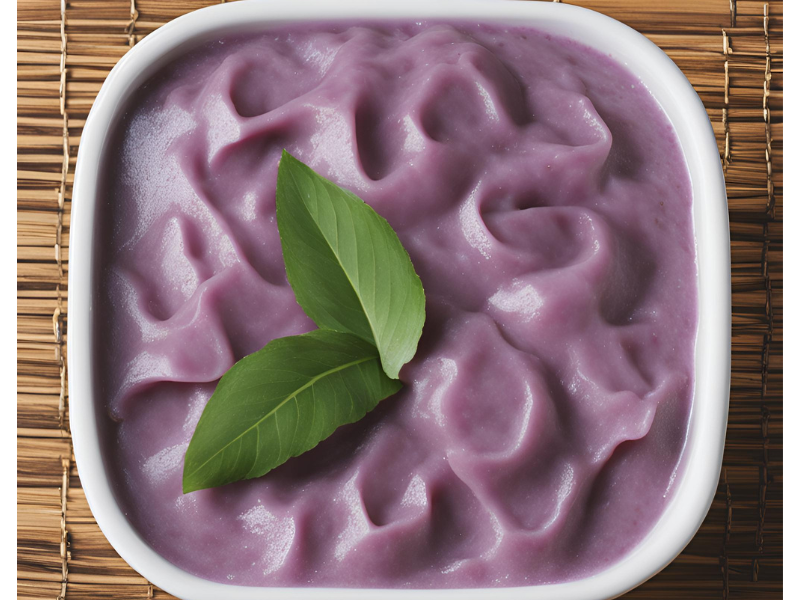
Taro pounded into a smooth, starchy paste and served with coconut cream and grilled fish. A Pacific staple.
Nutrition & Info
Allergen Warnings
Equipment Needed
Presentation Guide
Vessel: bowl or banana leaf
Accompaniments: coconut cream, grilled fish, greens
Instructions
-
1
Peel the taro roots carefully using a sharp knife, cut them into evenly sized chunks about five centimeters across, and rinse under cold water to remove the sticky sap that can irritate the skin.
-
2
Place the taro chunks in a large pot, cover with cold salted water by at least three inches, bring to a boil over high heat, then reduce to a steady simmer and cook for thirty-five to forty minutes until a knife slides through the center effortlessly.
-
3
Drain the cooked taro thoroughly and transfer to a large wooden mortar or heavy bowl while still steaming hot, as the taro must be pounded while warm to achieve the proper smooth and elastic consistency.
-
4
Begin pounding the hot taro with a wooden pestle using firm, steady strokes, wetting the pestle occasionally with water to prevent sticking, and continue for ten to fifteen minutes until the taro transforms into a smooth, stretchy, and slightly glossy paste.
-
5
Add small amounts of coconut cream gradually as you pound, working it into the taro to enrich the flavor and create a creamier texture, seasoning with salt to taste until the poi reaches the desired consistency.
-
6
Shape the pounded taro into a mound on a serving platter or into individual portions, drizzle generously with extra coconut cream, and serve alongside grilled fish as a traditional Pacific Island staple that is meant to be eaten by hand.
Did You Know?
Taro is considered sacred in Melanesian cultures and the skill of growing large taro is a source of pride.
Chef's Notes
Equipment Tips
- large pot
- mortar and pestle or wooden pounder
Accompaniments
The Story Behind Poi
The Story: Solomon Islands poi is a starchy pudding made from pounded taro, breadfruit, or cassava, cooked and mashed into a thick, smooth paste that serves as the traditional staple starch of Melanesian meals. Unlike Hawaiian poi, which is typically thinner and fermented, Solomon Islands poi tends to be thicker and is eaten fresh. The preparation connects to the ancient Melanesian tradition of processing root crops through pounding, a technique that makes tough, starchy roots digestible and palatable. Stone and wooden mortars used for pounding root crops have been found in archaeological sites throughout the archipelago.
On the Calendar: Poi is everyday food, served alongside fish, greens, and coconut cream at lunch and dinner. Special varieties made from premium taro appear at feasts and celebrations, where the quality of the poi reflects the host's agricultural skill and generosity.
Then and Now: While imported rice has partially displaced poi in urban areas and among younger generations, the tradition of pounding root crops remains strong in rural communities. Cultural revitalization efforts have emphasized the importance of maintaining traditional food preparation knowledge.
Legacy: Solomon Islands poi is the ancient heartbeat of Melanesian food culture, connecting thirty thousand years of root-crop agriculture to the contemporary table through the rhythmic pounding of mortar and pestle.

Comments (1)
Log in to leave a comment.
Great recipe! I added a bit more spice for my taste. Fantastic.