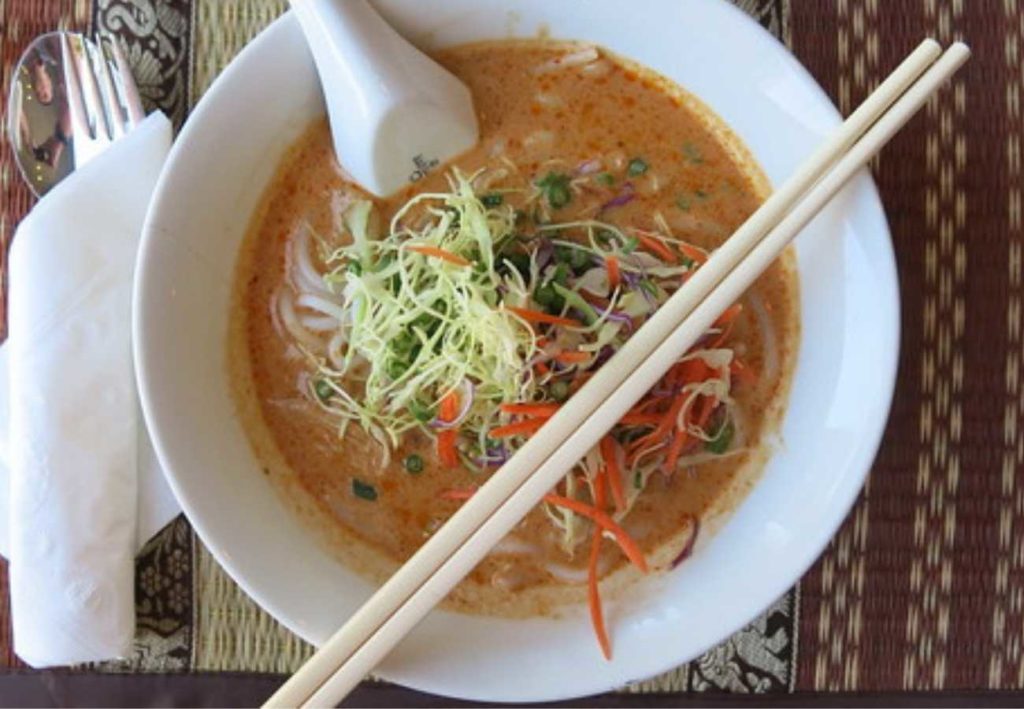
Springy thin egg noodles tossed in a savoury-sweet sauce of dark soy, sesame oil, and chili, served alongside plump shrimp and chicken wontons in a separate bowl of clear broth.
Nutrition & Info
Allergen Warnings
Equipment Needed
Presentation Guide
Vessel: two bowls (noodles and soup)
Garnishes: fried shallots, sliced chili, choy sum
Accompaniments: chili sauce, vinegar
Instructions
-
1
Mix shrimp, chicken mince, sesame oil, soy sauce, white pepper, and water chestnuts for the wonton filling.
-
2
Place a teaspoon of filling on each wonton wrapper, fold into shape, sealing edges with water.
-
3
Cook wontons in boiling water for 3-4 minutes until they float and the filling is cooked.
-
4
Cook egg noodles in boiling water for 1-2 minutes until springy. Drain and toss immediately with the sauce.
-
5
Heat chicken broth and pour into a separate bowl with the cooked wontons.
-
6
Plate the dressed noodles, top with blanched greens, fried shallots, and sliced chilies. Serve with the wonton soup alongside.
Did You Know?
In Singapore's wonton mee, the noodles are served dry with sauce (unlike the Hong Kong soup version) — locals consider the dry style superior for experiencing the noodle texture.
Chef's Notes
Equipment Tips
- pot
- wok
- slotted spoon
Garnishing
fried shallots, sliced chili, choy sum
Accompaniments
chili sauce, vinegar
The Story Behind Wonton Mee
Wonton mee migrated to Singapore with Cantonese immigrants and underwent a distinctly Singaporean transformation. While Hong Kong serves wontons in soup with noodles, Singaporean wonton mee separates the components — dry noodles tossed in a dark sauce alongside a separate bowl of wonton soup. This "dry" style has become the definitive Singaporean version and is a hawker centre essential.
More Singaporean Dishes
 Medium
📜 Story
Medium
📜 Story
Chai Tow Kway
Fried Carrot Cake
Breakfast or snack Hard
📜 Story
Hard
📜 Story
Char Kway Teow
Stir-Fried Flat Rice Noodles
Lunch or dinner, hawker centre staple Medium
📜 Story
Medium
📜 Story
Chicken Kut Teh
Peppery Herbal Chicken Soup
Breakfast or lunch, restorative meal Hard
📜 Story
Hard
📜 Story
Chili Crab
Chili Crab
Dinner, celebrations, entertaining guests
Comments (0)
Log in to leave a comment.
No comments yet. Be the first to share your thoughts!