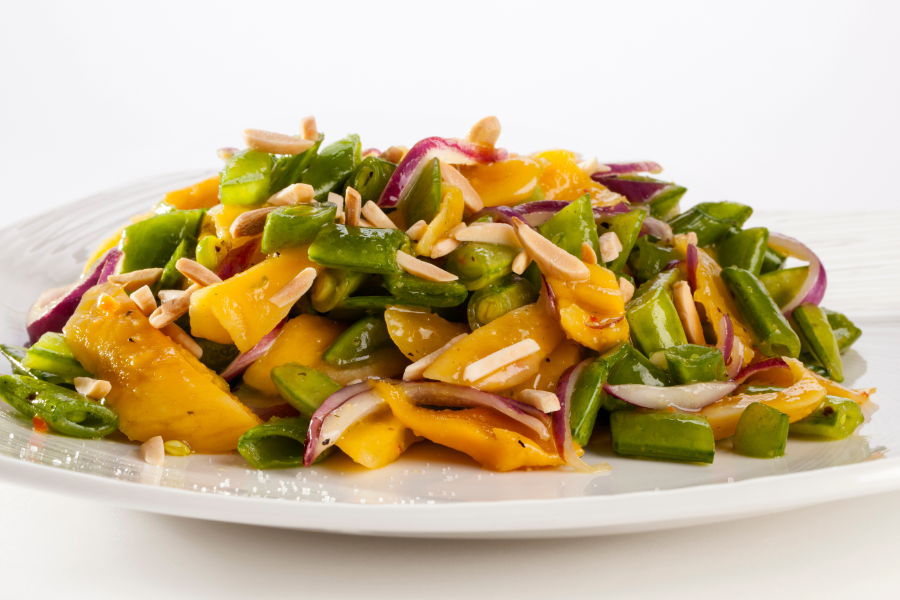
A riotous salad of tropical fruits, vegetables, and fried dough fritters tossed in a thick, dark, sticky-sweet shrimp paste dressing and topped with crushed roasted peanuts.
Nutrition & Info
Allergen Warnings
Equipment Needed
Presentation Guide
Vessel: shallow bowl
Garnishes: crushed peanuts, torch ginger flower
Accompaniments: extra dressing on the side
Instructions
-
1
Prepare all fruits and vegetables: cube pineapple, julienne mango and jicama, slice cucumber, blanch bean sprouts.
-
2
Slice you tiao into bite-size pieces. Halve tofu puffs.
-
3
Make dressing by mixing hae ko, sugar, lime juice, chili paste, and water until smooth and thick.
-
4
Combine all fruits, vegetables, you tiao, and tofu puffs in a large bowl.
-
5
Pour the dressing over and toss thoroughly until everything is coated in the dark, glossy sauce.
-
6
Top with crushed peanuts and sliced torch ginger flower. Serve immediately.
Did You Know?
The word "rojak" has entered Singaporean slang to mean "a wild mixture" — reflecting Singapore's own multicultural identity.
Chef's Notes
Equipment Tips
- large mixing bowl
- mortar and pestle
Garnishing
crushed peanuts, torch ginger flower
Accompaniments
extra dressing on the side
The Story Behind Rojak
Rojak is the quintessential metaphor for Singapore itself — a mix of different elements that somehow creates something greater than the sum of its parts. The dish combines Malay, Chinese, and Indian influences in a single bowl. The dark shrimp paste dressing (hae ko) is the unifying element, coating tropical fruits, vegetables, and fried dough in its complex sweet-savoury-funky embrace.
More Singaporean Dishes
 Medium
📜 Story
Medium
📜 Story
Chai Tow Kway
Fried Carrot Cake
Breakfast or snack Hard
📜 Story
Hard
📜 Story
Char Kway Teow
Stir-Fried Flat Rice Noodles
Lunch or dinner, hawker centre staple Medium
📜 Story
Medium
📜 Story
Chicken Kut Teh
Peppery Herbal Chicken Soup
Breakfast or lunch, restorative meal Hard
📜 Story
Hard
📜 Story
Chili Crab
Chili Crab
Dinner, celebrations, entertaining guests
Comments (0)
Log in to leave a comment.
No comments yet. Be the first to share your thoughts!