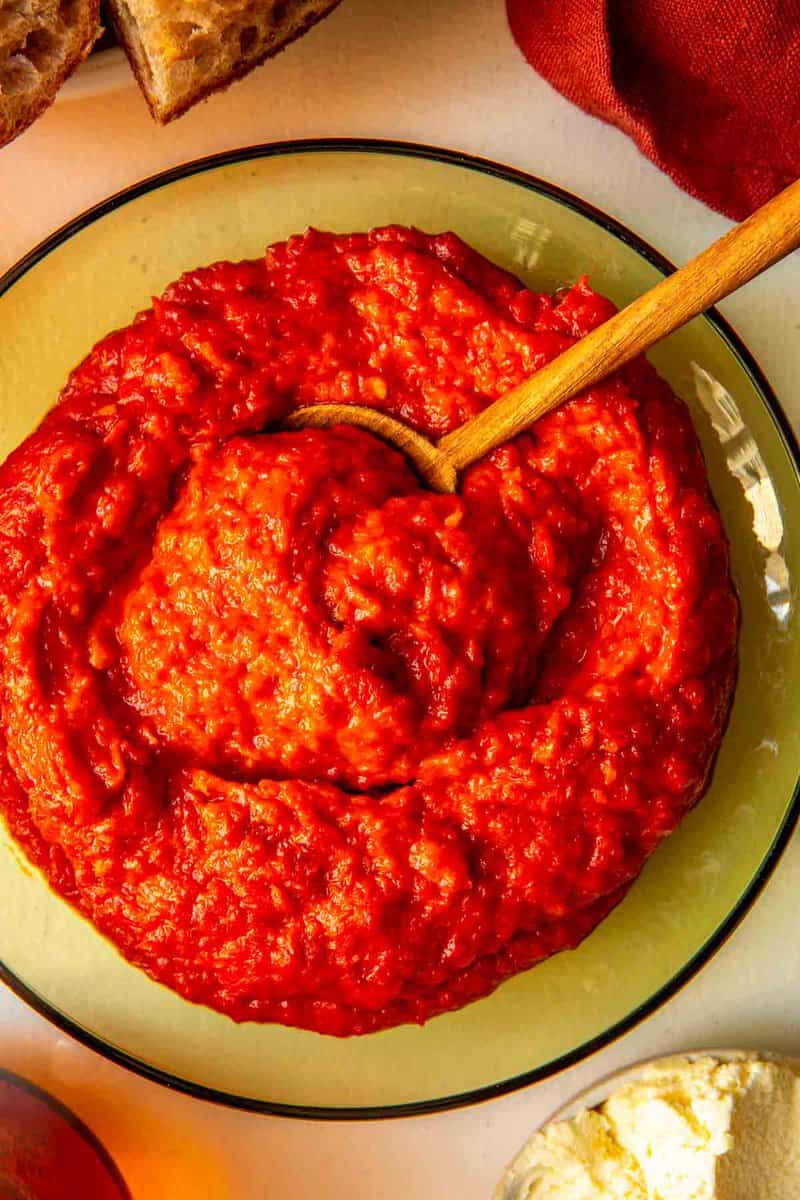
Smoky roasted red pepper and eggplant spread, slowly cooked until thick and jammy. The 'Serbian caviar.'
Instructions
-
1
Roast the whole red peppers and eggplants directly over an open gas flame or under a broiler, turning frequently with tongs, until the skins are completely charred and blistered on all sides, about fifteen minutes for peppers and twenty for eggplants.
-
2
Transfer the charred vegetables to a large bowl, cover tightly with plastic wrap or a lid to trap steam, and let them sweat for thirty minutes until the skins loosen and become easy to peel.
-
3
Peel away all the blackened skin from the peppers and eggplants, remove seeds and stems, then place the flesh in a colander set over a bowl and drain overnight in the refrigerator to remove excess moisture.
-
4
Chop the drained pepper and eggplant flesh finely by hand or pulse briefly in a food processor until coarsely textured, being careful not to puree too smoothly as ajvar should have a rustic, slightly chunky consistency.
-
5
Heat the oil in a large heavy-bottomed pot over medium-low heat, add the garlic and cook for one minute until fragrant, then add the chopped pepper and eggplant mixture and stir thoroughly to combine.
-
6
Cook the mixture on low heat for one and a half to two hours, stirring every five to ten minutes to prevent sticking, until the ajvar darkens in color, thickens considerably, and the oil begins to separate from the vegetables.
-
7
Stir in the vinegar, salt, and pepper during the last five minutes of cooking, then adjust seasoning to taste before either jarring the hot ajvar in sterilized jars for preserving or cooling it to serve fresh with crusty bread.
Did You Know?
Every autumn, Serbian families spend days roasting peppers and making ajvar — it is a beloved seasonal ritual.
The Story Behind Ajvar
The Story: Ajvar is a velvety relish of roasted red peppers and eggplant, slowly cooked with garlic and sunflower oil until thick and intensely sweet-smoky. The dish emerged in southern Serbia during the nineteenth century when red pepper cultivation expanded across the Balkans. Each autumn, Serbian families undertake ajvar-making as a communal ritual, roasting bushels of peppers over open flames, peeling them by hand, and simmering the pulp for hours in enormous pots. The quantity produced, often dozens of jars per household, reflects the Serbian commitment to preserving summer's abundance for winter.
On the Calendar: Ajvar-making season in September and October is a major social event. The finished product is consumed year-round as a condiment, spread, and accompaniment to grilled meats, bread, and cheese. It appears at every celebration and everyday meal alike.
Then and Now: While commercially produced ajvar is widely available, homemade ajvar remains a point of fierce family pride. The annual autumn ritual of roasting and cooking continues across Serbia, with families competing over whose ajvar is the finest. The relish has gained international popularity as a versatile condiment.
Legacy: Ajvar is the taste of Serbian autumn preserved in a jar, a labor of love that transforms simple peppers into liquid gold and connects every winter meal to the warmth of the harvest fire.
More Serbian Dishes
Beef Kobasica
Serbian Grilled Beef Sausage
Barbecue season and winter preservation Medium
📜 Story
Medium
📜 Story
Burek
Serbian Meat Pie
Breakfast or late-night snack Easy
📜 Story
Easy
📜 Story
Cevapi
Grilled Meat Fingers
Lunch, dinner, street food Easy
📜 Story
Easy
📜 Story
Cicvara
Serbian Cornmeal Porridge
Breakfast, especially in mountain regions
Comments (0)
Log in to leave a comment.
No comments yet. Be the first to share your thoughts!