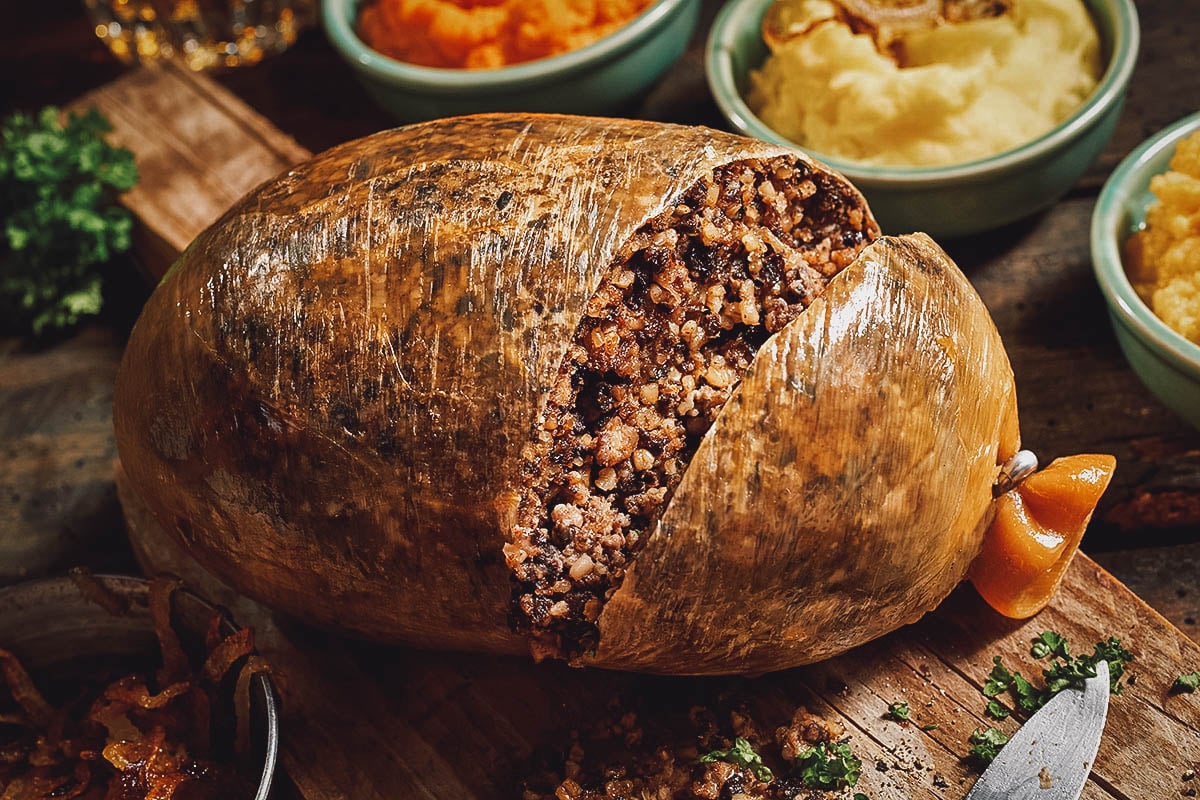
A savory pudding of minced lamb, oatmeal, onions, and spices, traditionally encased in a sheep's stomach. Scotland's national dish.
Nutrition & Info
Allergen Warnings
Equipment Needed
Presentation Guide
Vessel: plate, sliced open
Garnishes: fresh parsley
Accompaniments: neeps (turnip mash), tatties (mashed potatoes), whisky sauce
Instructions
-
1
Simmer the lamb liver and heart in salted water for forty minutes until cooked through. Remove and let cool, then mince very finely using a meat grinder or food processor. The texture should be coarsely ground, not smooth like a pate.
-
2
Toast the oatmeal in a dry skillet over medium heat for five minutes, stirring constantly, until golden and fragrant. This toasting step adds a nutty depth of flavour and helps the oatmeal absorb the rich meat juices during cooking.
-
3
Saute the diced onions in half the suet or butter for eight minutes until deeply golden and sweet. Combine in a large bowl with the minced offal, ground lamb, toasted oatmeal, remaining suet, stock, allspice, pepper, nutmeg, and salt. Mix thoroughly.
-
4
If using a natural casing, fill it loosely (the oatmeal expands during cooking) and tie securely. If using a pudding basin or oven-safe dish, pack the mixture in firmly, cover tightly with buttered foil, and tie with string.
-
5
Steam the haggis over simmering water for three hours if in a casing, or two and a half hours if in a basin. Maintain the water level throughout, adding more boiling water as needed. The long steaming melds the flavours and cooks the oatmeal until tender.
-
6
Turn out the haggis onto a warm serving platter. Cut it open at the table with a dramatic gesture, as tradition demands. Serve with mashed neeps (turnips), creamy mashed tatties (potatoes), and a dram of Scotch whisky for a proper Burns Night supper.
Did You Know?
Haggis is celebrated every January 25th on Burns Night, when Robert Burns' poem 'Address to a Haggis' is recited.
Chef's Notes
Equipment Tips
- large pot
- sheep stomach or casing
- mixing bowl
Garnishing
fresh parsley
Accompaniments
neeps (turnip mash), tatties (mashed potatoes), whisky sauce
The Story Behind Haggis
The Story: Haggis is Scotland's most iconic dish, a savory pudding of sheep's heart, liver, and lungs mixed with oatmeal, onions, suet, and spices, traditionally encased in the animal's stomach and simmered for hours. The dish represents the ancient thrift of Scottish Highland cooking, where every part of the animal was used and nothing wasted. While similar offal puddings exist across European culinary history, Scotland claimed haggis as its own, and Robert Burns immortalized it in his 1787 poem Address to a Haggis, elevating it to the status of national symbol.
On the Calendar: Burns Night on January 25th is haggis's moment of supreme glory, when it is ceremonially piped to the table, addressed with Burns's poetry, slashed open with a knife, and served with neeps (mashed turnip) and tatties (mashed potatoes). Haggis also appears at Hogmanay (New Year's Eve) and St. Andrew's Day celebrations.
Then and Now: Modern haggis production has been industrialized, with commercial versions widely available in supermarkets and butcher shops. However, artisanal haggis makers maintain traditional techniques, and the dish has found new life in contemporary Scottish cooking, appearing in haggis nachos, haggis bon bons, and even haggis pizza.
Legacy: Haggis is Scotland's culinary declaration of independence, a dish that refuses to apologize for its humble origins and dares the world to taste the soul of a nation in a single bite.
Comments (0)
Log in to leave a comment.
No comments yet. Be the first to share your thoughts!