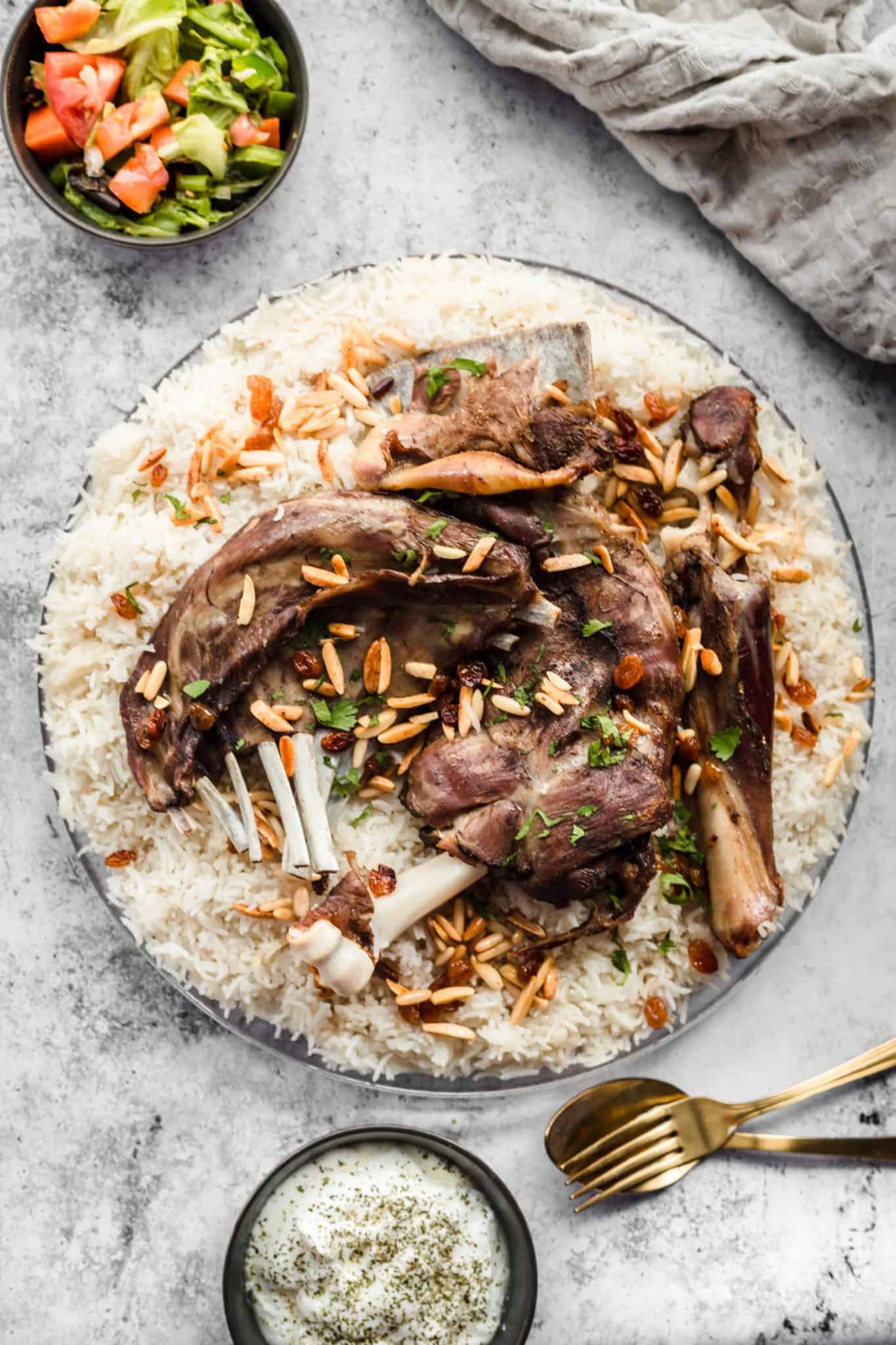
Tender, smoky chicken cooked underground-style, served atop saffron rice that has absorbed all the fragrant juices. The signature smokiness sets mandi apart.
Nutrition & Info
Allergen Warnings
Equipment Needed
Presentation Guide
Vessel: large round platter
Garnishes: fried onions, fresh herbs
Accompaniments: sahawiq (green chili sauce), yogurt
Instructions
-
1
Season the whole chicken or lamb with mandi spice, turmeric, salt, and ghee, rubbing the spices into every surface and under the skin. Marinate for at least two hours. Traditional mandi is cooked in a tandoor pit, but a home oven method works well.
-
2
Place the onion quarters and garlic in the bottom of a deep roasting pan. Set a rack over them and place the seasoned meat on the rack. Add one cup of water to the bottom of the pan. Cover tightly with foil and roast at 180C for two hours.
-
3
After two hours, remove the foil and increase the heat to 220C. Roast uncovered for fifteen minutes to develop a deeply browned, slightly charred exterior while the interior remains meltingly tender from the initial slow cooking.
-
4
While the meat roasts, cook the soaked rice. Pour the broth into a pot, add any drippings from the meat pan, and bring to a boil. Add the rice, stir once, reduce to the lowest heat, cover, and cook for twenty minutes until perfectly fluffy.
-
5
Remove the cooked meat from the oven and let rest for ten minutes. The meat should be so tender it falls off the bone with minimal effort. Carve or pull apart into serving pieces, collecting any juices to pour over the rice.
-
6
Mound the fragrant rice on a large platter and arrange the tender meat pieces on top. Pour the collected meat juices over the rice. Garnish with fried raisins, toasted almonds, and fresh herbs. Mandi is a celebration dish served at weddings across the Arabian Peninsula.
Did You Know?
Traditional mandi is cooked in a pit dug into the ground — meat suspended above coals while rice cooks in drippings below.
Chef's Notes
Equipment Tips
- tandoor or underground pit
- large pot
- coal
Garnishing
fried onions, fresh herbs
Accompaniments
sahawiq (green chili sauce), yogurt
The Story Behind مندي
### The Story
Mandi is a spectacular rice and meat dish originating in the Hadhramaut region of Yemen that has become deeply embedded in Saudi Arabian cuisine, particularly in the southern and western provinces. The name comes from the Arabic word nada, meaning "dew," referencing the tender, moist quality of the meat, which is traditionally cooked in a tandoor-like underground pit called a taboon or tanoor. A deep hole is dug in the ground, charcoal is burned at the bottom, and the seasoned meat -- usually a whole lamb or chicken -- is suspended above the coals on a grate, while rice cooks below, catching the dripping juices. This slow-smoking technique produces extraordinarily tender meat with a distinctive smoky flavor.
### On the Calendar
Mandi is a celebration dish served at weddings, Eid feasts, and large gatherings. In southern Saudi cities like Jizan and Najran, mandi restaurants are a major part of the dining culture, with some establishments cooking hundreds of lambs daily.
### Then & Now
The underground pit method remains the gold standard, though many modern Saudi restaurants use custom-built above-ground tandoor ovens that replicate the technique. Hadhrami immigrants to Saudi Arabia brought mandi with them in successive waves during the 20th century, and the dish has been enthusiastically adopted across the kingdom. The spice blend used in mandi -- heavy on cumin, cardamom, and black pepper with the addition of hawaij -- distinguishes it from kabsa's more tomato-forward flavor profile.
### Legacy
Mandi represents the deep culinary bond between Saudi Arabia and Yemen, a dish born from ancient pit-cooking traditions that has become one of the most beloved feasting foods across the Arabian Peninsula.


Comments (0)
Log in to leave a comment.
No comments yet. Be the first to share your thoughts!