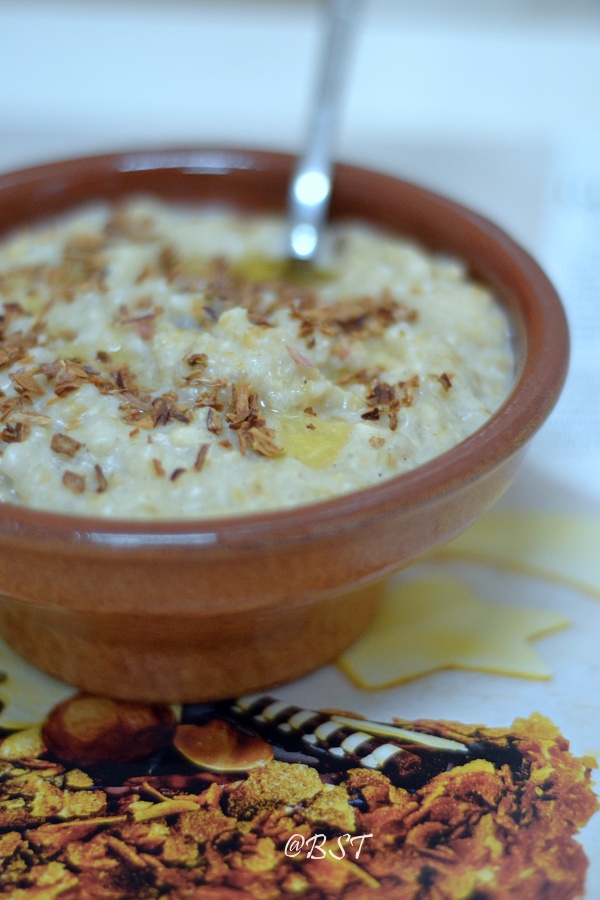
Crushed wheat cooked to creamy porridge consistency with chicken and caramelized onions — Saudi Arabia's ultimate comfort food.
Nutrition & Info
Allergen Warnings
Equipment Needed
Presentation Guide
Vessel: deep bowl
Garnishes: ghee drizzle, fried onions
Accompaniments: fresh salad, yogurt
Instructions
-
1
Rinse the crushed wheat several times until the water runs clear, then soak in warm water for thirty minutes. This softens the wheat and reduces the cooking time. Drain before adding to the pot.
-
2
Heat the ghee in a large pot over medium heat. Brown the meat pieces on all sides for five minutes. Add the diced onion and cook for five more minutes until golden. Add the tomatoes, tomato paste, baharat, and turmeric, stirring for two minutes.
-
3
Add the drained crushed wheat and pour in the water or broth. Stir well, bring to a boil, then reduce to the lowest simmer. Cover and cook for one and a half hours, stirring every twenty minutes to prevent sticking.
-
4
As the jareesh cooks, the wheat gradually breaks down and absorbs the meat-flavoured liquid, becoming a thick, porridge-like consistency. Add more water if needed to prevent it from becoming too dry before the wheat is fully tender.
-
5
The jareesh is ready when the wheat is completely soft and the meat can be shredded with a spoon. Using a wooden spoon, beat the mixture vigorously to break down any remaining whole wheat pieces into a smooth, creamy texture.
-
6
Serve the jareesh in shallow bowls with a generous drizzle of melted ghee and a scatter of crispy fried onions. This ancient wheat and meat porridge is one of Saudi Arabia's oldest and most beloved traditional dishes.
Did You Know?
Jareesh dates back to pre-Islamic Arabia — a staple of Bedouin nomads.
Chef's Notes
Equipment Tips
- pressure cooker or heavy pot
- immersion blender
Garnishing
ghee drizzle, fried onions
Accompaniments
fresh salad, yogurt
The Story Behind جريش
### The Story
Jareesh is one of the oldest dishes in the Arabian Peninsula, predating the arrival of rice by many centuries. Made from crushed wheat (or barley in its most ancient form) slow-cooked with yogurt or buttermilk until it reaches a thick, porridge-like consistency, jareesh was the daily sustenance of Bedouin and settled communities across Najd and the Hejaz long before the Islamic era. The word jareesh derives from the Arabic root jarash, meaning "to crush" or "to grind," reflecting the traditional preparation of cracking whole wheat between stones. Early Arabian travelers and poets referenced jareesh as the food of endurance, carried on long desert journeys.
### On the Calendar
Jareesh is traditionally a winter comfort food, served during cold desert nights. It holds special significance during Ramadan, when its slow-releasing energy makes it an ideal suhoor (pre-dawn) meal. It is also prepared for communal village gatherings and after funeral prayers.
### Then & Now
While rice dishes like kabsa have become the celebratory centerpieces of Saudi cuisine, jareesh remains beloved as heritage food that connects modern Saudis to their pre-oil past. Traditional preparation involves hours of slow stirring over low heat, though pressure cookers have shortened the process. It is typically enriched with lamb or chicken broth and seasoned simply with salt, cumin, and black pepper, sometimes topped with a butter-fried onion garnish.
### Legacy
Jareesh represents the ancient grain tradition of Arabia before the rice revolution -- a humble, nourishing dish that embodies the resilience and resourcefulness of desert life.


Comments (0)
Log in to leave a comment.
No comments yet. Be the first to share your thoughts!