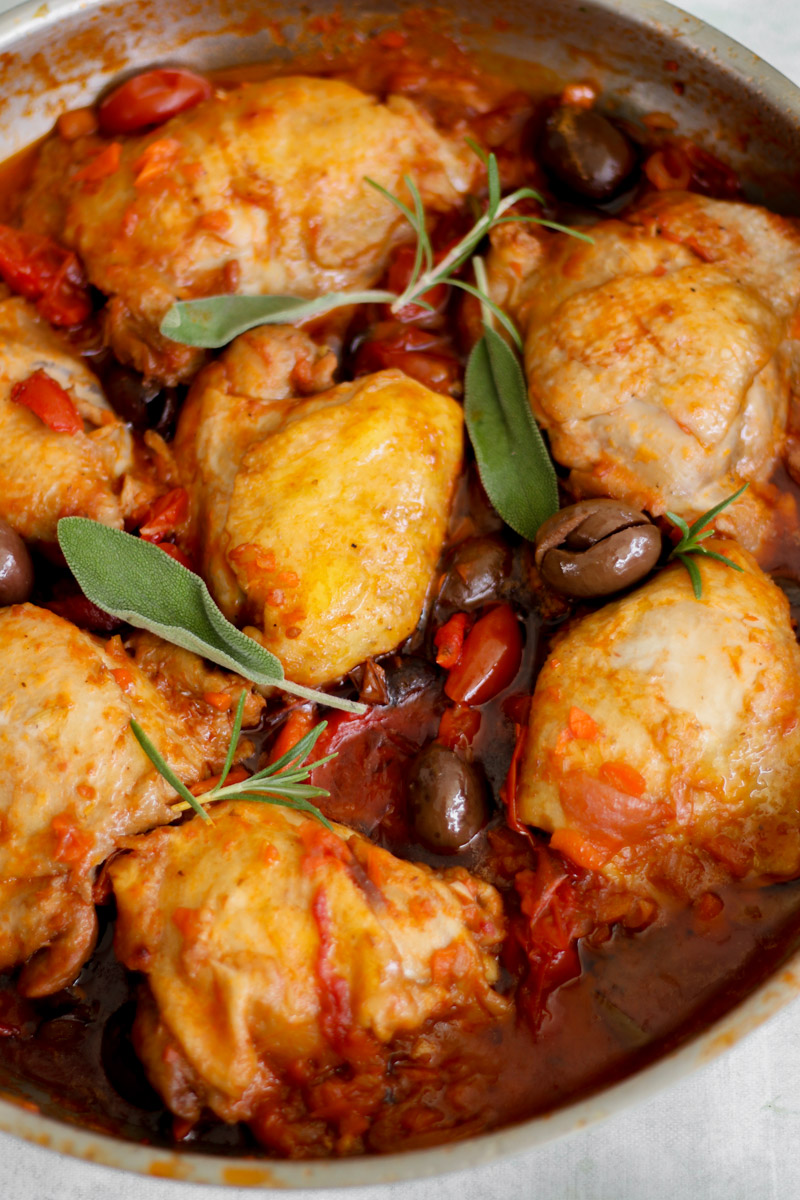
Pollo alla Cacciatora
Pollo alla Cacciatora (POHL-loh AHL-lah kah-chah-TOH-rah)
Hunter-Style Chicken
Chicken pieces braised with tomatoes, onions, olives, and herbs in white wine until meltingly tender.
Nutrition & Info
Equipment Needed
Presentation Guide
Vessel: shallow serving bowl
Garnishes: fresh rosemary, crusty bread
Accompaniments: polenta, roasted potatoes
Instructions
-
1
Season chicken pieces with salt and pepper. Heat olive oil in a heavy pot over medium-high heat.
-
2
Brown chicken on all sides, about 4 minutes per side. Remove and set aside.
-
3
In the same pot, sauté onion until softened, about 5 minutes. Add garlic, cook 1 minute.
-
4
Pour in white wine, scraping up browned bits. Cook until reduced by half.
-
5
Add tomatoes, olives, capers, rosemary, and sage. Return chicken to the pot.
-
6
Cover and simmer gently for 35-40 minutes until chicken is cooked through and tender. Adjust seasoning and serve.
Did You Know?
The name "cacciatora" means hunter-style, referring to the rustic way hunters would cook game birds with whatever wild herbs and vegetables they found.
Chef's Notes
Equipment Tips
- heavy braising pot or Dutch oven
- tongs
Garnishing
fresh rosemary, crusty bread
Accompaniments
polenta, roasted potatoes
The Story Behind Pollo alla Cacciatora
Chicken alla cacciatora is a cornerstone of Sammarinese home cooking, reflecting the republic's tradition of simple braised dishes. In a land where hunting was common on the wooded slopes of Mount Titano, this preparation evolved from cooking wild game to using farmyard chicken. The combination of tomatoes, olives, and herbs creates a dish that tastes of the Mediterranean hillside landscape.
More San Marinese Dishes
 Medium
📜 Story
Medium
📜 Story
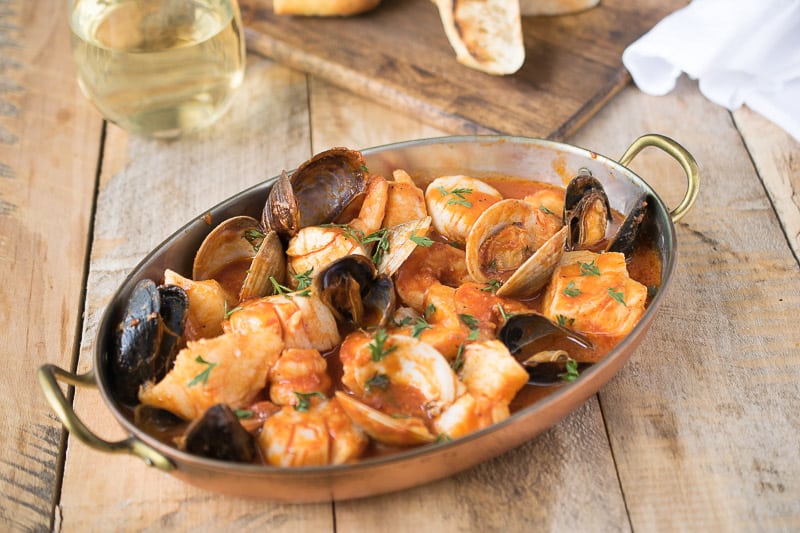
Brodetto di Pesce
Adriatic Fish Stew
Friday lunch, summer Medium
📜 Story
Medium
📜 Story
Bustrengo
San Marinese Fruit Cake
Christmas and winter holidays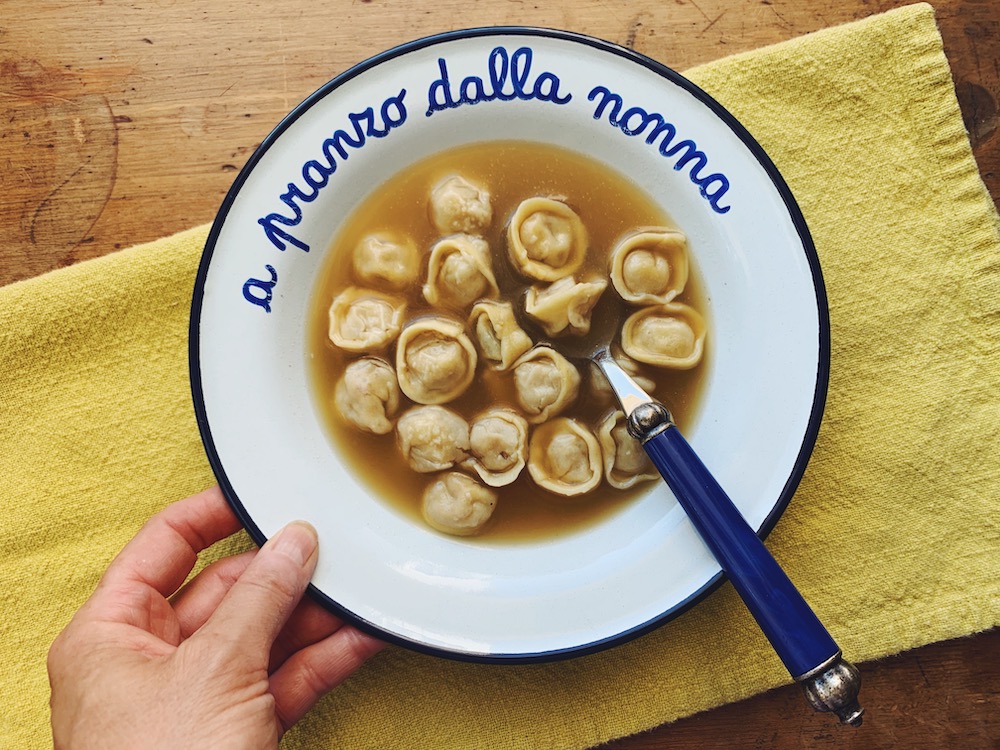 Hard
📜 Story
Hard
📜 Story
Cappelletti in Brodo
Little Hats in Broth
Christmas Day, New Year Medium
📜 Story
Medium
📜 Story
Ciambella al Mosto
Grape Must Ring Cake
Autumn, grape harvest season
Comments (0)
Log in to leave a comment.
No comments yet. Be the first to share your thoughts!