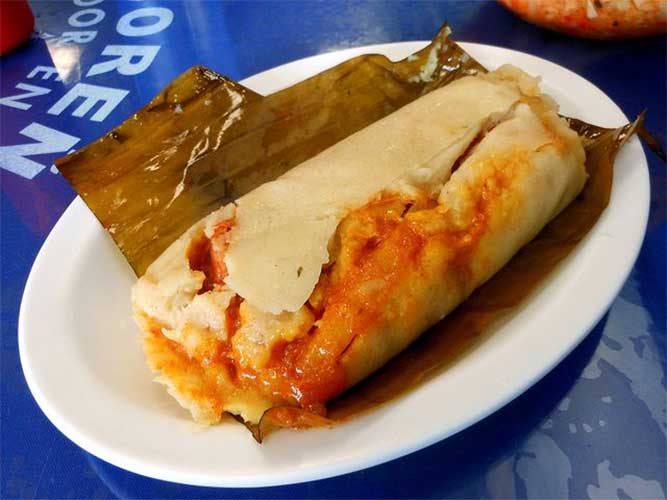
Tamales de Pollo
Tamales de Gallina (tah-MAH-les deh POH-yoh)
Chicken Tamales
Large banana-leaf wrapped tamales filled with seasoned masa and a rich chicken filling with vegetables, olives, and capers, steamed until tender.
Instructions
-
1
Mix masa harina with warm chicken broth and oil until a smooth spreadable dough forms. Season well with salt. It should spread easily on leaves.
-
2
Roast tomatoes and peppers, then blend with garlic and onion into a smooth sauce. Simmer until thickened, about fifteen minutes.
-
3
Combine shredded chicken with the sauce, olives, capers, potatoes, and green beans. This is the filling.
-
4
Soften banana leaves over an open flame or in hot water. Cut into large rectangles about thirty centimeters long.
-
5
Spread a generous layer of masa on each leaf, add filling in the center, fold the leaf to enclose, and tie securely with string.
-
6
Steam tamales upright in a large pot for one and a half hours until the masa is firm and pulls away from the leaf cleanly.
Did You Know?
In El Salvador, tamales are so central to Christmas celebrations that families often make hundreds at a time in a communal cooking event called a tamalada.
The Story Behind Tamales de Pollo
Salvadoran tamales trace their origins to the Pipil people who wrapped seasoned maize dough in leaves for portable meals. The Spanish conquest introduced chicken, olives, and capers, creating the distinctive Salvadoran version wrapped in banana leaves rather than corn husks. These large, generously filled tamales became the essential Christmas food, with entire families gathering days before the holiday to prepare them together. The tamalada tradition remains one of the most important communal cooking events in Salvadoran culture.
More Salvadoran Dishes
Arroz con Leche
Salvadoran Rice Pudding
Dessert after meals or afternoon meriendaAtol de Elote
Sweet Corn Beverage
Afternoon merienda or eveningCarne Guisada
Salvadoran Beef Stew
Lunch or dinner with rice and tortillas Medium
📜 Story
Medium
📜 Story
Chilate con Nuegados
Spiced Corn Drink with Fritters
Day of the Cross festival and afternoon treat
Comments (0)
Log in to leave a comment.
No comments yet. Be the first to share your thoughts!