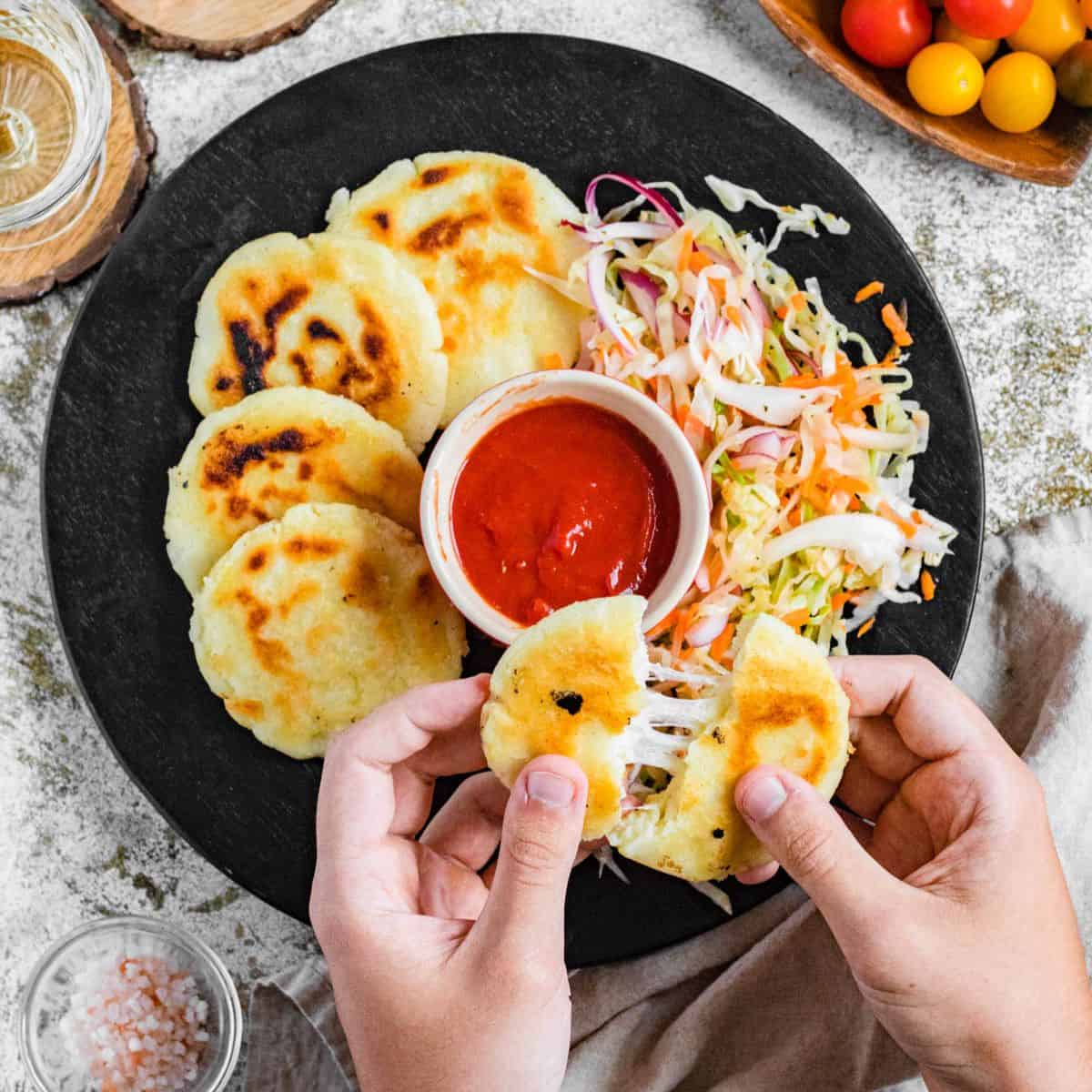
Thick corn masa cakes stuffed with cheese, beans, or meat, griddled until golden. El Salvador's beloved national dish, served with curtido slaw.
Nutrition & Info
Allergen Warnings
Equipment Needed
Presentation Guide
Vessel: plate
Accompaniments: curtido (pickled cabbage), salsa roja
Instructions
-
1
Combine the masa harina, salt, and warm water in a bowl. Mix with your hands and knead for three minutes until a smooth, soft dough forms. If the dough cracks when pressed, add water one tablespoon at a time. If sticky, add more masa. Cover and rest for ten minutes.
-
2
Prepare the filling by mixing the shredded cheese with the refried beans to create a combined chicharron-style filling that holds together. This classic combination is called pupusa revuelta and is the most popular filling in El Salvador.
-
3
Divide the dough into eight equal balls. Take one ball and flatten it into a thick disc in your palm. Place a generous tablespoon of filling in the centre, then fold the edges of the dough up and over the filling, pinching to seal completely.
-
4
Flatten the filled ball gently between your palms into a disc about twelve centimetres in diameter and one centimetre thick, keeping the filling sealed inside. The dough should stretch smoothly without cracking or exposing the filling.
-
5
Heat a flat griddle or cast-iron skillet over medium heat with a thin film of oil. Cook the pupusas for three to four minutes per side until golden-brown spots appear and the exterior is slightly crispy with the cheese beginning to melt and ooze at the edges.
-
6
Serve the hot pupusas immediately with a generous heap of tangy curtido pickled cabbage on top and a side of thin tomato salsa for dipping. These stuffed corn cakes are El Salvador's national dish and cultural treasure, eaten daily by millions.
Did You Know?
National Pupusa Day is celebrated every second Sunday of November in El Salvador.
Chef's Notes
Equipment Tips
- comal or flat griddle
- mixing bowl
- tortilla press or hands
Accompaniments
curtido (pickled cabbage), salsa roja
The Story Behind Pupusas
The Story: Pupusas are thick handmade corn masa cakes stuffed with a filling, typically quesillo cheese, refried beans, or loroco flower buds, then griddled until golden and slightly crisp on the outside while molten and savory within. Archaeological evidence from the Joya de Ceren site, a Pipil village preserved by volcanic ash around 600 CE, suggests that stuffed corn cakes were already part of the pre-Columbian diet. The Pipil word pupusa likely derives from the Nahuatl pupushawa, meaning something swollen or stuffed. Pupusas are El Salvador's undisputed national dish, so central to identity that the government declared the second Sunday of November as National Pupusa Day.
On the Calendar: Pupusas are eaten at any hour of any day, though they are especially popular for dinner and late-night eating. Sunday pupusa outings are a cherished family tradition, and National Pupusa Day in November is celebrated with festivals, competitions, and communal eating.
Then and Now: The fundamental technique of hand-patting masa around a filling has not changed in centuries, though fillings have expanded to include shrimp, spinach, and other modern additions. Salvadoran diaspora communities have spread pupuserias across the United States, Canada, and beyond, making pupusas one of the most successful Central American foods worldwide.
Legacy: Pupusas are El Salvador on a plate: humble in ingredients, rich in technique, and inseparable from the hands of the women who have shaped them for over a thousand years.
More Salvadoran Dishes
Arroz con Leche
Salvadoran Rice Pudding
Dessert after meals or afternoon meriendaAtol de Elote
Sweet Corn Beverage
Afternoon merienda or eveningCarne Guisada
Salvadoran Beef Stew
Lunch or dinner with rice and tortillas Medium
📜 Story
Medium
📜 Story
Chilate con Nuegados
Spiced Corn Drink with Fritters
Day of the Cross festival and afternoon treat
Comments (0)
Log in to leave a comment.
No comments yet. Be the first to share your thoughts!