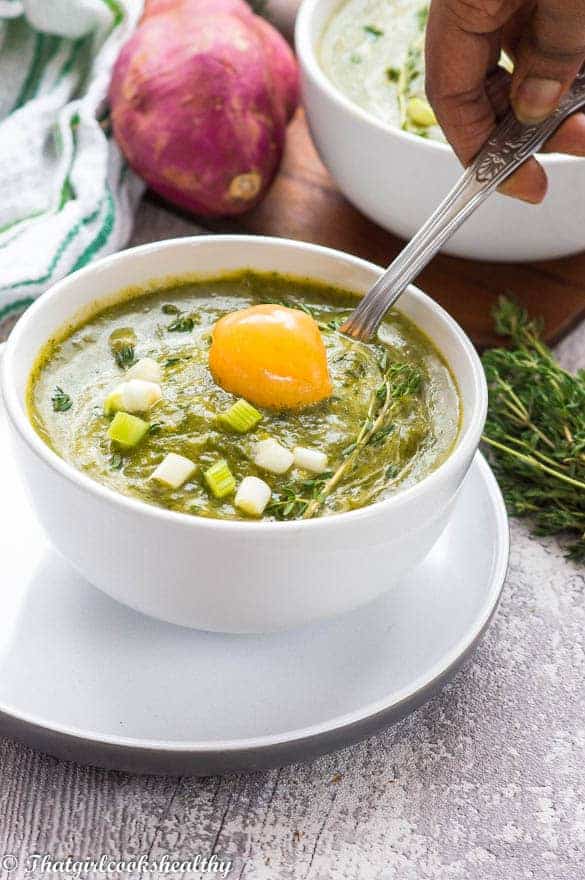
A thick, emerald-green soup made from dasheen leaves, okra, coconut milk, and fresh crab, seasoned with thyme and hot pepper. A cherished Saturday tradition.
Nutrition & Info
Allergen Warnings
Equipment Needed
Presentation Guide
Vessel: deep soup bowl
Garnishes: crab claw on top, thyme sprig
Accompaniments: crusty bread, white rice
Instructions
-
1
Wash dasheen leaves thoroughly and roughly chop them.
-
2
Melt butter in a large pot, saute onion and garlic until fragrant.
-
3
Add dasheen leaves, stock, and thyme. Bring to a boil, then simmer 30 minutes.
-
4
Add okra, coconut milk, and whole Scotch bonnet. Simmer 15 minutes.
-
5
Add crab pieces and cook another 15 minutes until crabs are done.
-
6
Remove Scotch bonnet. Blend partially for a thick but textured consistency.
-
7
Season and serve hot.
Did You Know?
In Saint Lucia, refusing a bowl of callaloo on Saturday is considered almost rude. Families compete over whose callaloo is the thickest and richest.
Chef's Notes
Equipment Tips
- large pot
- immersion blender
- cutting board
Garnishing
crab claw on top, thyme sprig
Accompaniments
crusty bread, white rice
The Story Behind Callaloo Soup
Callaloo traces its roots to West African leaf soups brought to the Caribbean by enslaved peoples. In Saint Lucia, the dish evolved to incorporate dasheen leaves abundant on the island, along with local blue crabs and coconut milk. Saturday callaloo became a social institution where neighbors would gather and share enormous pots of the soup. The dish represents a profound culinary connection between Africa and the Caribbean.
More Saint Lucian Dishes
 Easy
📜 Story
Easy
📜 Story
Accra
Saltfish Fritters
Afternoon snack and party appetizerBakes and Saltfish
Fried Dough with Salted Cod
Breakfast and weekend morningBanana Fritters
Sweet Fried Banana Beignets
Afternoon snack Medium
📜 Story
Medium
📜 Story
Bouyon
Creole Stew
Saturday lunch, communal gatherings
Comments (0)
Log in to leave a comment.
No comments yet. Be the first to share your thoughts!