
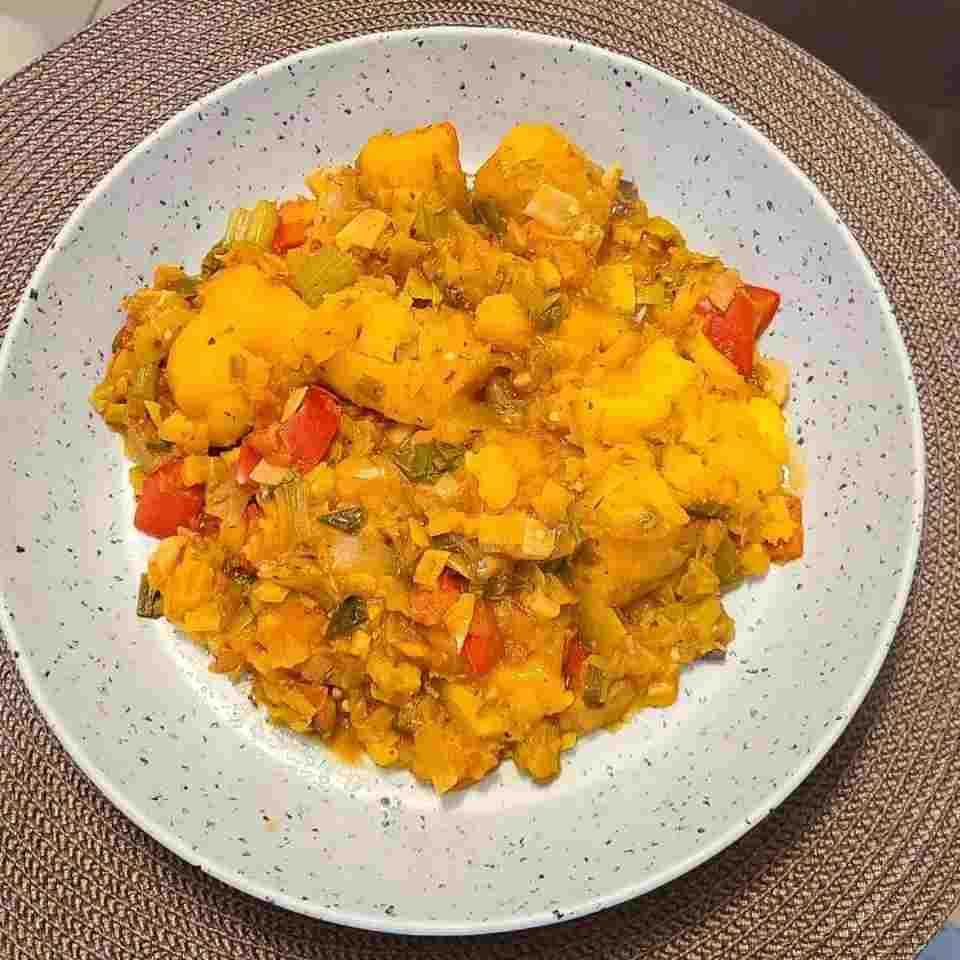
Cassava leaves pounded and slow-cooked with eggplant, spinach, and groundnut paste into a rich, creamy green stew.
Instructions
-
1
If using fresh cassava leaves, wash them thoroughly and pound in a mortar until very finely shredded, almost a paste. Cassava leaves must be cooked thoroughly for at least thirty minutes to be safe to eat. Frozen pre-processed leaves save considerable time.
-
2
Heat the oil in a large pot over medium heat. Saute the diced onion for five minutes until softened. Add the garlic and diced eggplant, cooking for five more minutes until the eggplant begins to soften and absorb the aromatic oil.
-
3
Add the processed cassava leaves and one cup of water to the pot. Bring to a boil, then reduce to a simmer and cook covered for thirty minutes, stirring every ten minutes. The leaves should become very tender and dark green.
-
4
Dissolve the ground peanut paste in half a cup of warm water until smooth. Pour this into the pot with the cassava leaves and stir well to combine. Add the flaked dried fish if using. Cook for another fifteen minutes until the sauce thickens.
-
5
Add the spinach during the last five minutes of cooking if using it to supplement the cassava leaves. Stir until wilted. Season with salt to taste. The finished isombe should be thick and creamy from the peanut paste with a deep green colour.
-
6
Serve the isombe hot alongside steamed rice, boiled sweet potatoes, or ugali. This peanut-cassava leaf stew is one of Rwanda's most traditional dishes, rich in protein from the peanuts and packed with vitamins from the green leaves.
Did You Know?
Isombe is considered Rwanda's national dish and is served at almost every family gathering.
The Story Behind Isombe
The Story: Isombe is a rich stew of pounded cassava leaves cooked slowly with ground roasted peanuts, onions, garlic, and palm oil until the leaves break down into a thick, deeply flavorful green mass. The dish draws on the Central and East African tradition of cooking leafy greens into concentrated, protein-rich stews that provide essential nutrition. Cassava, introduced to Africa from South America by Portuguese traders in the sixteenth century, became a staple crop across the Great Lakes region, and Rwandan cooks learned to use every part of the plant, including the nutrient-dense leaves.
On the Calendar: Isombe is everyday home cooking, served as a main accompaniment to rice, plantains, or ugali at lunch or dinner. It appears at celebrations and family gatherings where a spread of traditional dishes is expected.
Then and Now: The laborious process of pounding fresh cassava leaves with a mortar and pestle has been partially modernized with blenders and food processors, but many Rwandan cooks insist that hand-pounding produces a superior texture. The dish has gained recognition through the Rwandan diaspora and African food festivals.
Legacy: Isombe embodies the Rwandan principle of extracting maximum nourishment and flavor from humble ingredients, transforming tough leaves into a dish of extraordinary richness.


Comments (0)
Log in to leave a comment.
No comments yet. Be the first to share your thoughts!