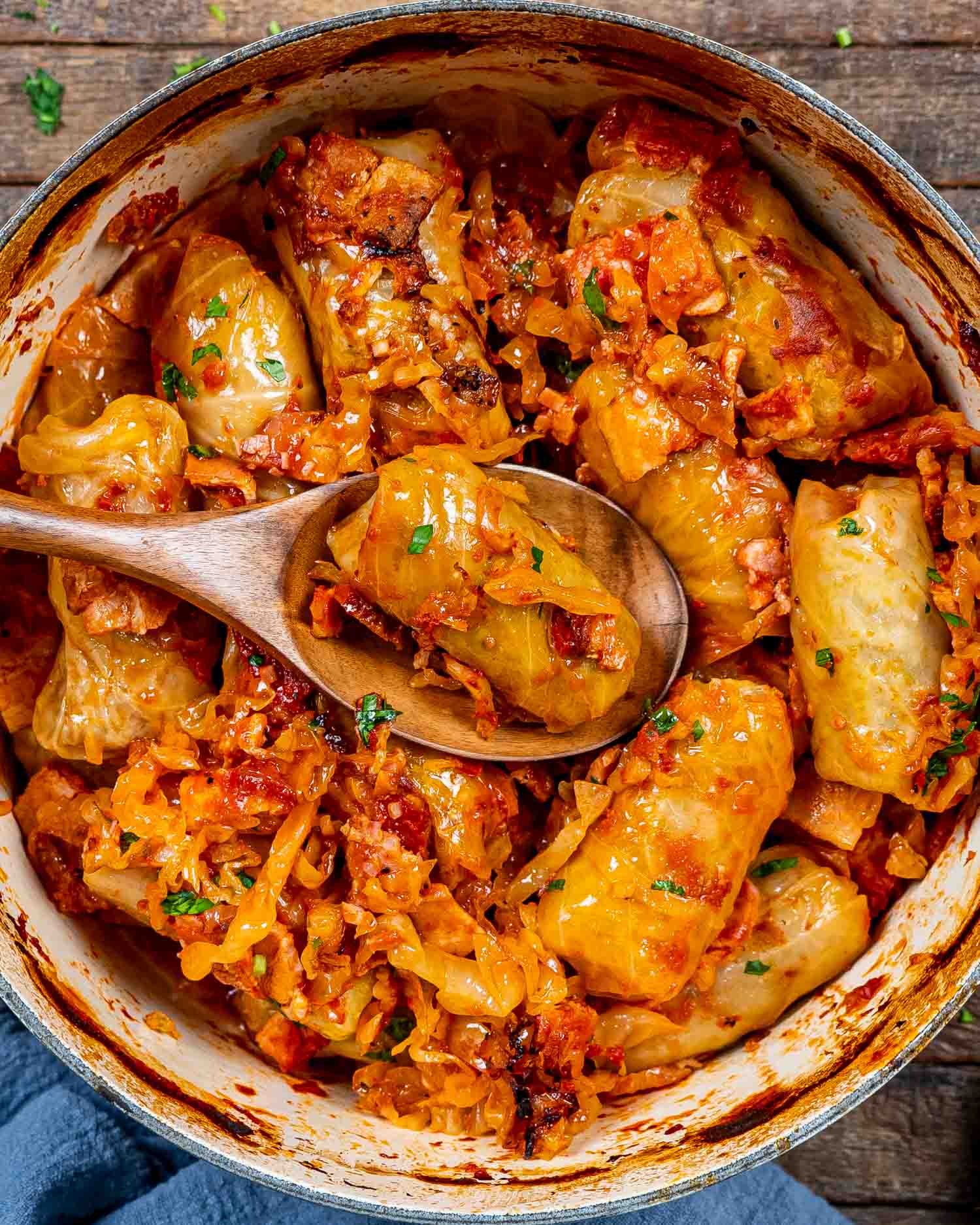
Fermented cabbage leaves wrapped around a savory rice and beef filling, slow-cooked with sauerkraut and served with sour cream and polenta.
Nutrition & Info
Allergen Warnings
Equipment Needed
Presentation Guide
Vessel: deep plate
Garnishes: sour cream dollop, fresh dill
Accompaniments: mămăligă (polenta), hot peppers
Instructions
-
1
Carefully peel individual leaves from the pickled cabbage head, keeping them whole. If the leaves are very salty, rinse briefly. Trim the thick central vein of each leaf flat with a knife so the leaves roll easily without cracking.
-
2
Saute one diced onion in oil for five minutes until softened. Mix with both ground meats, rinsed rice, the remaining raw diced onion, tomato paste, paprika, thyme, salt, and pepper. Knead until very well combined and slightly sticky.
-
3
Place two tablespoons of filling near the stem end of each cabbage leaf. Fold the sides inward, then roll away from you into a tight, compact cylinder. Tuck the end under so it stays sealed. Each roll should be about the size of your thumb.
-
4
Shred any remaining or torn cabbage leaves and spread a layer on the bottom of a large heavy pot. Arrange the cabbage rolls seam-side down in tight concentric circles on top, packing them snugly in layers with shredded cabbage between each layer.
-
5
Pour the sauerkraut juice or tomato juice over the rolls, add the bay leaves, and enough water to just cover. Place a heavy plate on top to keep the rolls submerged. Cover the pot and simmer on the lowest heat for three hours.
-
6
The sarmale are ready when the rice inside is fully cooked, the cabbage is meltingly tender, and the sauce has reduced to a thick, tangy gravy. Serve hot with a generous dollop of cold sour cream and a side of creamy polenta.
Did You Know?
Romanian families make enormous pots of sarmale for Christmas, often 100+ rolls at a time.
Chef's Notes
Equipment Tips
- large pot or dutch oven
- mixing bowl
Garnishing
sour cream dollop, fresh dill
Accompaniments
mămăligă (polenta), hot peppers
The Story Behind Sarmale
The Story: Sarmale are rolls of fermented cabbage leaves stuffed with a savory mixture of ground beef, rice, onions, and herbs, slow-cooked for hours in a pot layered with sauerkraut and tomato sauce, then served with a generous dollop of sour cream alongside golden mamaliga. The dish arrived through Ottoman influence, sharing ancestry with the broader family of dolma and sarma found across the Balkans and Middle East. Romanian cooks made the dish their own by emphasizing the fermented cabbage, which imparts a distinctive tang.
On the Calendar: Sarmale are the undisputed centerpiece of Romanian celebrations: Christmas, Easter, weddings, baptisms, and New Year feasts all demand a pot of sarmale. No Romanian holiday table is complete without them, and families compete over whose grandmother's recipe is superior.
Then and Now: The essential technique has changed little over centuries. The most prized version uses whole fermented cabbage heads prepared in autumn, and the rolls are cooked slowly in clay or cast-iron pots. Modern variations sometimes use vine leaves in summer, but the fermented cabbage version remains the gold standard.
Legacy: Sarmale are Romania's edible heirloom, a dish that binds generations across every holiday table and carries the warmth of grandmothers' kitchens into every celebration.


Comments (0)
Log in to leave a comment.
No comments yet. Be the first to share your thoughts!