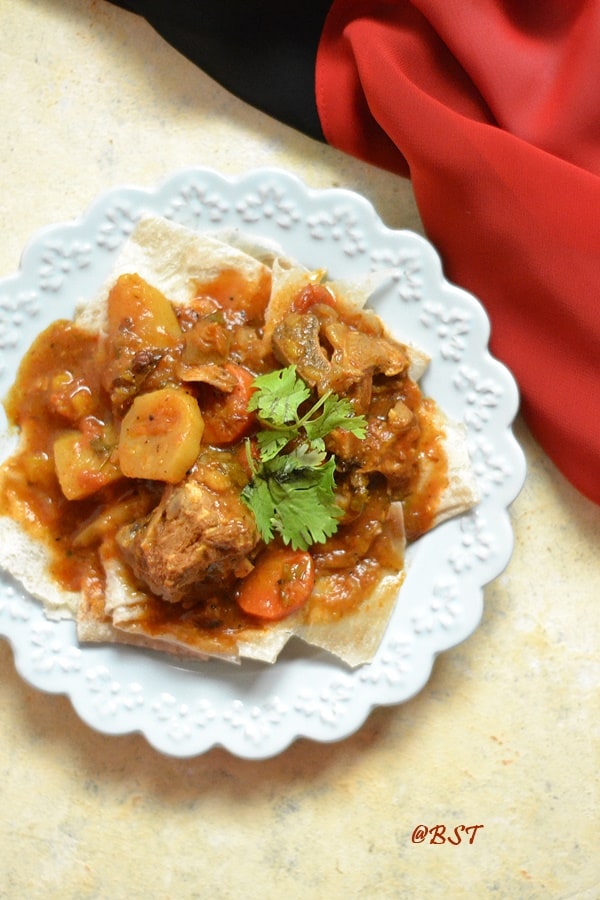
Thin rounds of crispy regag bread layered beneath a hearty slow-cooked lamb and vegetable stew, absorbing the rich broth until each piece becomes a savory, melt-in-your-mouth morsel.
Nutrition & Info
Allergen Warnings
Equipment Needed
Instructions
-
1
Brown the lamb cubes in oil over high heat for 5 minutes until seared on all sides. Add diced onion and cook for 3 minutes.
-
2
Stir in tomato paste, bezar, turmeric, and diced tomatoes. Cook for 2 minutes until fragrant.
-
3
Add water and bring to a boil. Reduce heat, cover, and simmer for 45 minutes until lamb is very tender.
-
4
Add potatoes, carrots, and zucchini. Continue simmering for 20 minutes until vegetables are soft.
-
5
Tear regag bread into large pieces and line a deep serving dish. Ladle the stew over the bread, allowing it to soak for 5 minutes before serving.
Did You Know?
Thareed is mentioned in a hadith as a dish beloved by the Prophet Muhammad, making it one of the most spiritually significant foods in the Gulf.
Chef's Notes
Equipment Tips
- large stew pot
- round baking tray
- ladle
The Story Behind Thareed
Thareed holds a revered place in Qatari and broader Arabian cuisine as a dish directly referenced in Islamic tradition. The Prophet Muhammad is reported to have praised thareed, comparing its superiority among foods to the superiority of his wife Aisha among women. The dish represents frugal desert cooking at its finest — stale bread revived with rich broth into something greater than the sum of its parts. In Qatar, thareed became especially associated with Ramadan, when families prepare large communal pots to share with neighbors and the less fortunate. The regag bread used as the base is itself a traditional Gulf flatbread cooked on a domed griddle.



Comments (0)
Log in to leave a comment.
No comments yet. Be the first to share your thoughts!