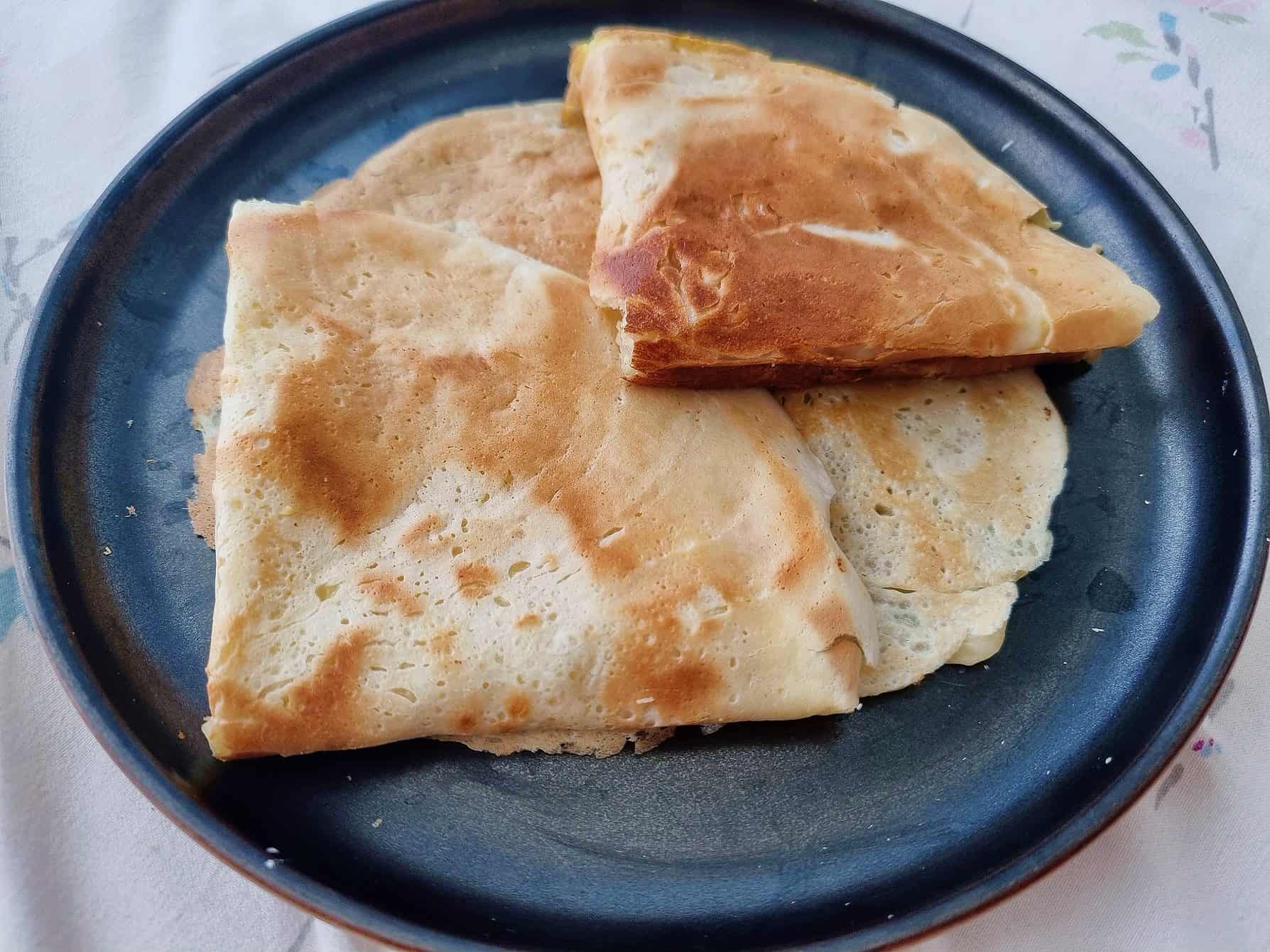
Paper-thin, crispy flatbread cooked on a domed griddle, served plain, with cheese and honey, or as a wrap for eggs and herbs. This ancient Gulf bread is a cornerstone of Qatari breakfast traditions.
Nutrition & Info
Allergen Warnings
Equipment Needed
Instructions
-
1
Mix flour and salt in a bowl. Add oil and warm water gradually, kneading into a smooth, elastic dough. Rest for 15 minutes.
-
2
Heat a tawa or large flat griddle over medium heat until very hot.
-
3
Take a golf-ball sized piece of dough and spread it directly on the hot griddle using your palm in a circular motion to create a paper-thin round.
-
4
Cook for 1-2 minutes until the edges curl and the bread becomes crispy and lightly golden with bubbles.
-
5
Peel off the griddle and serve immediately — fold with cream cheese and honey, or use as a wrap for scrambled eggs.
Did You Know?
Making perfect regag requires years of practice — the hand-spreading technique on the hot griddle is an art form passed from mother to daughter.
Chef's Notes
Equipment Tips
- tawa or large flat griddle
- mixing bowl
- spatula
The Story Behind Regag
Regag is one of the oldest breads in the Arabian Peninsula, predating ovens and representing the ingenuity of desert cooking with minimal equipment. The domed griddle (tawa) used to cook regag is itself an ancient tool, and the technique of spreading wet dough by hand on the hot surface requires remarkable skill and heat tolerance. In Qatar, regag was historically made by women in the early morning, producing enough for the day's meals. The bread served as plate, utensil, and carbohydrate in a single food. Today, regag remains a breakfast staple and is experiencing a revival in Qatari restaurants that celebrate heritage cuisine.



Comments (0)
Log in to leave a comment.
No comments yet. Be the first to share your thoughts!