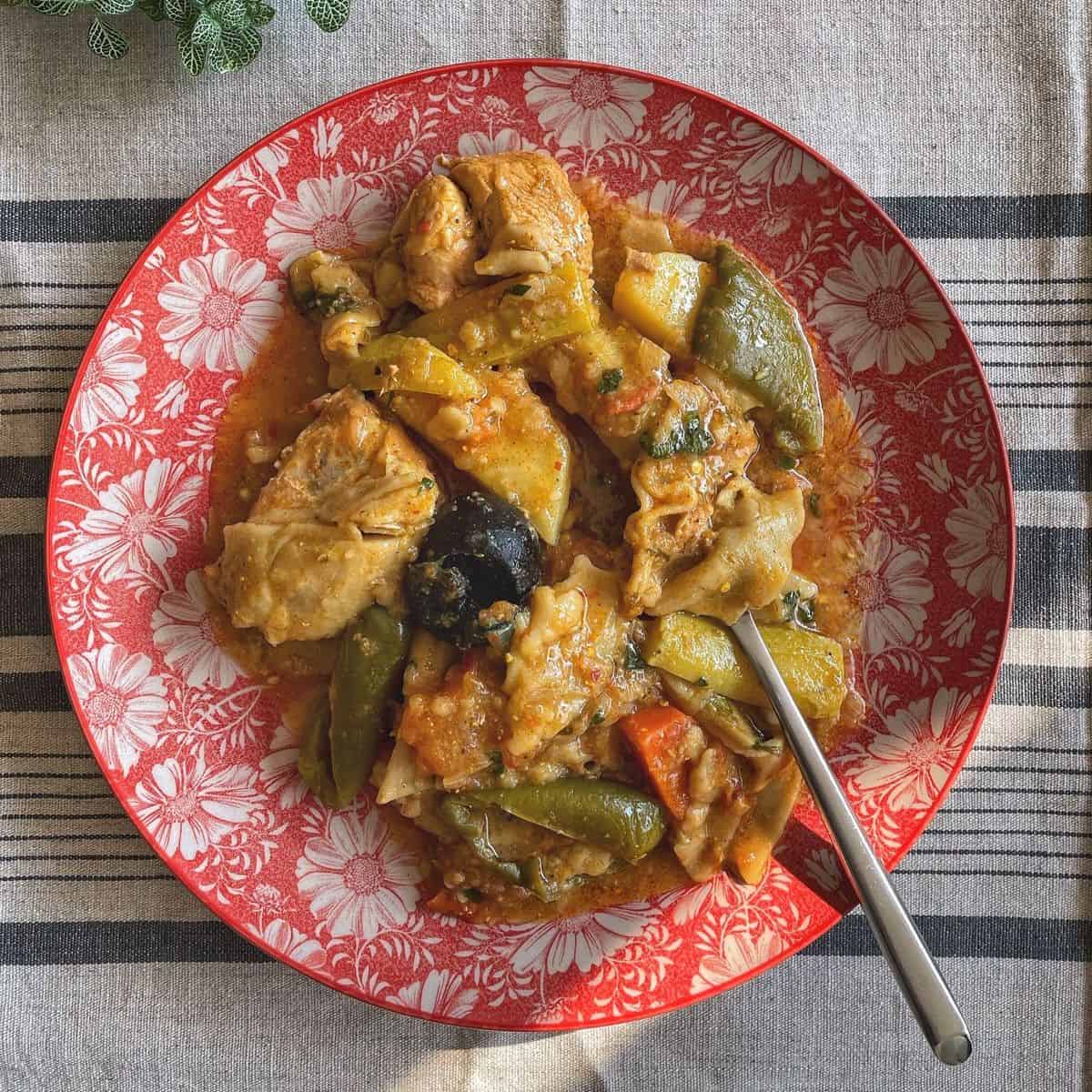
Hand-torn sheets of fresh dough simmered directly in a rich lamb and vegetable stew until they become silky pasta-like ribbons that absorb every drop of the spiced broth.
Nutrition & Info
Allergen Warnings
Equipment Needed
Instructions
-
1
Make the dough: combine flour, salt, and water. Knead until smooth, cover, and rest for 20 minutes.
-
2
Brown lamb in oil for 5 minutes. Add onion, cook 3 minutes. Add tomato paste, bezar, turmeric, and tomatoes; cook 2 minutes.
-
3
Add 6 cups water and dried limes. Simmer covered for 40 minutes until lamb is tender.
-
4
Add potatoes and zucchini, cook 10 minutes.
-
5
Roll the dough very thin and tear into large irregular pieces. Drop directly into the bubbling stew and cook for 15 minutes until the dough pieces are soft and silky.
-
6
Serve in deep bowls, making sure each serving has meat, vegetables, and plenty of the dough pieces.
Did You Know?
Margoog gets its name from the Arabic word for "flattened," describing the thin sheets of dough that are torn and dropped into the stew.
Chef's Notes
Equipment Tips
- large stew pot
- rolling pin
- work surface
The Story Behind Margoog
Margoog is a Bedouin dish born of necessity — a complete meal created from the simplest pantry staples of flour, meat, and whatever vegetables were available. The technique of adding fresh dough directly to a simmering stew is found across many nomadic cooking traditions, as it eliminates the need for a separate oven. In Qatar, margoog became a beloved cold-weather dish and a testament to the resourcefulness of desert cooking. The dish remains a point of pride among Qatari grandmothers, who consider the thinness and evenness of the torn dough pieces a mark of skill.



Comments (0)
Log in to leave a comment.
No comments yet. Be the first to share your thoughts!