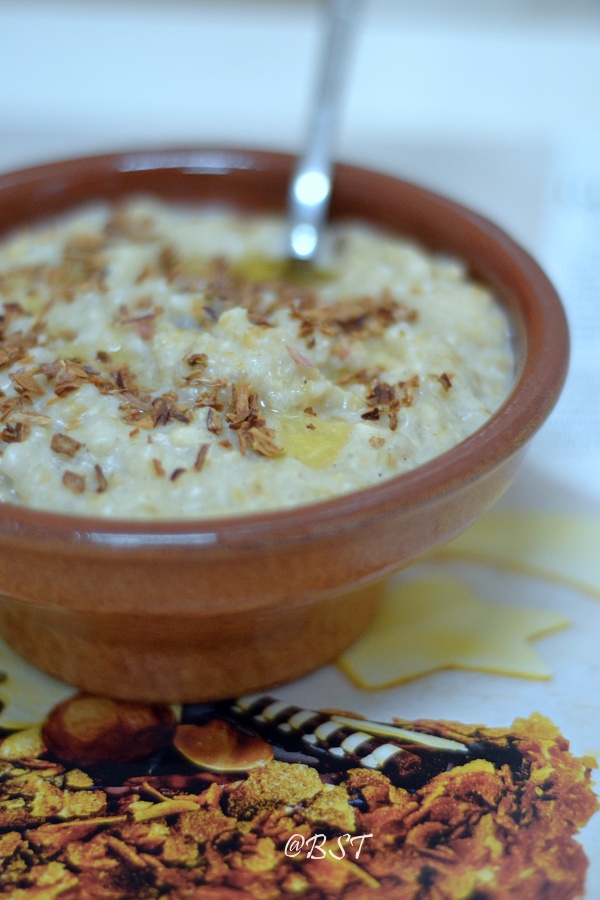
A thick, creamy porridge of rice and chicken beaten together until silky smooth, seasoned with turmeric and black pepper, and finished with a generous knob of butter — pure Qatari comfort food.
Nutrition & Info
Allergen Warnings
Equipment Needed
Instructions
-
1
Place chicken, onion, turmeric, salt, and water in a large pot. Bring to a boil, then simmer for 40 minutes until chicken falls off the bone.
-
2
Remove chicken, shred the meat finely, and discard bones and onion. Return shredded chicken to the pot.
-
3
Add washed rice to the broth and cook on medium-low heat for 30 minutes, stirring frequently to prevent sticking.
-
4
When the rice is completely soft and the mixture thickens, beat vigorously with a wooden spoon for 10 minutes until smooth and porridge-like.
-
5
Stir in butter until melted and incorporated. Ladle into bowls and garnish with cracked black pepper and parsley.
Did You Know?
The name madrouba means "beaten" — referring to the vigorous pounding that transforms rice and chicken into a seamless, velvety porridge.
Chef's Notes
Equipment Tips
- large heavy pot
- wooden spoon or hand masher
- serving bowls
The Story Behind Madrouba
Madrouba is one of Qatar's oldest comfort foods, originating from the Bedouin tradition of making the most of simple ingredients through patient, labor-intensive cooking. The technique of beating cooked rice into a porridge predates modern kitchen equipment and was traditionally done with large wooden pestles. During Ramadan, madrouba is one of the most anticipated iftar dishes, as its rich, soothing texture is ideal for breaking a day-long fast. The dish shares roots with harees but uses rice instead of wheat, reflecting Qatar's historical rice imports from the Indian subcontinent.



Comments (0)
Log in to leave a comment.
No comments yet. Be the first to share your thoughts!