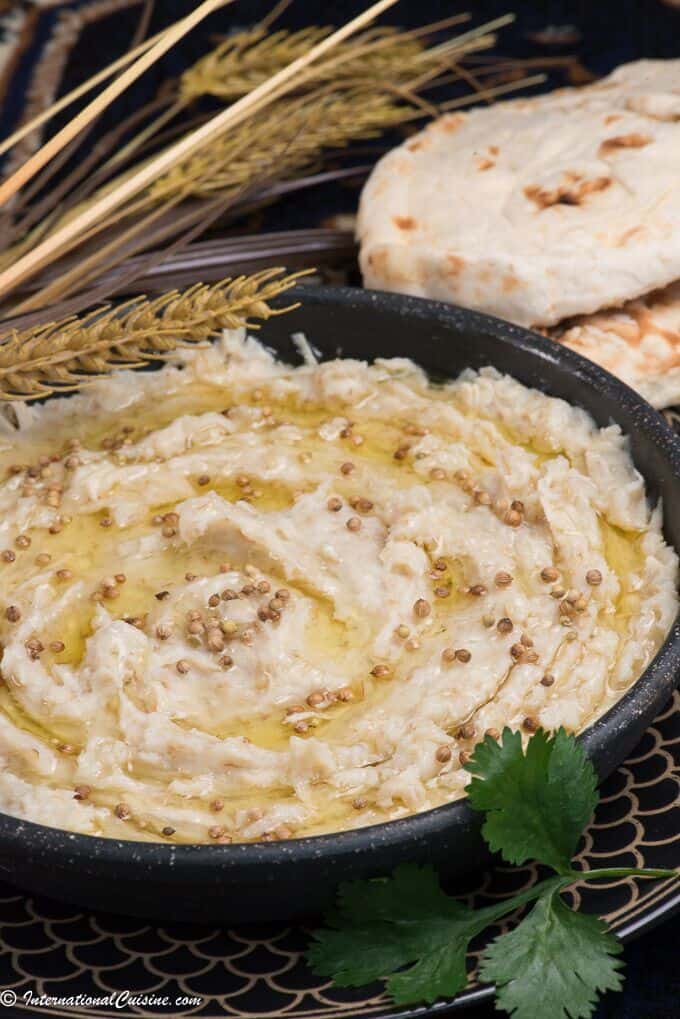
Silky porridge of crushed wheat and slow-cooked lamb, beaten smooth and finished with ghee and cinnamon.
Nutrition & Info
Allergen Warnings
Equipment Needed
Presentation Guide
Vessel: deep bowl
Garnishes: ghee drizzle, cinnamon dust, sugar sprinkle
Instructions
-
1
Drain the soaked wheat and rinse well. Place in a large pot with the meat pieces, quartered onion, salt, and six cups of water. Bring to a boil, skimming any foam, then reduce to the lowest simmer and cook covered for three hours, stirring every thirty minutes.
-
2
After three hours the wheat should be completely broken down and the meat falling off the bone. Remove the meat, shred finely, discard bones, and return the shredded meat to the pot with the dissolved wheat porridge.
-
3
Using a wooden spoon or immersion blender, beat the mixture vigorously for ten to fifteen minutes until it becomes completely smooth with no visible wheat grains or meat fibres. The consistency should be like thick, smooth porridge.
-
4
Add two tablespoons of ghee, the cinnamon, and cardamom. Continue stirring over the lowest heat for ten more minutes until the ghee is incorporated and the harees is glossy. Season with additional salt to taste.
-
5
The finished harees should flow like thick honey when poured, with a velvety smooth texture throughout. It should taste subtly sweet from the wheat with warm spice notes from the cinnamon and cardamom, enriched by the lamb and ghee.
-
6
Serve the harees in shallow bowls with a well of melted ghee in the centre and a dusting of cinnamon. This is one of Qatar's most important traditional dishes, served during Ramadan and at weddings and celebrations.
Did You Know?
Harees is mentioned in medieval Arab cookbooks dating back to the 10th century.
Chef's Notes
Equipment Tips
- large pot or pressure cooker
- immersion blender or masher
Garnishing
ghee drizzle, cinnamon dust, sugar sprinkle
The Story Behind Harees
The Story: Harees is one of Qatar's most ancient and revered dishes: whole wheat grains slow-cooked with lamb or chicken and a generous amount of ghee (clarified butter) until the wheat breaks down into a smooth, porridge-like consistency and the meat dissolves into tender shreds within the grain. The dish is stirred continuously during the final stages of cooking, developing a silky, comforting texture. Harees is mentioned in medieval Arab cookbooks dating to the Abbasid period, and the dish has been prepared across the Arabian Peninsula and broader Arab world for over a thousand years.
On the Calendar: Harees is the quintessential Ramadan dish in Qatar, prepared and consumed almost daily during the holy month as part of the iftar (fast-breaking) meal. It is also served at weddings, Eid celebrations, and during periods of mourning. Its nourishing, easily digestible nature makes it ideal for breaking the fast.
Then & Now: The basic technique has remained unchanged for centuries, though modern cooks may use pressure cookers to reduce the long cooking time. During Ramadan, harees is prepared in enormous quantities by families and distributed to neighbors, mosques, and workers, reflecting the Islamic emphasis on charity during the holy month.
Legacy: Harees is the dish that connects modern Qatar to ancient Arabia, a preparation so fundamental that it has survived unchanged through every transformation the peninsula has undergone, from pearl diving to petroleum.



Comments (0)
Log in to leave a comment.
No comments yet. Be the first to share your thoughts!