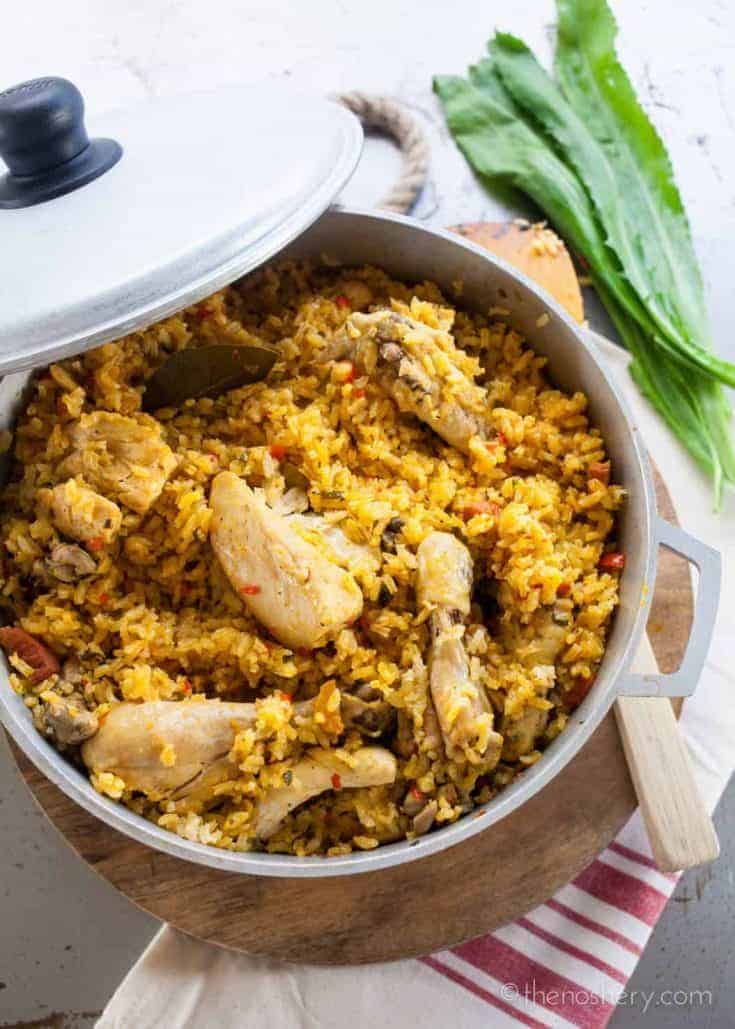
Arroz con Pollo
Arroz con Pollo (ah-ROHS kohn POH-yoh)
Puerto Rican Chicken and Rice
Seasoned chicken cooked with rice, sofrito, beer, olives, and pigeon peas in a caldero, creating tender rice with a prized crispy bottom layer.
Nutrition & Info
Equipment Needed
Presentation Guide
Vessel: caldero brought to table
Garnishes: cilantro, avocado
Accompaniments: habichuelas guisadas, maduros
Instructions
-
1
Season chicken with adobo and sazon. Sear in olive oil until golden on all sides. Remove and set aside.
-
2
In the same caldero, cook sofrito and tomato sauce for two minutes.
-
3
Add beer and chicken stock, bring to a boil. Add olives and pigeon peas.
-
4
Return chicken to pot. Add rice and stir once to distribute evenly.
-
5
Cook uncovered on medium until most liquid is absorbed. Then cover tightly and reduce heat to very low.
-
6
Cook twenty minutes without lifting the lid. The bottom will form a crispy pegao layer. Fluff and serve.
Did You Know?
The most prized part of arroz con pollo is the pegao — the crispy rice crust at the bottom of the caldero that everyone fights over.
Chef's Notes
Equipment Tips
- caldero or heavy pot with lid
- wooden spoon
Garnishing
cilantro, avocado
Accompaniments
The Story Behind Arroz con Pollo
Arroz con pollo is one of the most universally loved dishes across Latin America, but the Puerto Rican version stands apart through its use of beer in the cooking liquid and the reverence for pegao, the crispy bottom crust. This one-pot meal reflects the practical ingenuity of Caribbean cooking, producing a complete dinner from a single caldero. The technique of allowing rice to crisp at the bottom without burning is considered an essential skill for any Puerto Rican home cook.
More Puerto Rican Dishes
 Hard
📜 Story
Hard
📜 Story
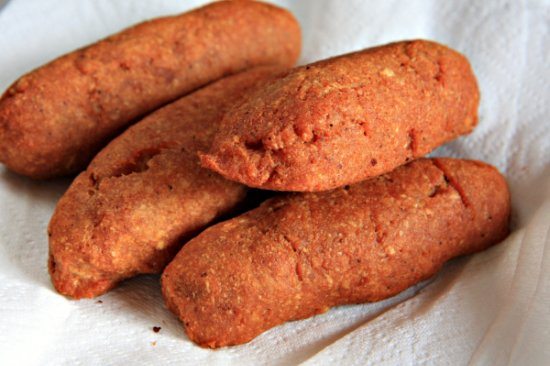
Alcapurrias
Stuffed Plantain and Yautia Fritters
Beach snack and street food Easy
📜 Story
Easy
📜 Story
Amarillos en Almibar
Plantains in Syrup
Dessert after family dinner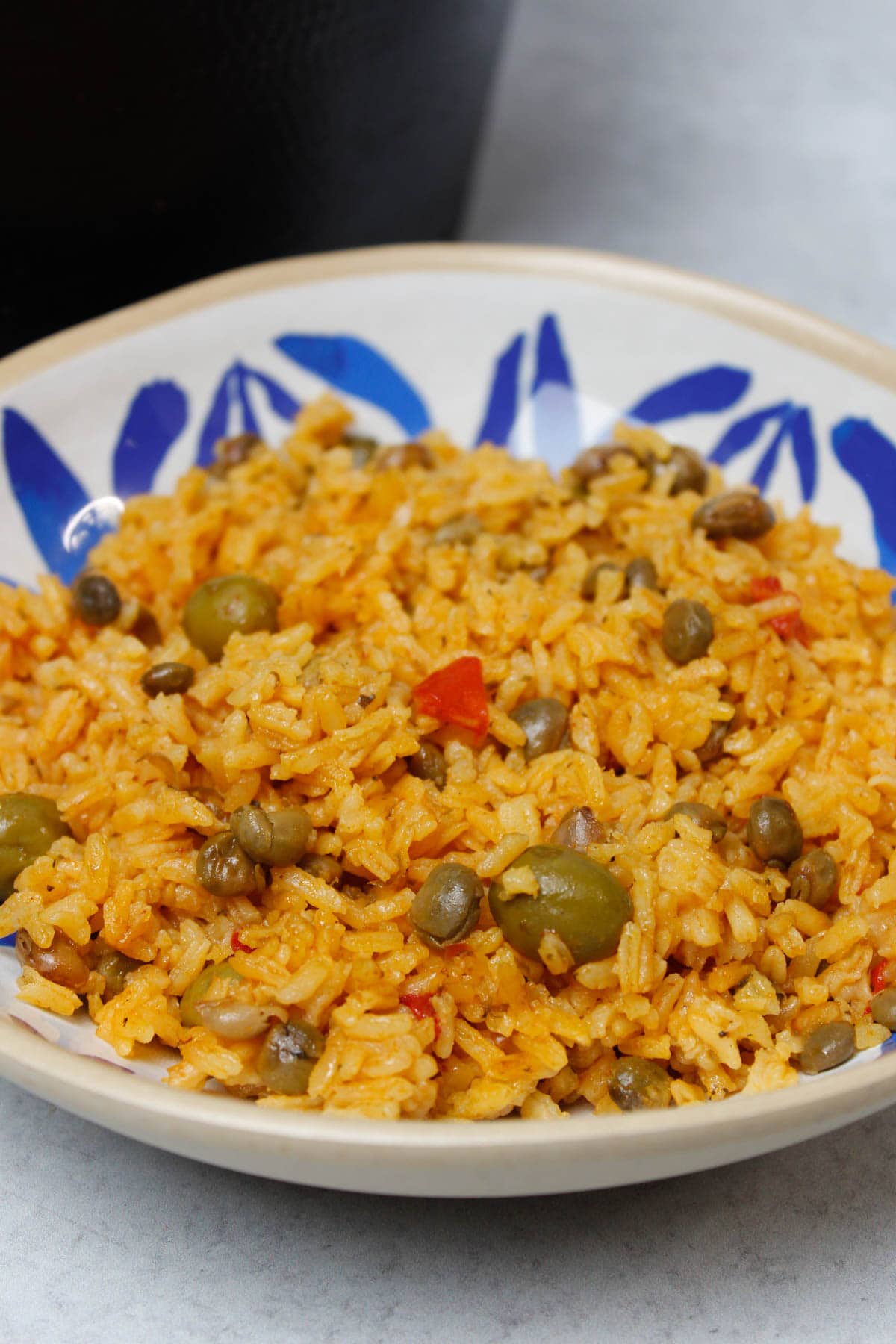 Medium
📜 Story
Medium
📜 Story
Arroz con Gandules
Rice with Pigeon Peas
Christmas Eve, celebrations, dinner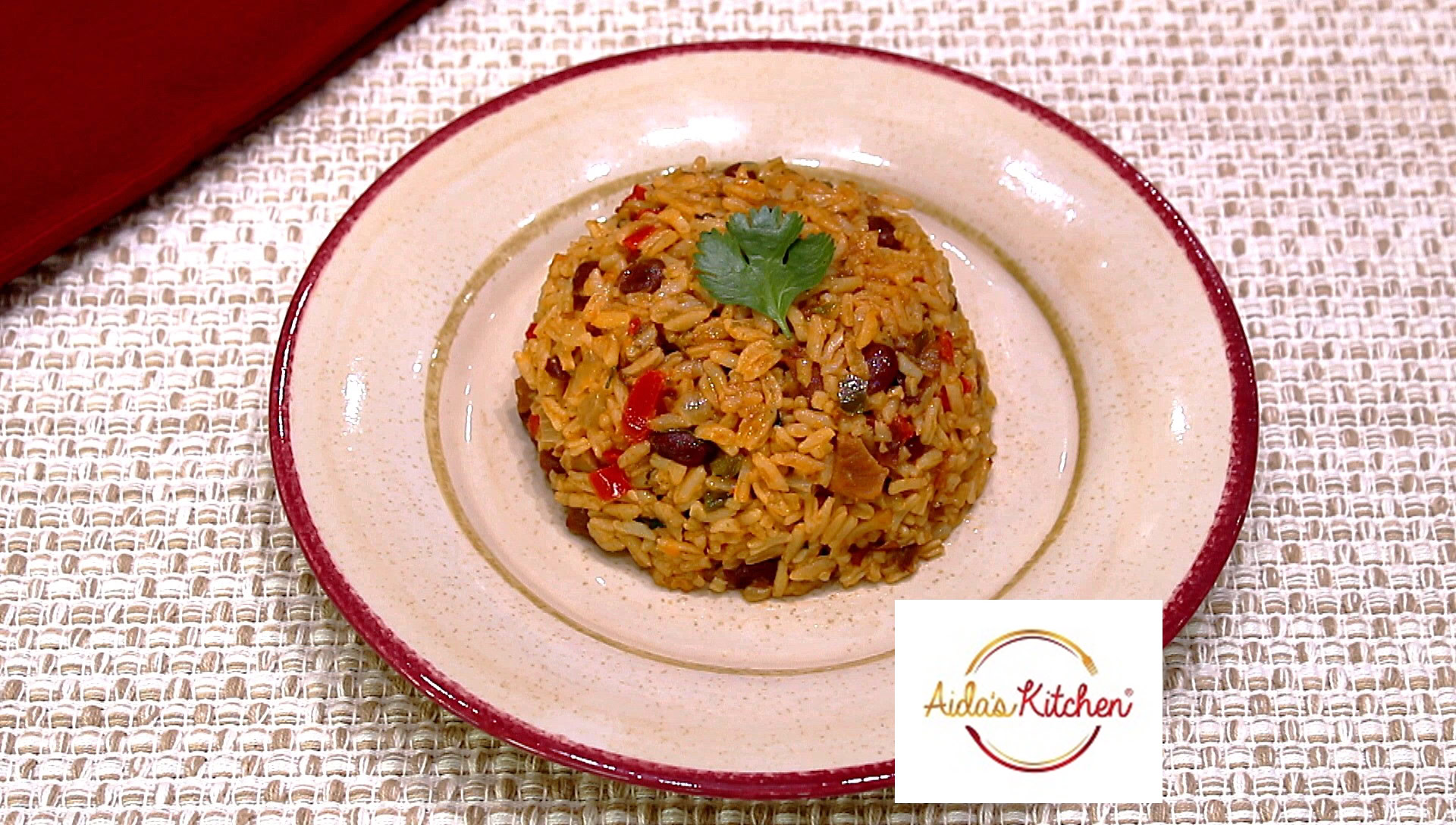 Easy
📜 Story
Easy
📜 Story
Arroz Mamposteao
Refried Rice and Beans
Breakfast or quick dinner
Comments (0)
Log in to leave a comment.
No comments yet. Be the first to share your thoughts!