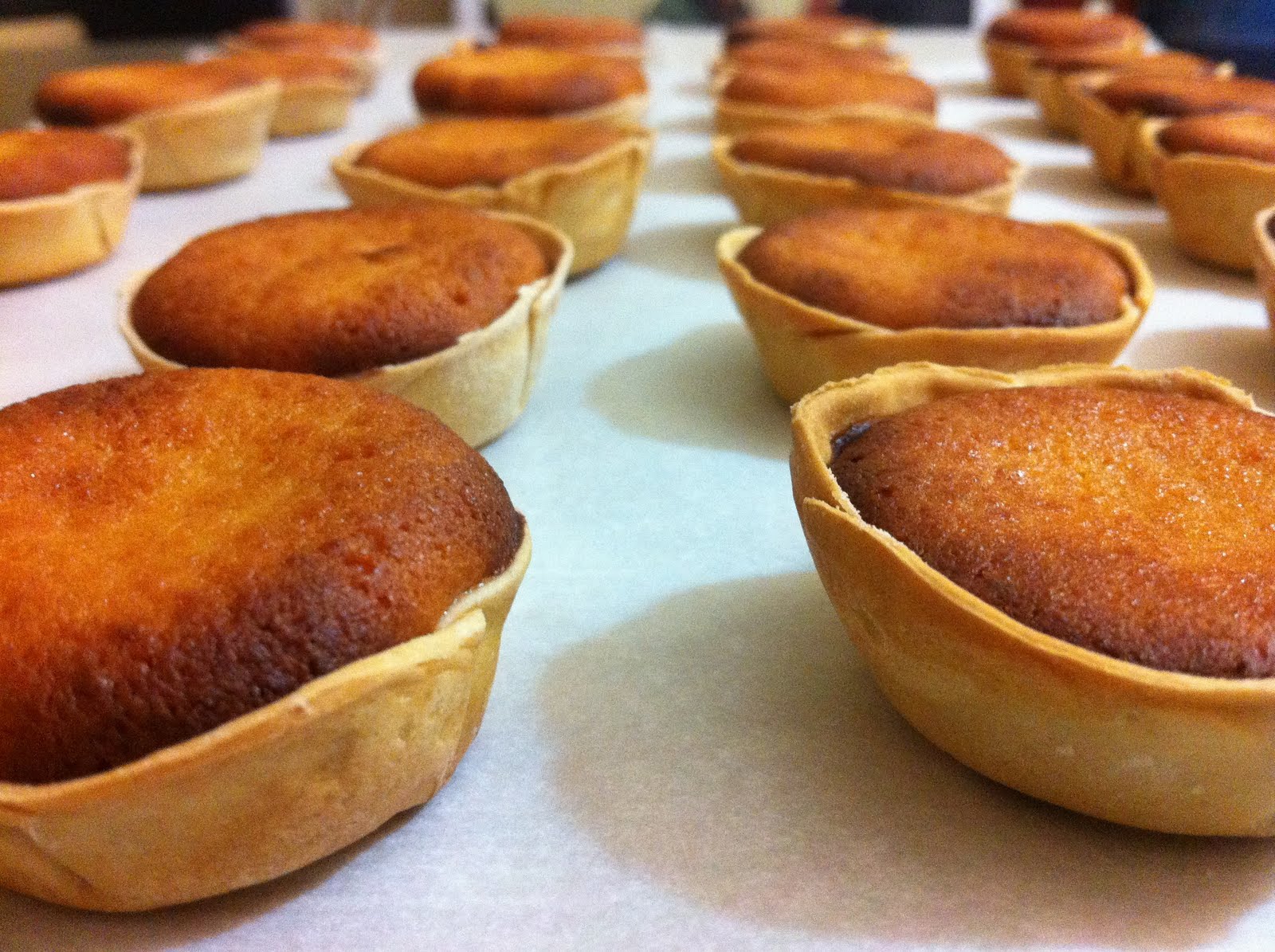
Queijadas de Sintra
Queijadas de Sintra (kay-ZHAH-dash deh SEEN-trah)
Sintra Cheese Tarts
Delicate, golden tartlets from Sintra filled with a sweet, lightly tangy fresh cheese custard seasoned with cinnamon. A confection so legendary that Sintra built its reputation on them.
Nutrition & Info
Allergen Warnings
Equipment Needed
Presentation Guide
Vessel: wire cooling rack or small plate
Garnishes: powdered sugar, cinnamon
Accompaniments: espresso, port wine
Instructions
-
1
Make pastry: rub butter into flour and salt until crumbly. Add cold water gradually until dough forms. Rest 20 minutes.
-
2
For filling, mix fresh cheese, sugar, egg yolks, flour, cinnamon, and lemon zest until smooth.
-
3
Roll pastry thin and cut circles to line a greased muffin tin, pressing into the cups.
-
4
Fill each pastry case three-quarters full with the cheese mixture.
-
5
Bake at 200°C for 20-25 minutes until the filling is puffed and golden with dark speckles on top.
-
6
Cool slightly in the tin, then transfer to a wire rack. Best served warm or at room temperature.
Did You Know?
Records show queijadas were already being made in Sintra in 1276, making them one of Europe's oldest continuously produced pastries.
Chef's Notes
Equipment Tips
- muffin tin
- mixing bowl
- rolling pin
Garnishing
powdered sugar, cinnamon
Accompaniments
espresso, port wine
The Story Behind Queijadas de Sintra
Queijadas de Sintra date back to the 13th century, when the town was a summer retreat for Portuguese royalty. The fresh cheese tarts became so famous that King Afonso III granted special privileges to queijada sellers. Today, Sintra's queijada shops still operate from centuries-old storefronts, and the pastry is protected by tradition if not by law.
More Portuguese Dishes
Açorda Alentejana
Alentejo Bread and Garlic Soup
Lunch, supperAmêijoas à Bulhão Pato
Clams in Garlic and Coriander
Appetizer, petisco (Portuguese tapas) Medium
📜 Story
Medium
📜 Story
Arroz de Marisco
Seafood Rice
Lunch, Sunday family meals Hard
📜 Story
Hard
📜 Story
Arroz de Pato
Duck Rice
Sunday lunch, celebrations
Comments (0)
Log in to leave a comment.
No comments yet. Be the first to share your thoughts!