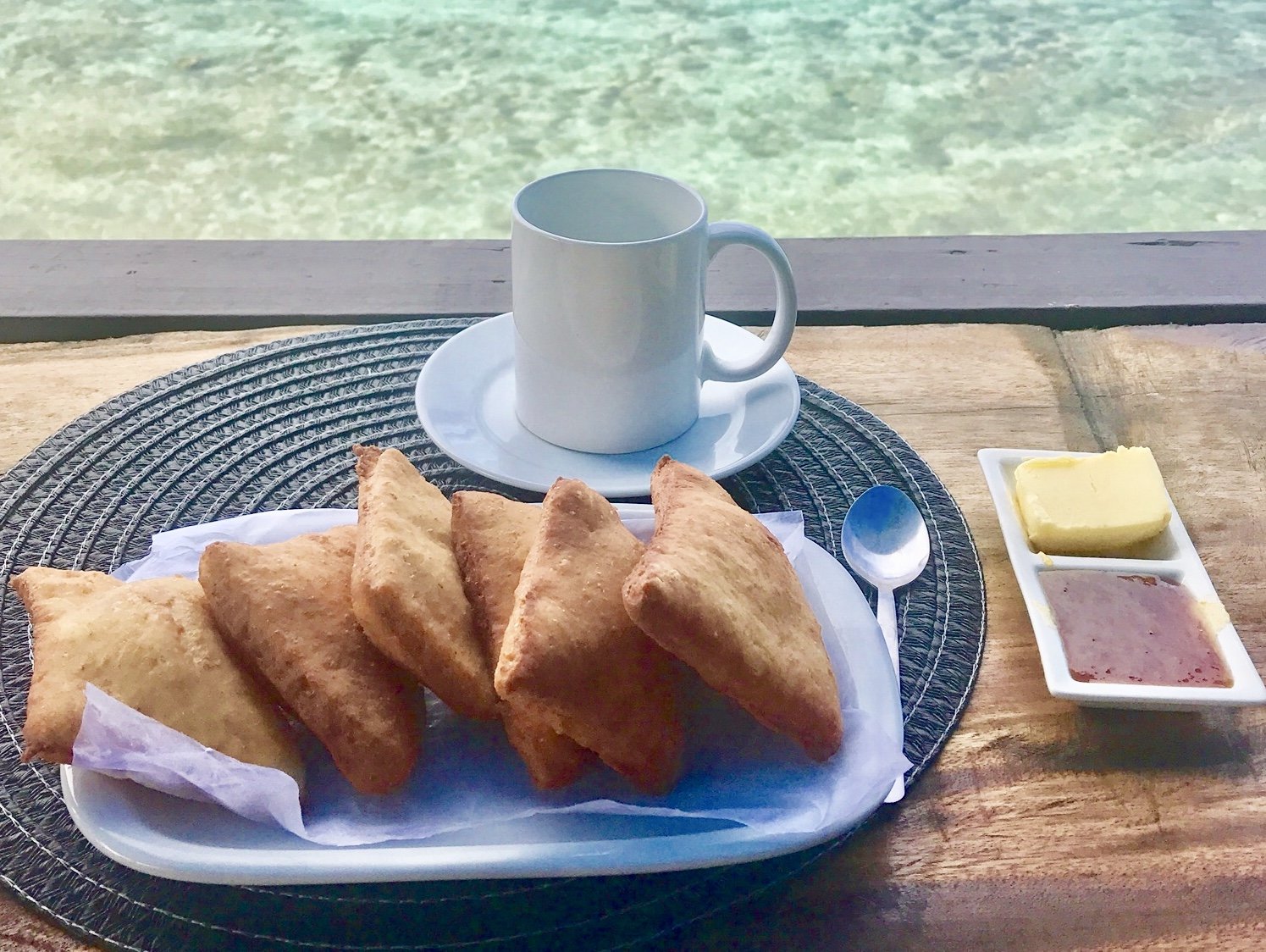
Thin, chewy flatbreads made from pure sago starch cooked on a hot stone or dry pan. These unleavened pancakes are a daily staple for Sepik River communities, eaten with fish or coconut.
Nutrition & Info
Equipment Needed
Presentation Guide
Vessel: banana leaf
Accompaniments: smoked fish, coconut cream
Instructions
-
1
Mix sago starch with water and salt to form a thick, smooth paste.
-
2
Heat a dry flat pan or griddle over medium-high heat.
-
3
Pour a thin layer of sago paste onto the hot surface, spreading quickly into a circle.
-
4
Cook 2-3 minutes until edges lift and the bottom is set and lightly browned.
-
5
Flip carefully and cook 1-2 minutes more.
-
6
Serve warm alongside smoked fish or coconut cream.
Did You Know?
A single sago palm can yield up to 300kg of starch, enough to feed a family for months. Processing a palm is a multi-day community event involving songs and rituals.
Chef's Notes
Equipment Tips
- flat pan or hot stone
- spatula
Accompaniments
The Story Behind Sago Pancakes
Sago pancakes are the most basic and ancient prepared food of PNG's lowland river communities. Where conditions are too swampy for root crop gardens, sago palms provide the primary calorie source.
The technique of cooking sago starch on heated stones predates pottery in the Sepik region. The resulting flatbread is bland on its own but serves as the perfect vehicle for smoked fish, coconut, and other flavorful accompaniments.
Despite the availability of imported rice and flour, sago pancakes remain a daily food for many rural Sepik communities.


Comments (0)
Log in to leave a comment.
No comments yet. Be the first to share your thoughts!