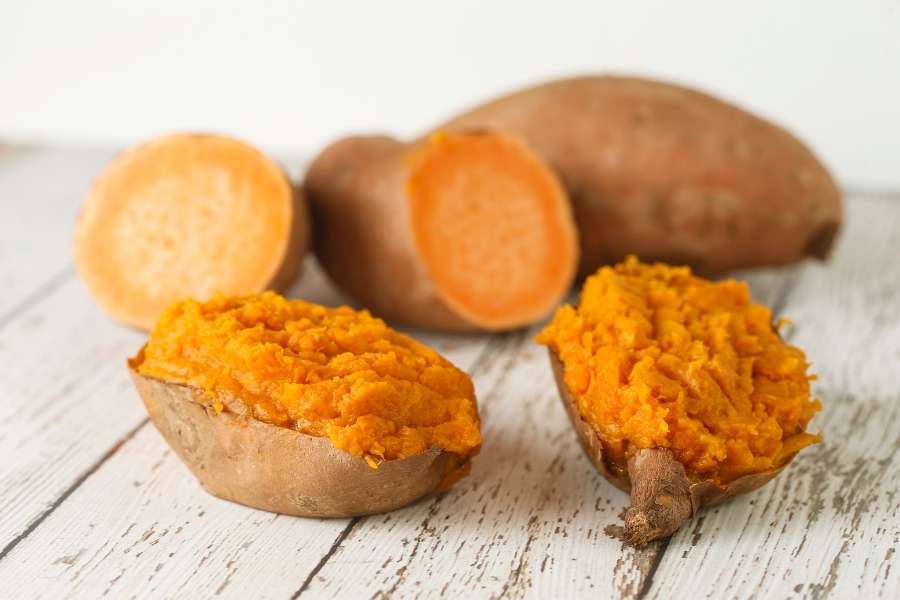
Sweet potatoes roasted over open coals until caramelized and smoky. The daily staple of Highland PNG.
Nutrition & Info
Equipment Needed
Presentation Guide
Instructions
-
1
Select firm, unblemished sweet potatoes of similar size for even roasting. Scrub them thoroughly under running water to remove all dirt. Pierce each sweet potato several times with a fork to allow steam to escape during roasting and prevent them from bursting.
-
2
If roasting traditionally over coals, place the whole sweet potatoes directly onto hot embers and cover with additional coals. For oven roasting, place on a foil-lined baking sheet and roast at 200C. Both methods take forty-five to sixty minutes.
-
3
The kaukau are done when the skin is wrinkled and slightly charred and a knife slides into the thickest part with absolutely no resistance. The interior should be completely soft, sweet, and creamy throughout with no firm spots remaining.
-
4
Remove from the heat and let cool for five minutes until handleable. Split each sweet potato open with a knife and squeeze the sides to push the fluffy flesh upward. The caramelized, sweet interior should be vibrant orange and steaming.
-
5
Add a generous knob of coconut oil or butter to each split sweet potato and sprinkle with salt. The fat melts into the hot flesh, creating a rich, creamy texture. Drizzle with coconut cream if desired for extra richness and tropical flavour.
-
6
Serve the roasted kaukau as a staple starch alongside grilled fish, stewed greens, or as a standalone snack. Sweet potato is the most important food crop in Papua New Guinea and is central to the diet and cultural life of highland communities.
Did You Know?
Sweet potatoes arrived in PNG around 300 years ago and quickly became the Highland staple, replacing taro.
Chef's Notes
The Story Behind Kaukau
The Story: Kaukau (sweet potato) is the foundation of the Papua New Guinean highland diet, cultivated in elaborate garden systems at altitudes up to 2,700 meters. The sweet potato arrived in New Guinea from South America, likely via Polynesian or Southeast Asian trade networks, approximately three to four hundred years ago, and its adoption triggered a population explosion in the highlands by providing a reliable, high-calorie crop that thrived at elevations where taro struggled. Kaukau is typically roasted in ashes, boiled, or steam-cooked in the mumu earth oven. Varieties number in the hundreds, with different cultivars prized for flavor, texture, and growing characteristics.
On the Calendar: Kaukau is daily food, eaten at every meal in the highlands. It is also the primary starch at ceremonial mumu feasts, where the sweet potatoes are layered with other foods over hot stones.
Then & Now: Kaukau remains the absolute staple of highland PNG, with most families growing their own supply in household gardens. Climate change threatens traditional growing patterns, and agricultural researchers work to develop climate-resilient varieties. Despite urbanization, kaukau retains its cultural centrality.
Legacy: Kaukau transformed highland PNG, enabling the dense populations and elaborate ceremonial cultures that define the region, making a South American tuber the cornerstone of one of the world's oldest continuously inhabited landscapes.


Comments (0)
Log in to leave a comment.
No comments yet. Be the first to share your thoughts!