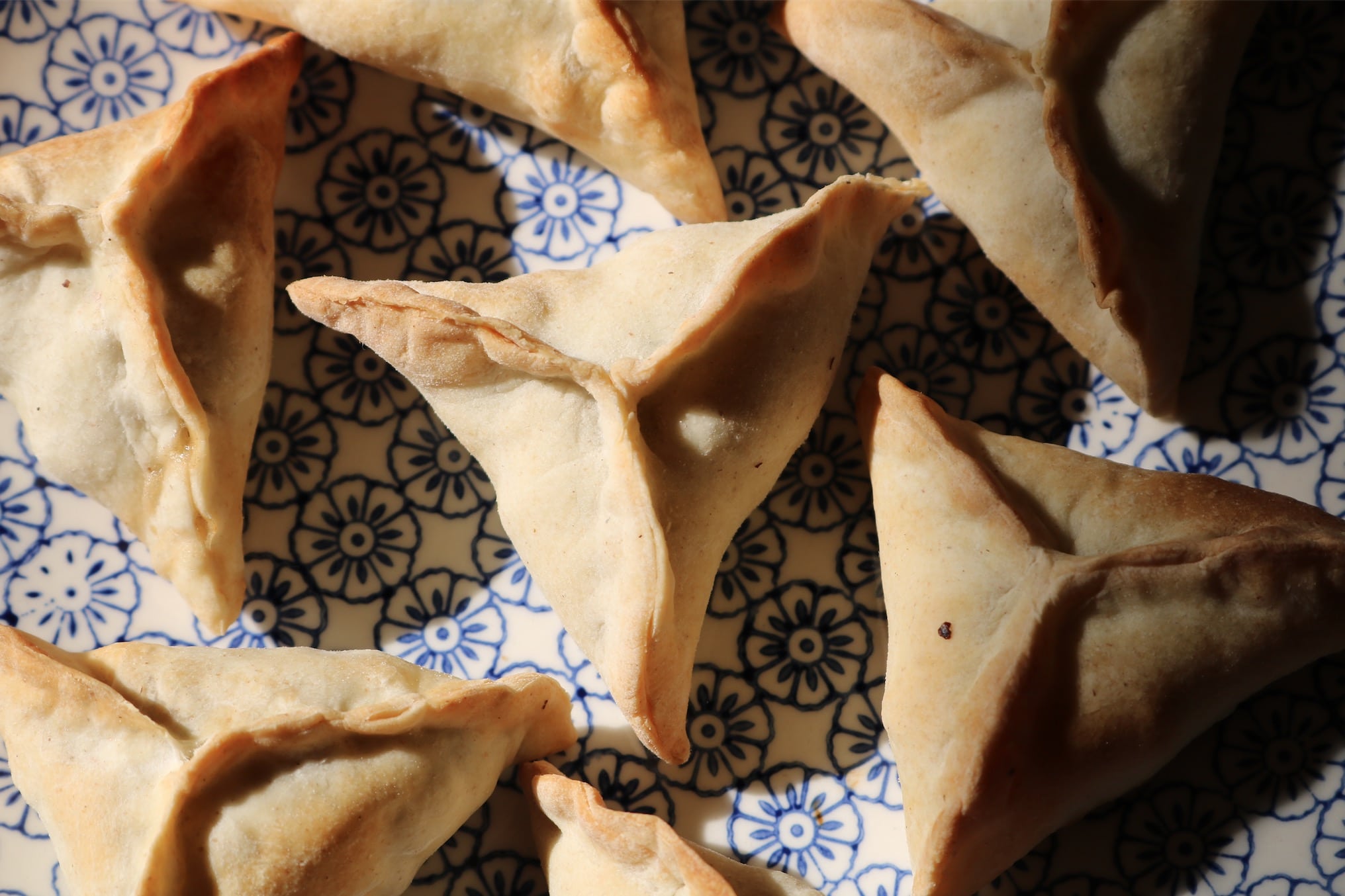
Layers of paper-thin phyllo dough filled with sweet white cheese, baked until golden and crisp, then soaked in fragrant sugar syrup. Each bite delivers a contrast of shattering pastry and molten, stretchy cheese.
Nutrition & Info
Allergen Warnings
Equipment Needed
Instructions
-
1
Desalt the cheese by soaking in water for several hours, changing water twice. Shred or crumble the softened cheese.
-
2
Make syrup by boiling sugar and water with lemon juice for 10 minutes. Stir in orange blossom water and cool completely.
-
3
Mix melted butter and oil. Brush a large baking pan generously. Layer half the phyllo sheets, brushing each with the butter-oil mixture.
-
4
Spread the shredded cheese evenly over the phyllo layers in an even, compact layer.
-
5
Top with remaining phyllo sheets, brushing each layer with butter-oil. Brush the top generously and score into diamond shapes.
-
6
Bake at 180C for 30-35 minutes until the top is deeply golden and crisp. Pour cold syrup over hot pastry. Garnish with crushed pistachios.
Did You Know?
The best mutabbaq achieves the impossible — pastry that stays crisp for hours even after being drenched in syrup, thanks to proper butter layering.
Chef's Notes
Equipment Tips
- large baking pan
- pastry brush
- saucepan
The Story Behind Mutabbaq
Mutabbaq belongs to the family of syrup-soaked cheese pastries that are central to Palestinian sweet-making traditions. The name means "folded" or "layered" in Arabic, describing the technique of building up thin pastry sheets around a cheese filling. In Palestinian cities like Nablus and Jerusalem, sweet shops have specialized in mutabbaq for generations, each guarding their layering technique and syrup recipe. The dish is particularly associated with Ramadan and Eid celebrations, when trays of golden mutabbaq are exchanged between neighbors as gestures of goodwill.
More Palestinian Dishes
 Medium
📜 Story
Medium
📜 Story
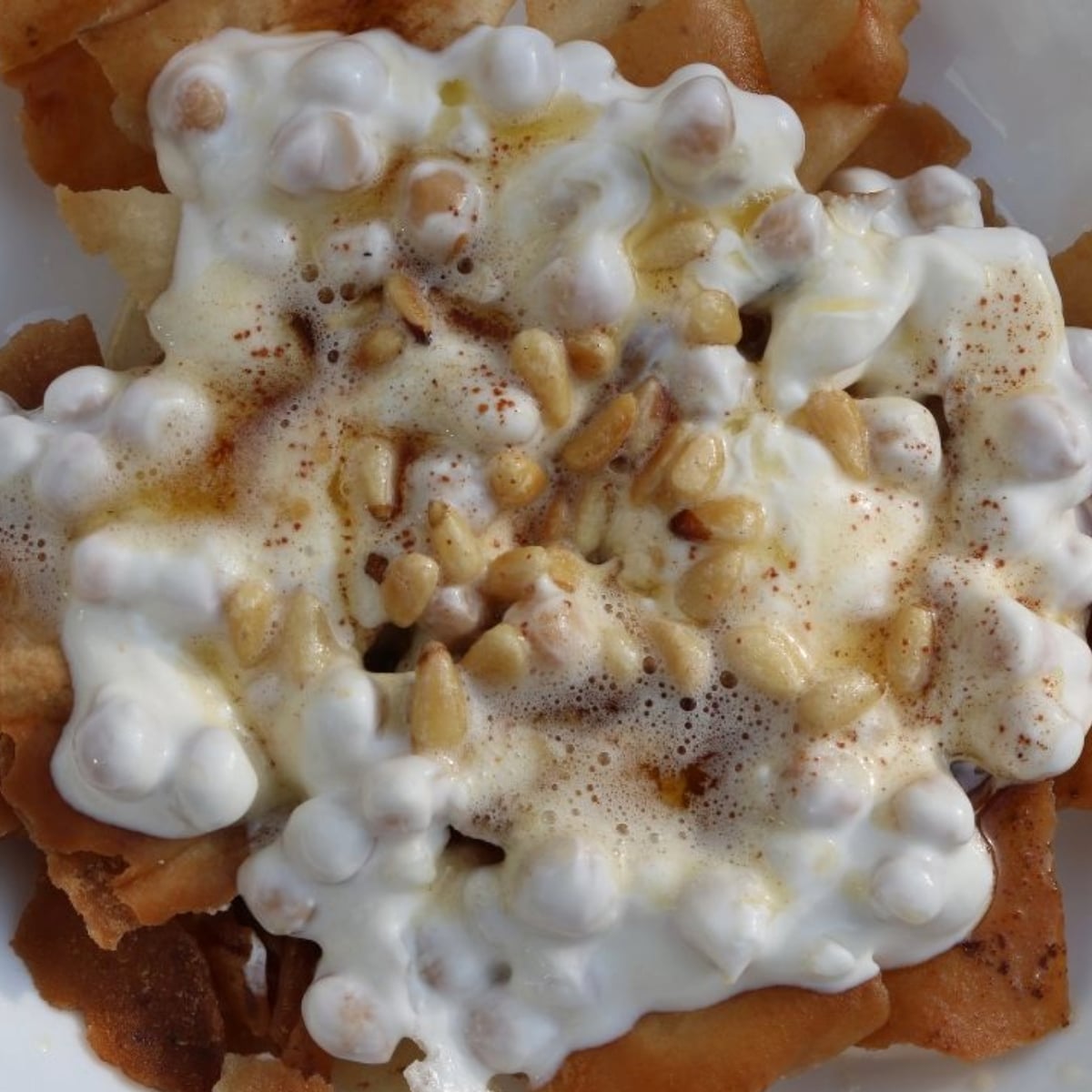
Fattet Hummus
Layered Chickpea and Bread Bowl
Festive breakfast, Eid morning Easy
📜 Story
Easy
📜 Story
Ful Mudammas
Slow-Cooked Fava Beans
Breakfast, daily stapleHummus
Chickpea and Tahini Dip
Breakfast, meze, any meal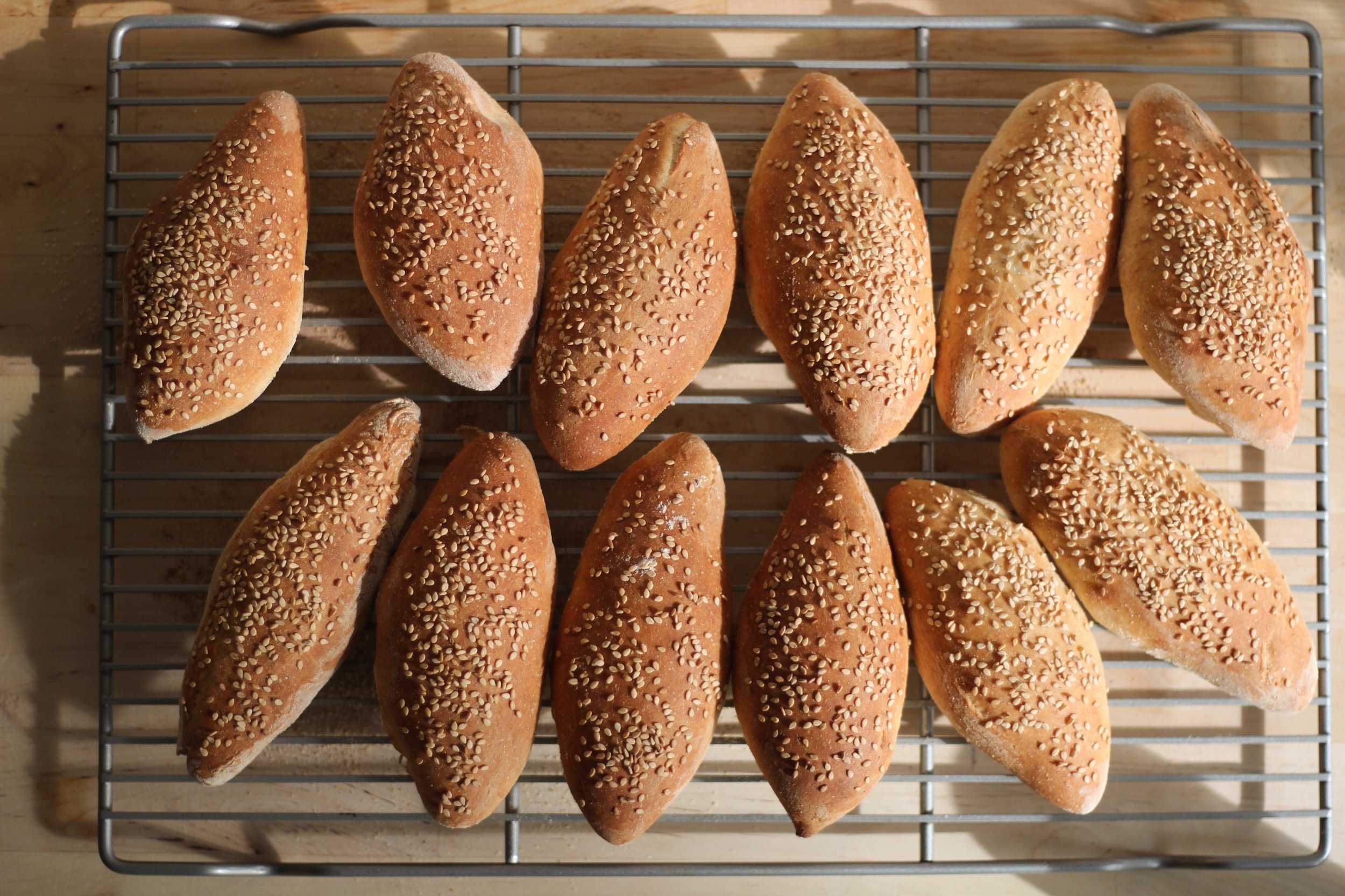 Medium
📜 Story
Medium
📜 Story
Ka'ak al-Quds
Jerusalem Sesame Bread
Breakfast, street snack
Comments (0)
Log in to leave a comment.
No comments yet. Be the first to share your thoughts!