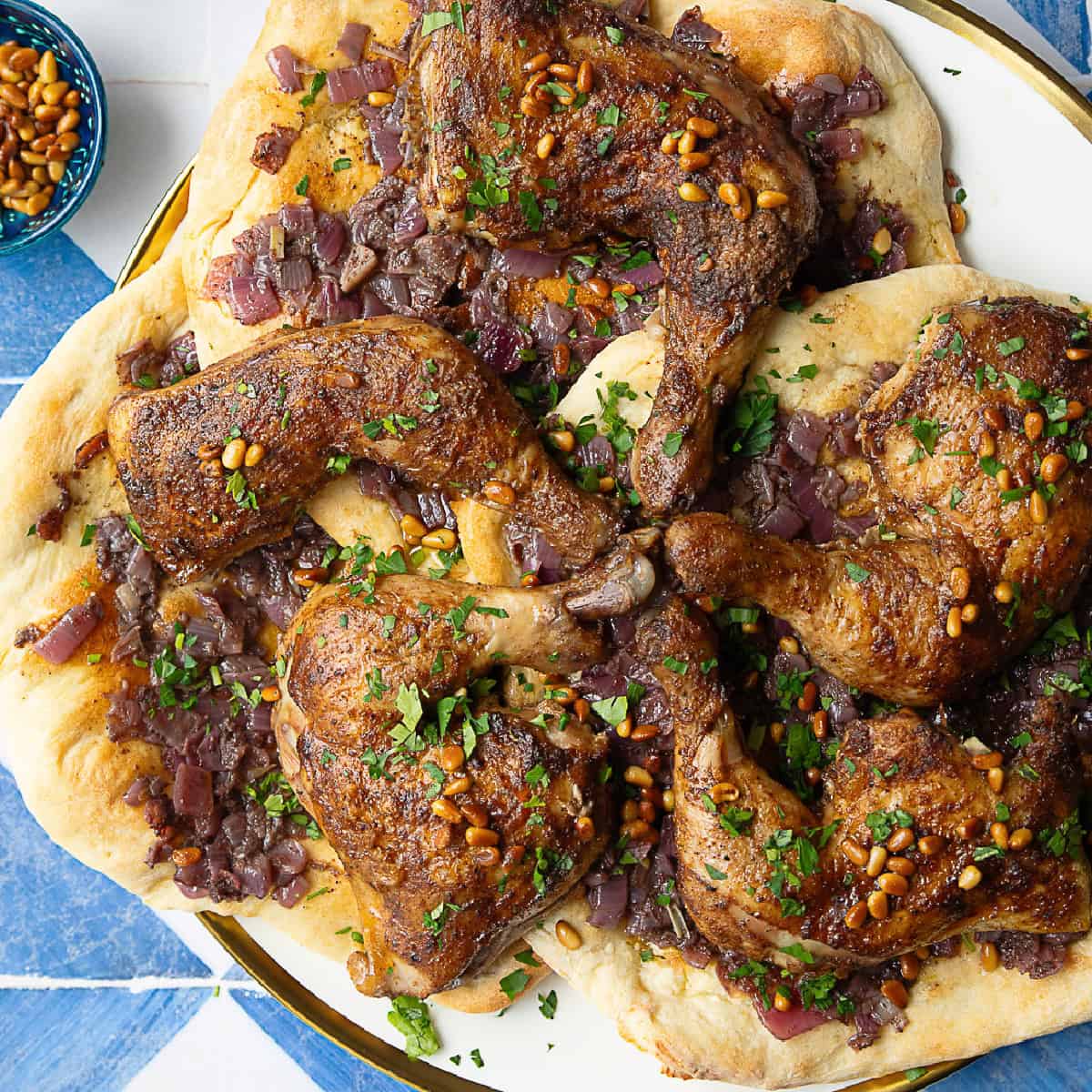
Sumac-rubbed chicken roasted atop caramelized onions and olive oil-soaked taboon bread, topped with toasted pine nuts. A love letter to the olive groves of the homeland.
Nutrition & Info
Allergen Warnings
Equipment Needed
Presentation Guide
Vessel: large round platter over taboon bread
Garnishes: toasted pine nuts, sumac, fresh parsley
Accompaniments: yogurt, pickles
Instructions
-
1
Season the chicken pieces with salt, pepper, allspice, cinnamon, and two tablespoons of the sumac. Rub the spices into the chicken thoroughly. Let marinate for at least one hour in the refrigerator to allow the tangy sumac and warm spices to penetrate the meat.
-
2
Heat a quarter cup of olive oil in a large, deep skillet over medium heat. Add the sliced onions and cook slowly for twenty-five to thirty minutes, stirring occasionally, until the onions are deeply caramelized, jammy, and dark golden. This long, slow cooking is essential.
-
3
Add the remaining sumac to the caramelized onions and stir for two minutes. The sumac turns the onions a deep purple-red and adds its signature lemony, tangy flavour. Remove about half the sumac onions and set aside for topping. Leave the rest in the pan.
-
4
Nestle the seasoned chicken pieces into the onion bed in the pan. Cover and cook over medium-low heat for thirty-five to forty minutes, turning once, until the chicken is fully cooked through and very tender, having absorbed the onion and sumac flavours.
-
5
Toast the pine nuts in a dry small pan over medium heat, shaking frequently, for three minutes until golden brown. Watch them carefully as they burn very quickly. Set aside for the final garnish.
-
6
Place the flatbreads on a large baking tray and spread with the reserved sumac onions. Arrange the cooked chicken pieces on top and drizzle with any remaining pan juices. Bake at 200C for ten minutes to warm the bread and lightly crisp the edges.
-
7
Scatter the toasted pine nuts over the chicken and serve the musakhan on the flatbread, which absorbs all the sumac-onion juices. Traditionally eaten with hands by tearing off pieces of bread wrapped around chicken and onions, this is Palestine's national dish.
Did You Know?
Musakhan is Palestine's national dish, traditionally made during olive harvest season.
Chef's Notes
Equipment Tips
- large baking tray
- oven
- skillet
Garnishing
toasted pine nuts, sumac, fresh parsley
Accompaniments
yogurt, pickles
The Story Behind مسخن
### The Story
Musakhan is considered the national dish of Palestine, a celebration of the olive harvest that dates back centuries in the rural West Bank and Galilee. The dish consists of roasted chicken placed atop taboon bread that has been saturated with caramelized onions cooked slowly in copious amounts of freshly pressed olive oil, then seasoned heavily with sumac and allspice. Its origins lie in the fellahin (peasant farming) communities who prepared musakhan during the olive pressing season in late autumn, when new-season olive oil was abundant. The dish was a way to showcase the quality of that year's harvest -- the better the oil, the better the musakhan.
### On the Calendar
Musakhan is traditionally associated with the olive harvest season (October through December) and is prepared for large family gatherings, village celebrations, and important communal events. It is also served at weddings and funerals as a dish of honor.
### Then & Now
The traditional preparation requires taboon bread baked in a domed clay oven, though modern cooks sometimes substitute flatbread or even rice. The onions must be cooked until deeply caramelized, which can take over an hour, and the sumac quantity is deliberately generous -- its tartness cuts through the richness of the oil. In diaspora communities, musakhan has become a powerful symbol of Palestinian heritage, prepared at cultural events and family reunions.
### Legacy
Musakhan embodies the soul of Palestinian agriculture -- olive oil, bread, onions, and sumac combined into a dish that is simultaneously humble and magnificent, tying Palestinian identity to the land and its harvests.
More Palestinian Dishes
 Medium
📜 Story
Medium
📜 Story
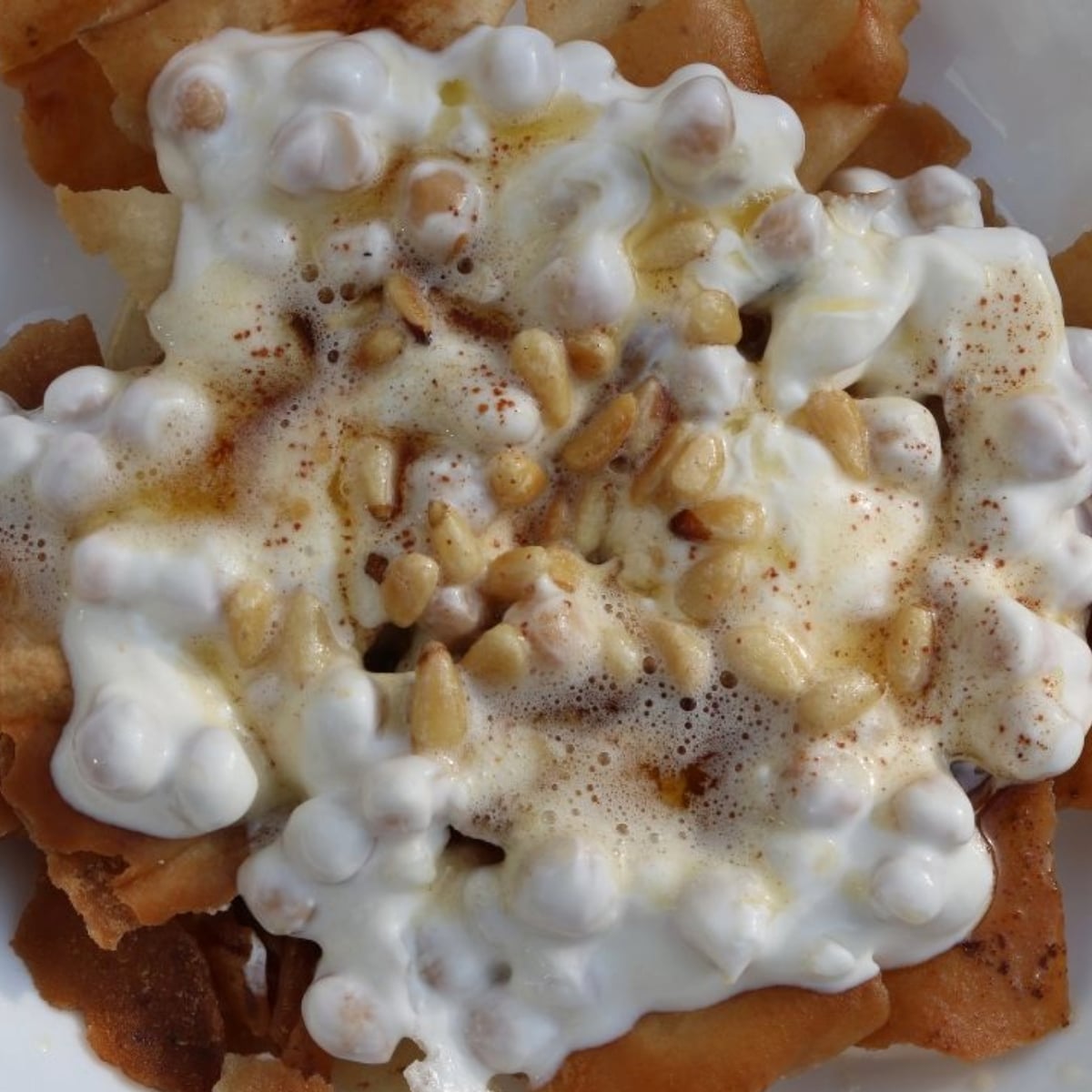
Fattet Hummus
Layered Chickpea and Bread Bowl
Festive breakfast, Eid morning Easy
📜 Story
Easy
📜 Story
Ful Mudammas
Slow-Cooked Fava Beans
Breakfast, daily stapleHummus
Chickpea and Tahini Dip
Breakfast, meze, any meal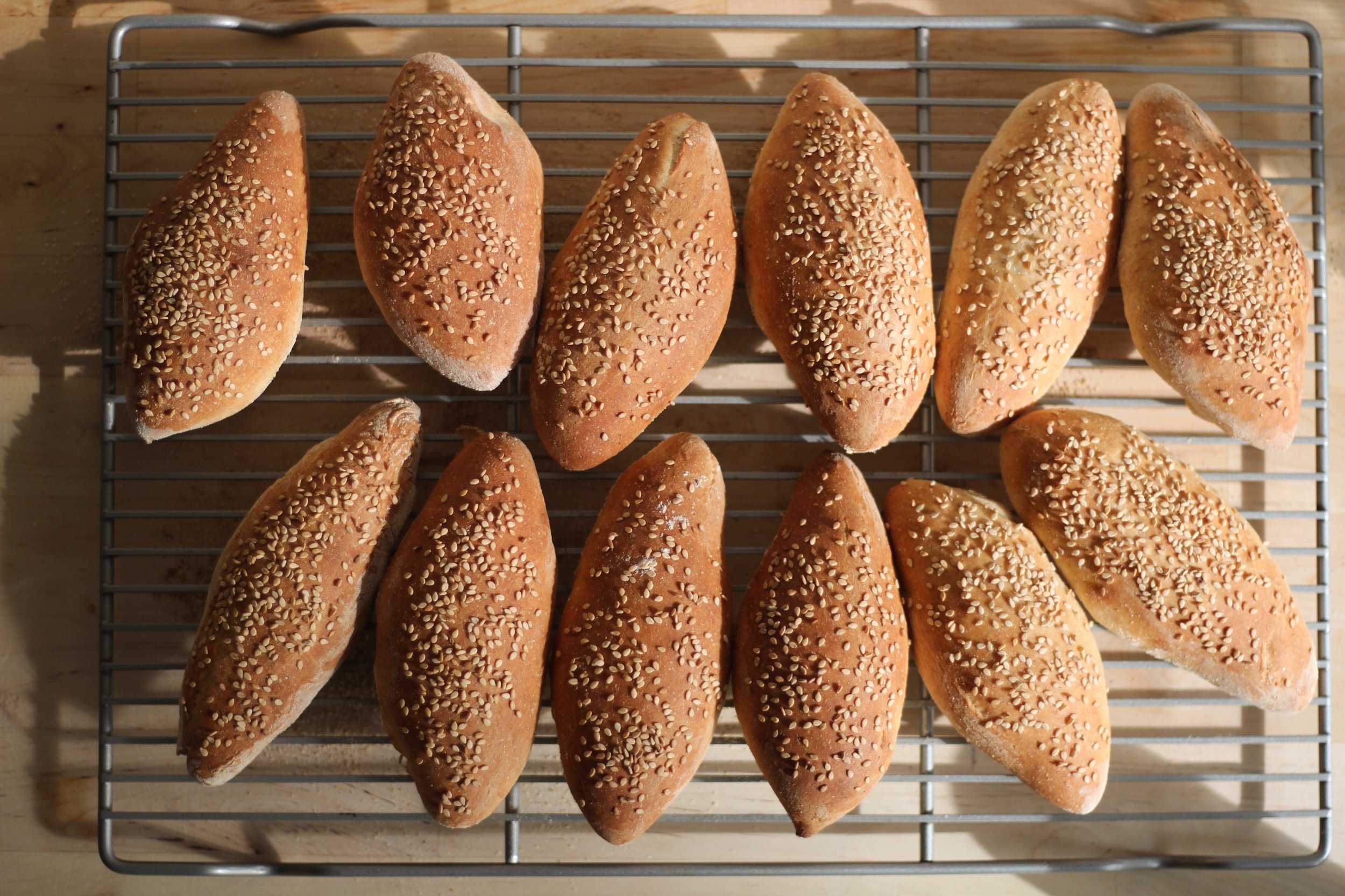 Medium
📜 Story
Medium
📜 Story
Ka'ak al-Quds
Jerusalem Sesame Bread
Breakfast, street snack
Comments (0)
Log in to leave a comment.
No comments yet. Be the first to share your thoughts!