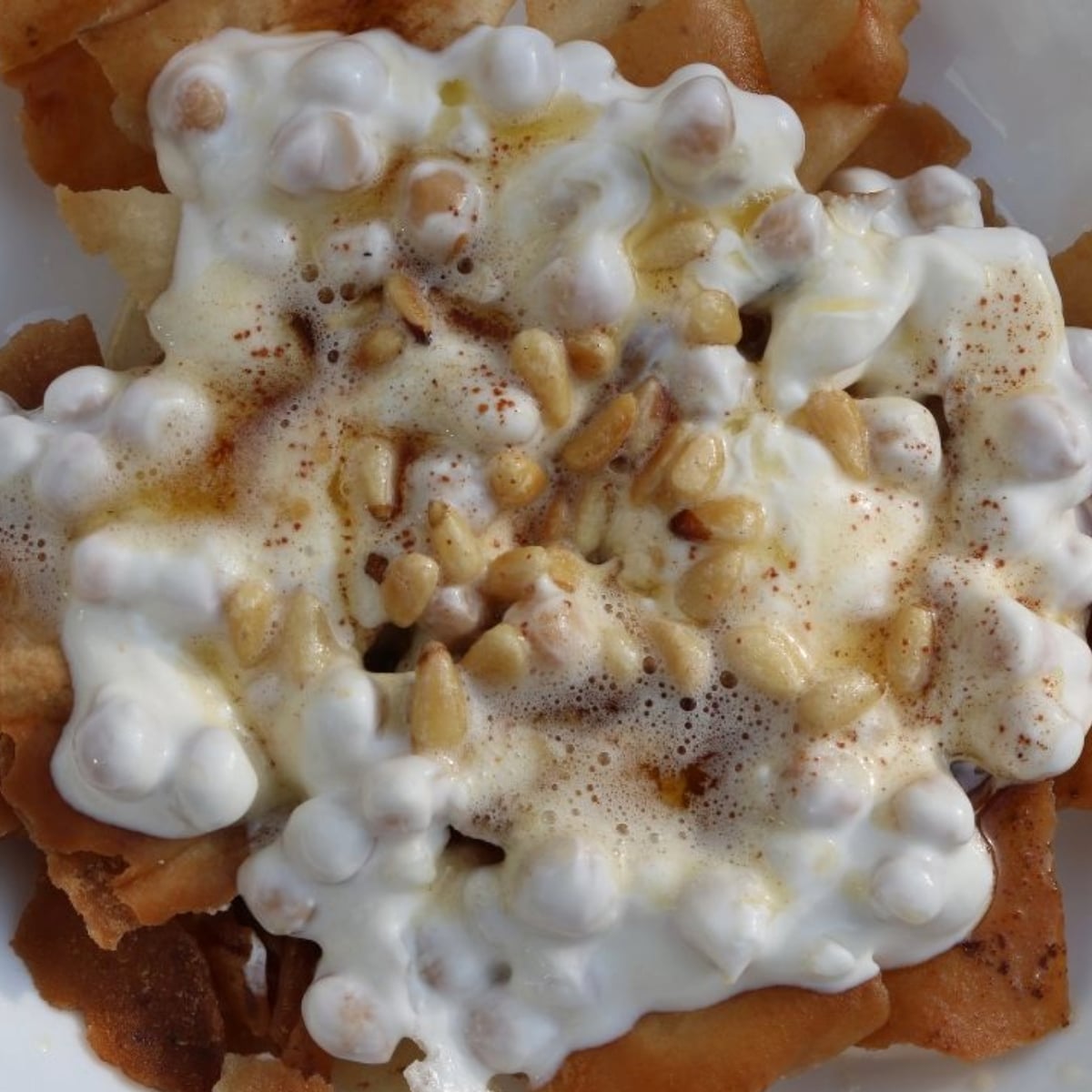
Fattet Hummus
فتة حمص (FAT-tet HUM-mus)
Layered Chickpea and Bread Bowl
Warm chickpeas layered over crispy toasted bread, drenched in garlicky yogurt and tahini sauce, then topped with sizzling spiced butter and toasted nuts. A textural symphony of crunch, creaminess, and warmth.
Nutrition & Info
Allergen Warnings
Equipment Needed
Instructions
-
1
Toast or fry torn pita pieces until deeply golden and very crispy. Spread in an even layer in a large serving bowl.
-
2
Warm chickpeas in their liquid with a pinch of cumin and salt. Spoon the hot chickpeas over the toasted bread.
-
3
Whisk yogurt with tahini, crushed garlic, lemon juice, and salt until smooth and pourable. Pour evenly over the chickpea layer.
-
4
Melt butter in a small skillet. Toast pine nuts until golden, watching carefully as they burn quickly.
-
5
Pour the sizzling pine nut butter over the yogurt layer. Sprinkle with cumin and paprika.
-
6
Garnish with fresh parsley and serve immediately while the bread is still crispy beneath the layers.
Did You Know?
The key to great fatteh is speed — it must be assembled and served within minutes so the bread stays crispy under the warm, creamy layers.
Chef's Notes
Equipment Tips
- baking sheet
- saucepan
- serving bowl
- small skillet
The Story Behind Fattet Hummus
Fatteh is one of the oldest documented dishes in Arab culinary history, with references in medieval cookbooks dating to the 10th century. In Palestine, fattet hummus holds a special place as a celebratory breakfast dish, particularly on Eid mornings when families gather for a festive meal after dawn prayers. The dish exemplifies the Palestinian genius for transforming simple pantry ingredients — stale bread, chickpeas, yogurt — into something luxurious and deeply satisfying through clever layering and contrasting textures.

Comments (0)
Log in to leave a comment.
No comments yet. Be the first to share your thoughts!