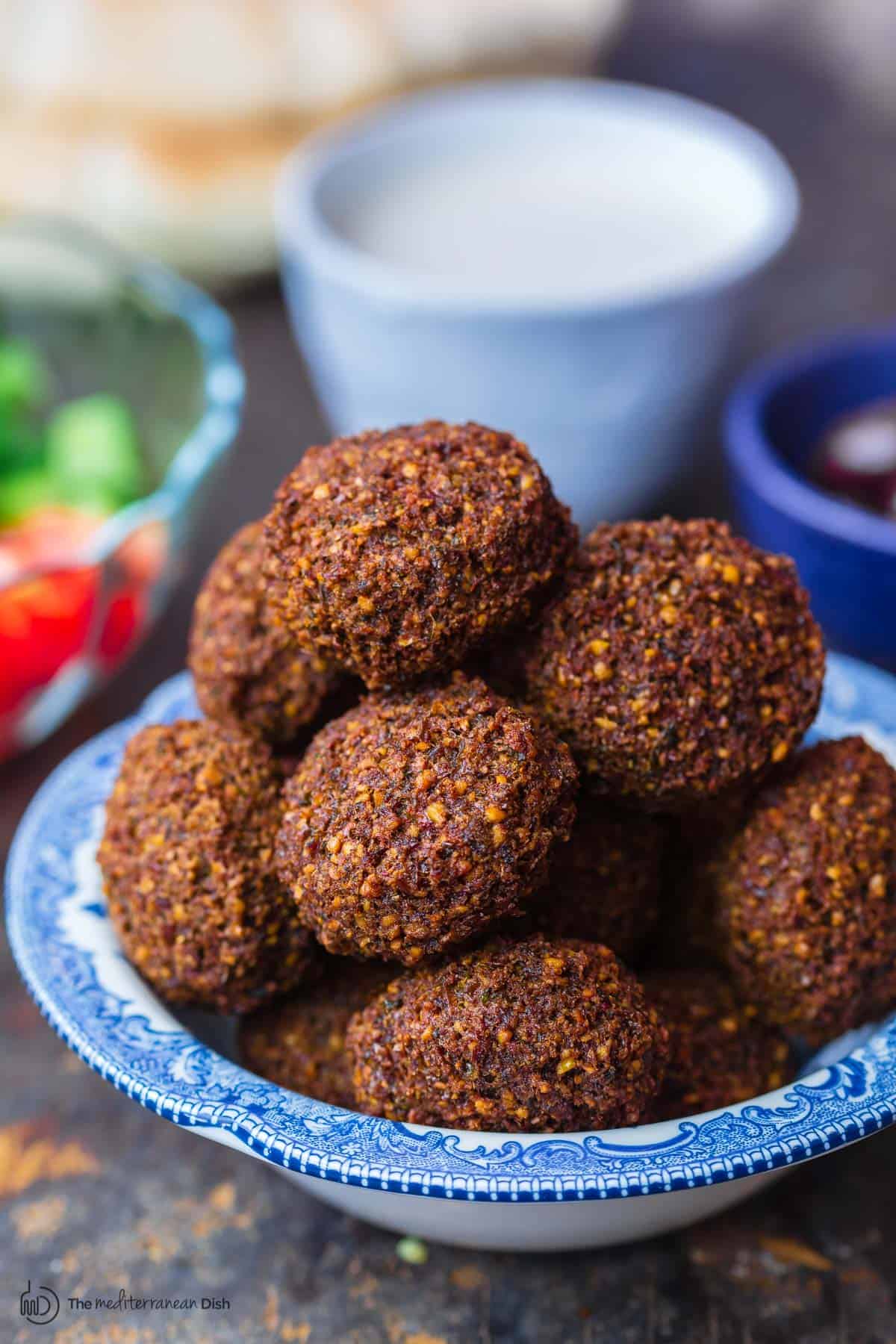
Crispy, herb-flecked chickpea fritters with vibrant green interior, fried to golden perfection. Tucked in pita with tahini, pickles, and vegetables — street food perfection.
Nutrition & Info
Allergen Warnings
Equipment Needed
Presentation Guide
Vessel: pita bread pocket or plate
Garnishes: fresh parsley, pickled turnips
Accompaniments: tahini sauce, hummus, chopped salad
Instructions
-
1
Drain the soaked chickpeas and spread them on a kitchen towel to dry thoroughly. Excess moisture is the enemy of good falafel; wet chickpeas produce a mixture that falls apart in the oil. Pat them as dry as possible before processing.
-
2
Process the chickpeas, onion, garlic, parsley, and cilantro in a food processor, pulsing in short bursts until finely ground but not pureed. The texture should resemble coarse wet sand with visible tiny pieces. Scrape down the sides between pulses for even processing.
-
3
Transfer to a bowl and add cumin, coriander, cayenne, baking powder, sesame seeds, flour, salt, and pepper. Mix thoroughly and let rest in the refrigerator for one hour. This rest firms the mixture and develops the flavours for better-tasting, sturdier falafel.
-
4
Using a falafel mold, ice cream scoop, or your hands, form the mixture into balls about four centimetres in diameter or flatten into thick discs. Palestinian falafel are typically slightly flattened rather than perfectly round. Place on a parchment-lined tray.
-
5
Heat vegetable oil to 175C in a deep pot. Carefully lower four to five falafel at a time into the oil and fry for four to five minutes without touching them until deep brown and crispy. Turn only once if needed. A dark exterior means a vivid green interior.
-
6
Drain on a wire rack and serve immediately in warm pita bread with tahini sauce drizzled generously, pickled turnips, pickled cucumbers, sliced tomatoes, and fresh herbs. Palestinian falafel are a point of pride and are served at every meal and celebration.
Did You Know?
Palestinian falafel uses only chickpeas (unlike Egyptian fava bean versions) — raw, never canned, for a green interior.
Chef's Notes
Equipment Tips
- food processor
- deep fryer or pot
- falafel mold
Garnishing
fresh parsley, pickled turnips
Accompaniments
tahini sauce, hummus, chopped salad
The Story Behind فلافل
### The Story
Palestinian falafel traces its roots to the ancient Levantine tradition of forming ground legumes into fried patties, a practice with origins likely predating the Common Era. Unlike Egyptian ta'amiya, which uses fava beans, Palestinian falafel is built on dried chickpeas soaked overnight and ground raw with fresh herbs -- parsley, cilantro, and generous quantities of onion and garlic. The coastal cities of Jaffa and Akka were renowned falafel centers during the Ottoman period, where street vendors served the crispy fritters wrapped in taboon bread with pickled turnips, tahini, and fresh tomatoes. Each city developed subtle variations: Gaza's falafel tends spicier with chili flakes, while Nablus versions incorporate more herbs.
### On the Calendar
Falafel is eaten year-round and at any time of day, though it is most commonly a breakfast or lunch food. It holds particular importance during Ramadan as a protein-rich iftar dish and is a staple at communal gatherings and street celebrations.
### Then & Now
Once the food of farmers and laborers seeking an affordable, filling meal, falafel has become an emblem of Palestinian culinary identity. Traditional preparation demands hand-grinding the chickpeas rather than using a blender, producing a coarser, more textured interior. Modern Palestinian falafel shops still follow this method, and the dish remains a daily fixture from refugee camp kitchens to diaspora restaurants worldwide.
### Legacy
Palestinian falafel is more than street food -- it is a symbol of cultural continuity, an edible assertion of identity that connects displaced communities to their homeland's flavors.
More Palestinian Dishes
 Medium
📜 Story
Medium
📜 Story
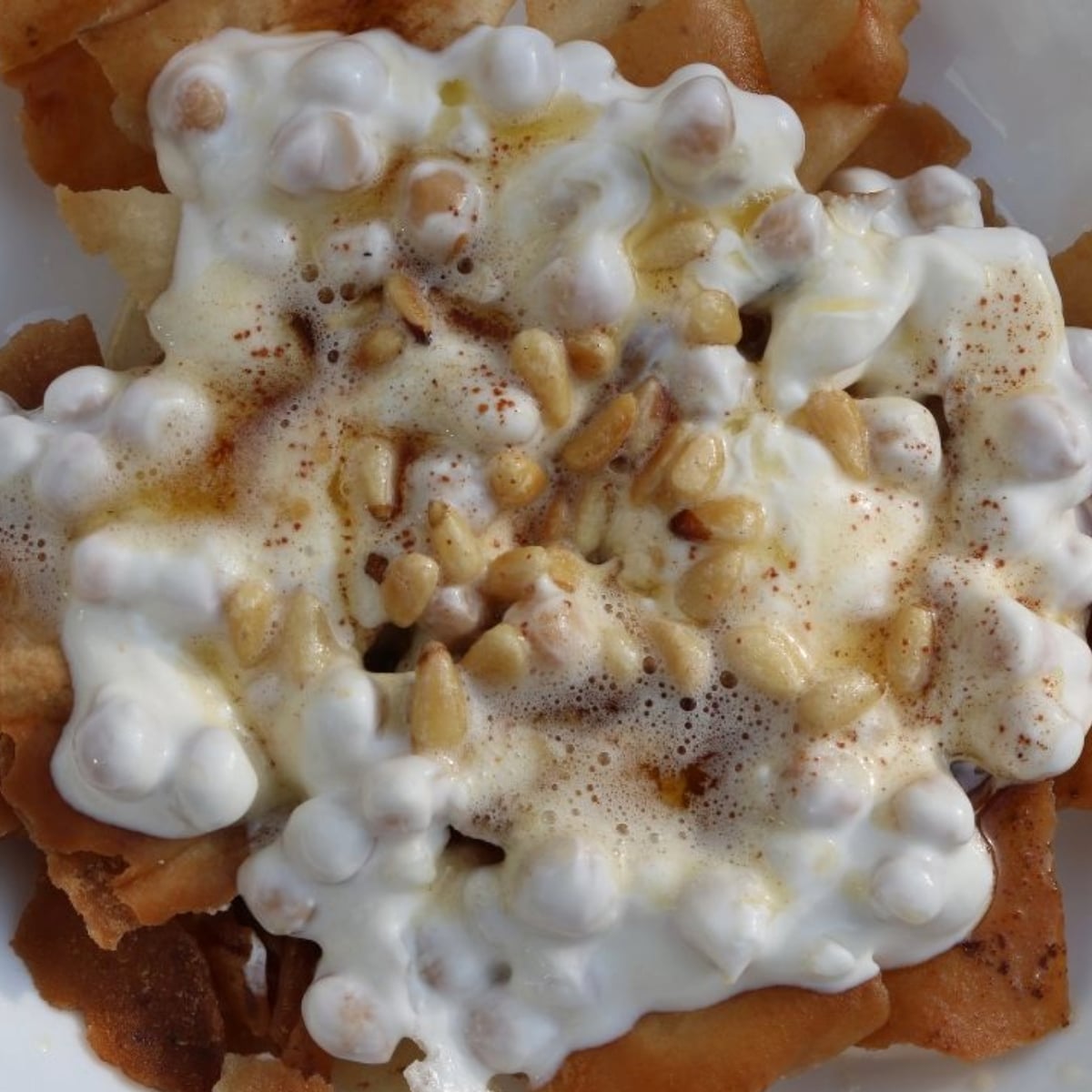
Fattet Hummus
Layered Chickpea and Bread Bowl
Festive breakfast, Eid morning Easy
📜 Story
Easy
📜 Story
Ful Mudammas
Slow-Cooked Fava Beans
Breakfast, daily stapleHummus
Chickpea and Tahini Dip
Breakfast, meze, any meal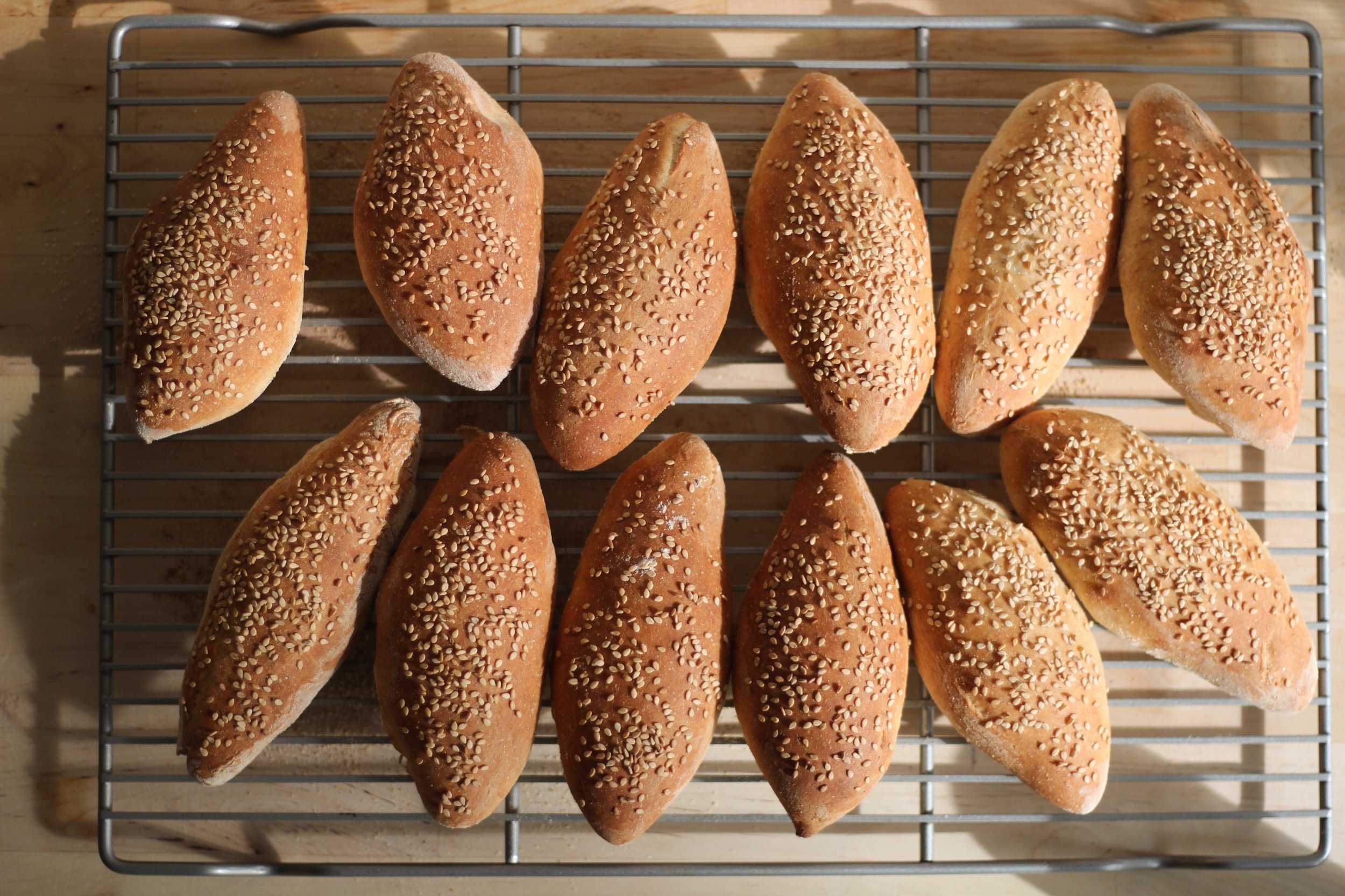 Medium
📜 Story
Medium
📜 Story
Ka'ak al-Quds
Jerusalem Sesame Bread
Breakfast, street snack
Comments (0)
Log in to leave a comment.
No comments yet. Be the first to share your thoughts!