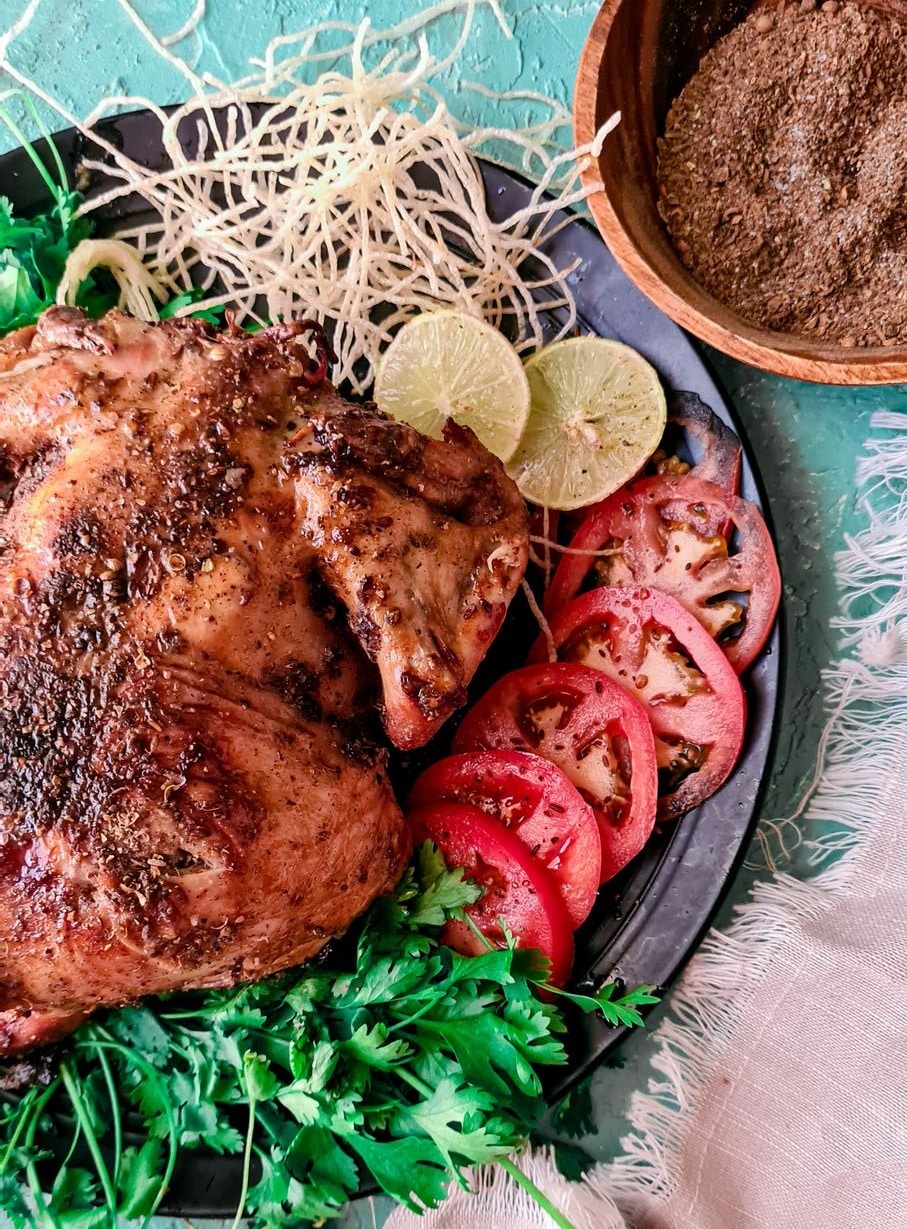
A Balochi specialty of whole lamb or chicken marinated simply with salt, stuffed with rice, and slow-roasted over open coals until the meat is fall-off-the-bone tender with crispy golden skin.
Nutrition & Info
Equipment Needed
Instructions
-
1
Clean the whole chicken or lamb leg thoroughly. Make deep cuts in the thickest parts of the meat to allow seasoning to penetrate. Rub generously with salt, black pepper, and green papaya paste. Let it marinate for at least two hours.
-
2
Prepare the rice filling by parboiling soaked basmati rice until half-cooked. Season with salt. Stuff the cavity of the chicken with the parboiled rice and secure with kitchen twine or skewers.
-
3
Build a charcoal fire and let it burn down to glowing embers. Mount the stuffed chicken on a spit or place on a wire rack positioned about twelve inches above the coals.
-
4
Roast slowly for two to three hours, turning periodically, until the skin is deeply golden and crackling, and the meat is so tender it falls away from the bone at the slightest touch.
-
5
Remove from the fire and let rest for ten minutes. Carve and serve the meat alongside the rice that has absorbed all the juices during roasting. Squeeze fresh lemon juice over everything before eating.
Did You Know?
Traditional Balochi sajji uses minimal spices, often just salt, because the Baloch believe that truly good meat needs nothing more than fire and salt to taste perfect. The simplicity is the art.
Chef's Notes
Equipment Tips
- spit or large roasting setup
- charcoal fire
- large roasting pan
The Story Behind Sajji
Sajji is the signature dish of Balochistan province, born from the nomadic cooking traditions of the Baloch tribes who roamed the vast deserts and mountains of western Pakistan. The technique of roasting whole animals over open fires was a practical solution for feeding large groups during tribal gatherings and celebrations. When Quetta, the capital of Balochistan, became urbanized, sajji restaurants proliferated and the dish spread to Karachi and other major cities. The modern version often uses chicken for everyday eating, while whole lamb sajji remains the centerpiece of major celebrations.

Comments (0)
Log in to leave a comment.
No comments yet. Be the first to share your thoughts!