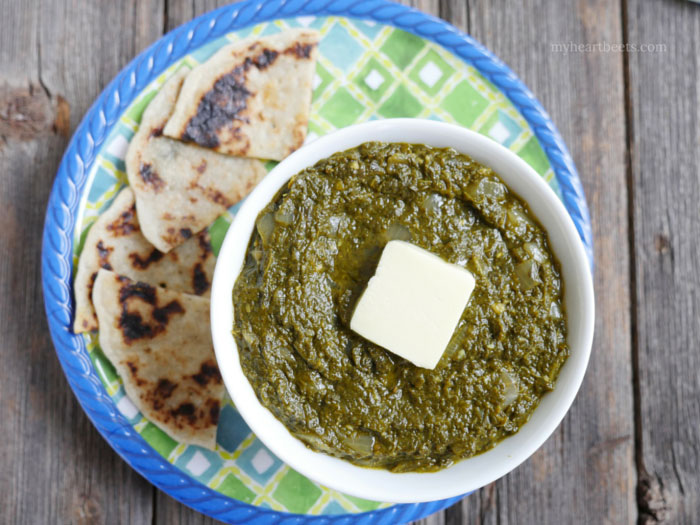
A rustic Punjabi dish of slow-cooked mustard greens and spinach mashed into a thick, earthy puree, finished with a generous dollop of butter and served with makki ki roti (corn flatbread).
Nutrition & Info
Allergen Warnings
Equipment Needed
Instructions
-
1
Wash all greens thoroughly several times to remove any grit. Roughly chop and place in a large pot with half a cup of water, salt, and green chilies. Cover and cook on low heat for forty-five minutes, stirring occasionally, until completely wilted and very soft.
-
2
Once the greens are thoroughly cooked, use a hand masher or traditional wooden churner to mash them into a coarse puree. The texture should be rough and rustic, not smooth like a blended soup.
-
3
Sprinkle cornmeal into the mashed greens and stir well. This thickens the saag and gives it body. Continue cooking on low heat for another ten minutes.
-
4
In a separate small pan, heat ghee and fry chopped onion until deep brown. Add garlic and ginger, cooking for two more minutes until fragrant. Pour this tempering over the saag and mix thoroughly.
-
5
Serve the saag in a deep bowl with a generous lump of fresh white butter melting on top, accompanied by makki ki roti (corn flatbread).
Did You Know?
In Pakistani Punjab, the arrival of the sarson (mustard) season in winter is celebrated almost like a festival. Farmers' families gather to prepare saag communally, and the dish is considered incomplete without a lump of fresh white butter melting on top.
Chef's Notes
Equipment Tips
- large pot
- hand masher or blender
- heavy pan
The Story Behind Saag
Saag is one of the oldest dishes of the Punjab, rooted in the agricultural traditions of the Indus plains where mustard has been cultivated for thousands of years. The dish represents the peasant cooking of rural Punjab, where greens growing wild in the winter fields were gathered, slow-cooked, and mashed by hand. After partition, saag became a symbol of Punjabi cultural identity in Pakistan, connecting urban families to their rural roots. The traditional pairing with makki ki roti and a glass of lassi remains unchanged.

Comments (0)
Log in to leave a comment.
No comments yet. Be the first to share your thoughts!