
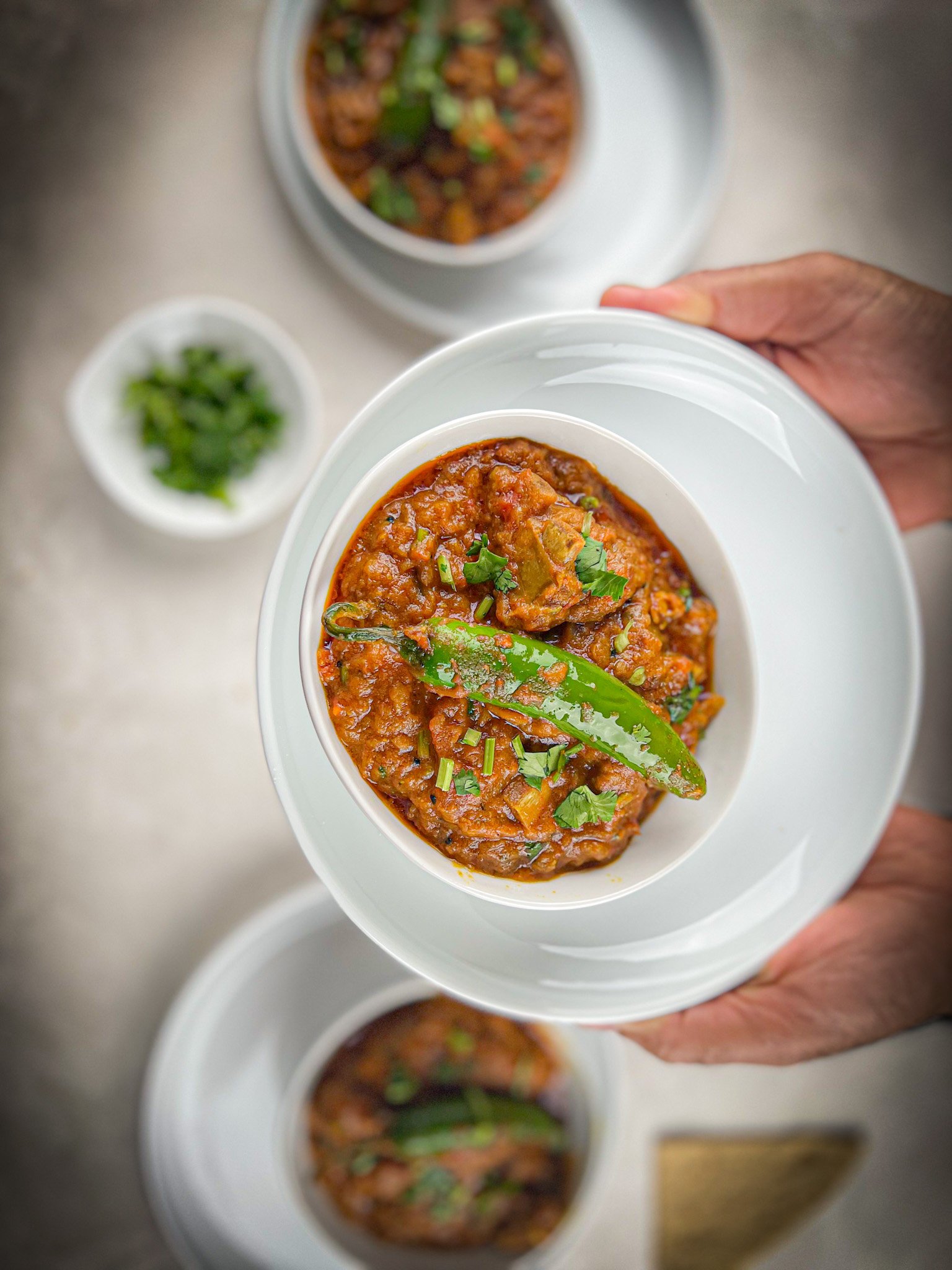
Beef or goat trotters slow-simmered overnight until the collagen-rich broth becomes thick and gelatinous, infused with warming spices. This beloved winter dish is a Pakistani breakfast tradition, especially in Punjab.
Nutrition & Info
Equipment Needed
Instructions
-
1
Clean the trotters thoroughly, removing any hair or debris. Blanch in boiling water for ten minutes, then drain and rinse. This removes impurities and ensures a clear broth.
-
2
Heat oil in a large heavy pot. Add sliced onions and fry until deep golden brown. Add ginger-garlic paste and cook for two minutes until fragrant.
-
3
Add the blanched trotters, all whole and ground spices, and salt. Stir well to coat the trotters in the spice mixture. Cook for five minutes on high heat.
-
4
Add eight cups of water, bring to a boil, then reduce to the lowest possible heat. Cover tightly and simmer for six to seven hours, stirring occasionally, until the broth is thick, gelatinous, and the meat falls off the bone.
-
5
Serve piping hot in deep bowls, garnished with julienned ginger, chopped green chilies, and fresh coriander. Accompany with warm naan for dipping.
Did You Know?
Dedicated paya shops in Lahore and Rawalpindi begin cooking their pots at midnight to have them ready by the early morning rush. Some famous shops have been using the same copper pots for decades, believing they add flavor.
Chef's Notes
Equipment Tips
- large heavy pot
- slow cooker optional
- strainer
The Story Behind Paya
Paya is one of the oldest dishes in the culinary traditions of the Indian subcontinent, with roots in the practical nose-to-tail eating philosophy of pastoral communities. The slow cooking of trotters to extract every bit of nutrition from the bones and connective tissue represents ancient culinary wisdom. In Pakistan, paya evolved into a beloved breakfast institution, with specialized paya shops opening before dawn to serve laborers and early risers. The dish is considered especially nourishing during winter and is often prescribed as a restorative food.

Comments (0)
Log in to leave a comment.
No comments yet. Be the first to share your thoughts!