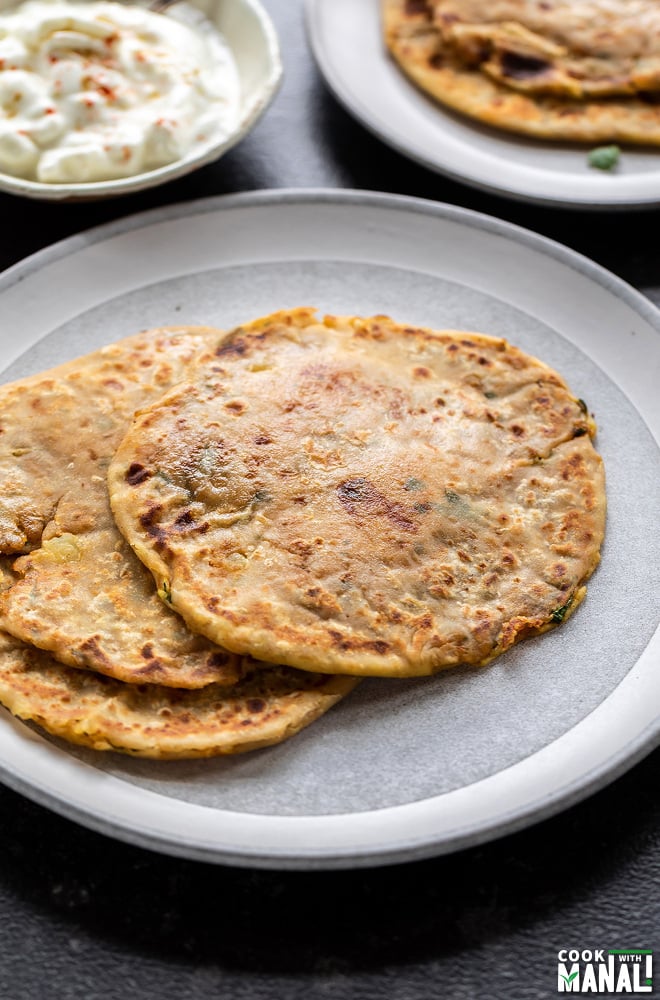
Flaky, multi-layered flatbread made by folding and rolling whole wheat dough with ghee, creating crispy golden layers that shatter with each bite. Served at breakfast with eggs, yogurt, or pickles across Pakistan.
Nutrition & Info
Allergen Warnings
Equipment Needed
Instructions
-
1
Combine whole wheat flour and salt in a large bowl. Gradually add warm water while mixing with your hand until a soft, pliable dough forms. Knead for eight minutes until smooth and elastic, then cover and rest for thirty minutes.
-
2
Divide the dough into four equal balls. Roll each ball into a thin circle about eight inches in diameter. Spread a tablespoon of ghee evenly over the surface.
-
3
Fold the circle in half, then in half again to form a triangle. Roll out this triangle into a larger triangular shape about a quarter-inch thick, dusting with flour as needed to prevent sticking.
-
4
Heat a tawa or flat griddle over medium-high heat. Place the paratha on the dry tawa and cook for one minute until small bubbles appear on the surface.
-
5
Flip and brush the cooked side with ghee. Cook for another minute, then flip again, brushing ghee on the second side. Press gently with a cloth to ensure even cooking until both sides are golden brown with crispy spots. Serve hot.
Did You Know?
In Punjab, the size of a paratha is a matter of regional pride. Lahori parathas are famously large and flaky, and there are annual informal competitions among dhaba owners to make the biggest, flakiest paratha.
Chef's Notes
Equipment Tips
- rolling pin
- tawa or flat griddle
- mixing bowl
The Story Behind Paratha
Paratha derives from the Sanskrit 'parat atta' meaning layers of cooked dough. This ancient bread has been a staple of the Punjab region for millennia, with references to layered breads appearing in medieval texts. In Pakistan, paratha culture is especially strong in Punjab, where specialized paratha shops serve dozens of varieties stuffed with potatoes, cauliflower, eggs, or minced meat. The Lahori breakfast of paratha with channay (chickpea curry) and lassi is considered one of the great meal traditions of South Asia.

Comments (0)
Log in to leave a comment.
No comments yet. Be the first to share your thoughts!