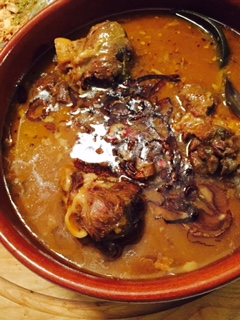
A legendary slow-cooked beef stew simmered overnight until the meat melts in your mouth, enriched with bone marrow and a complex spice blend. Lahore's most iconic breakfast dish.
Nutrition & Info
Allergen Warnings
Equipment Needed
Presentation Guide
Vessel: deep bowl
Garnishes: julienned ginger, sliced green chilies, fresh cilantro, lemon wedge
Accompaniments: naan bread
Instructions
-
1
Heat the oil in a large, heavy-bottomed pot over medium heat. Fry the sliced onions for twelve to fifteen minutes, stirring frequently, until they are deeply caramelized to a dark mahogany brown. This slow, patient onion browning is the foundation of nihari's rich, dark sauce.
-
2
Add the garlic, ginger, turmeric, and cayenne pepper to the browned onions. Stir for two minutes until fragrant. Add the beef shank pieces and sear on all sides for five minutes, letting the meat brown against the hot pot for maximum flavour development.
-
3
Pour in eight cups of water and add the nihari masala and salt. Bring to a boil, then reduce to the lowest possible simmer. Cover tightly and cook for four to six hours, or overnight on the absolute lowest heat. Traditional nihari simmers through the entire night.
-
4
After the long cooking, the meat should be so tender it falls off the bone with no effort. The marrow should have melted out of the bones into the sauce, adding body and richness. Remove the bones, leaving the soft marrow pieces in the stew.
-
5
Whisk the wheat flour into the half cup of water until completely smooth. Pour this slurry slowly into the simmering nihari while stirring constantly. This thickens the sauce to its signature velvety, slightly gelatinous consistency. Simmer for fifteen more minutes.
-
6
The finished nihari should have a deep brown, glossy sauce that coats the tender, shredded meat. The consistency should be thick enough to eat with bread but still flowing. Taste and adjust salt and spice levels one final time before serving.
-
7
Serve the nihari in deep bowls with a pool of hot oil on top. Garnish generously with fresh julienned ginger, sliced green chilies, chopped cilantro, and a squeeze of lemon. Serve with fresh, hot naan bread for tearing and dipping into the rich, spiced sauce.
Did You Know?
The word nihari comes from 'nahar' meaning morning. It was created in Mughal Delhi as a breakfast for laborers who needed sustenance for the day.
Chef's Notes
Equipment Tips
- heavy stockpot
- strainer
- spice grinder
Garnishing
julienned ginger, sliced green chilies, fresh cilantro, lemon wedge
Accompaniments
naan bread
The Story Behind Nihari
### The Story
Nihari originated in the kitchens of Old Delhi during the Mughal Empire, its name derived from the Arabic word nahar, meaning "morning." Muslim nawabs (noblemen) would eat nihari after their dawn Fajr prayers, fortifying themselves with a slow-cooked stew of bone-in shank meat simmered for 12 to 14 hours overnight. The long cooking dissolved the bone marrow into the gravy, creating the signature silken consistency. Two cities compete for the claim of origin: Lucknow and Delhi, both centers of Mughal culinary refinement. After the Partition of India in 1947, Urdu-speaking Muslims migrating to Karachi brought their nihari traditions with them, and the dish became a massive success in Pakistan's largest city.
### On the Calendar
Nihari is traditionally a breakfast dish, though in Pakistan it is now eaten at any meal. It is commonly served during Ramadan at suhoor (the pre-dawn meal) and is a staple at Sunday family breakfasts.
### Then & Now
The classic nihari uses shank cuts of beef or mutton, slow-cooked with a proprietary spice blend (the nihari masala) that typically includes coriander, cumin, fennel, cinnamon, cardamom, and cloves. The finished stew is garnished with fresh ginger julienne, green chilies, cilantro, and a squeeze of lemon, served with naan for soaking up the rich gravy. Each nihari establishment guards its masala recipe jealously, and Karachi's Old City nihari houses -- some operating for generations -- are culinary institutions.
### Legacy
Nihari is the Mughal Empire's most patient creation -- a stew that demands overnight devotion and rewards with depths of flavor that cannot be rushed, a living monument to the culinary sophistication of Old Delhi.

Comments (1)
Log in to leave a comment.
Tried this for a dinner party and got so many compliments!