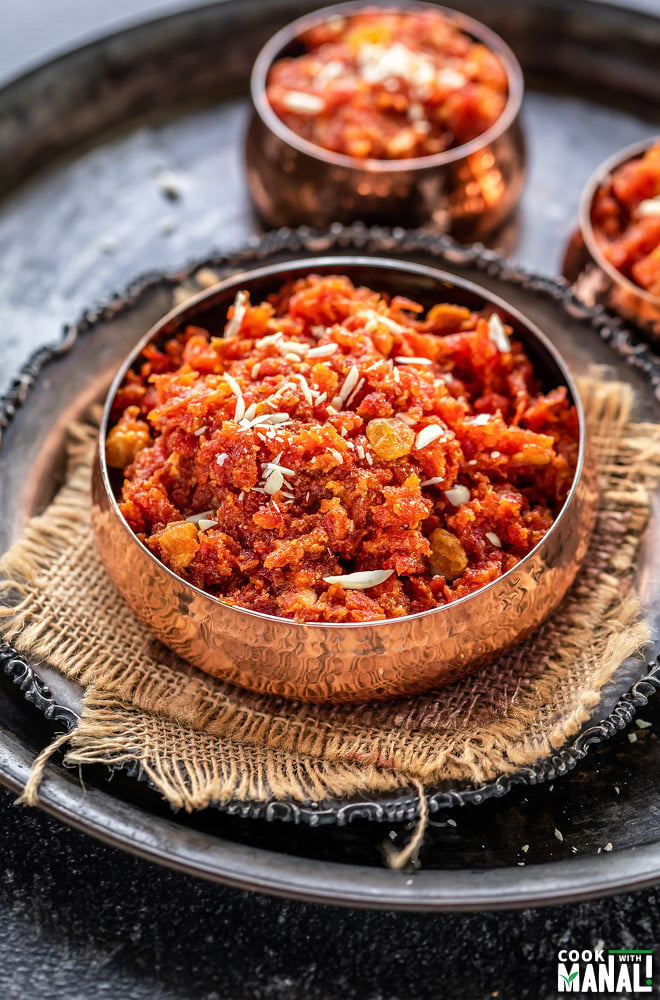
Grated carrots slow-cooked in milk until the liquid evaporates completely, then sweetened with sugar and enriched with ghee and cardamom. This beloved winter dessert turns humble carrots into a rich, jewel-toned confection.
Nutrition & Info
Allergen Warnings
Equipment Needed
Instructions
-
1
Grate the carrots using the fine side of a box grater for a smoother halwa or the coarse side for more texture. The choice of grater size significantly affects the final consistency.
-
2
Bring milk to a boil in a large heavy pan or kadhai. Add the grated carrots and stir well. Cook on medium heat, stirring frequently, for thirty to forty minutes until all the milk has been absorbed by the carrots.
-
3
Add sugar and continue cooking for another ten minutes. The sugar will release moisture from the carrots, so keep stirring until this liquid also evaporates.
-
4
Add ghee one tablespoon at a time, stirring each addition into the halwa. The ghee gives the halwa its characteristic sheen and richness. Cook for another five minutes until the halwa pulls away from the sides of the pan.
-
5
Stir in cardamom powder, slivered almonds, pistachios, and raisins. Serve warm in small bowls, garnished with additional nuts and optional silver leaf for a festive presentation.
Did You Know?
The best gajar ka halwa uses the deep red winter carrots available only during December and January in Punjab. These carrots have a higher sugar content and produce a naturally deeper color than orange carrots available year-round.
Chef's Notes
Equipment Tips
- large heavy pan or kadhai
- grater
- stirring spoon
The Story Behind Gajar Ka Halwa
Gajar ka halwa has its roots in the Mughal tradition of slow-cooked milk desserts. The technique of simmering grated vegetables in milk until the liquid evaporates was a Mughal kitchen innovation that transformed humble root vegetables into royal confections. In Pakistan, gajar ka halwa is inextricably linked with winter, when the seasonal red carrots of Punjab arrive in markets. The sight of large kadhai pots of halwa being stirred on street corners is one of the iconic images of winter in Lahore and other Punjabi cities.

Comments (0)
Log in to leave a comment.
No comments yet. Be the first to share your thoughts!