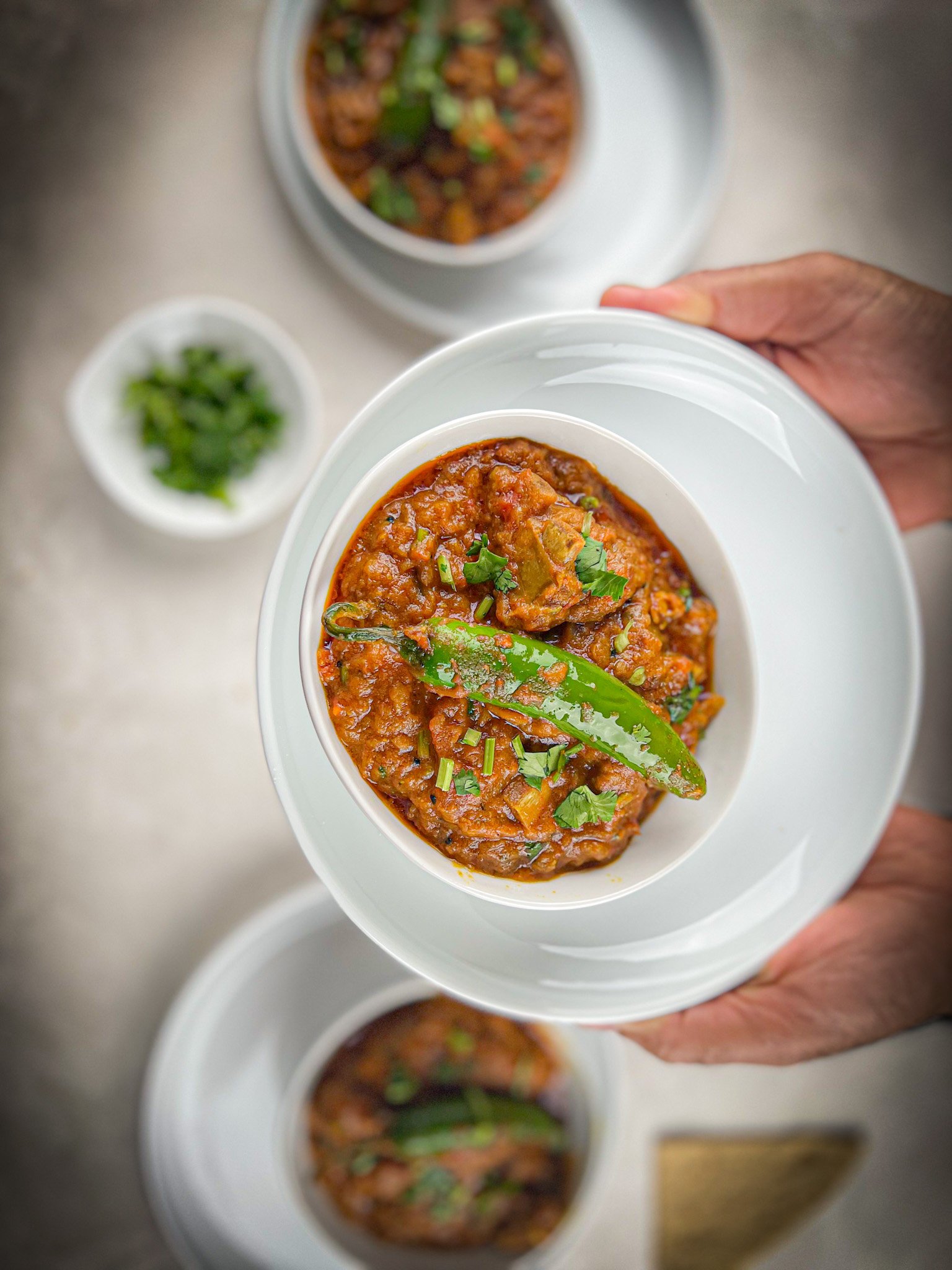
A tangy, piquant curry where tender meat is cooked with pickling spices including mustard seeds, fenugreek, and nigella seeds, creating a unique sour-spicy flavor profile that sets it apart from all other Pakistani curries.
Nutrition & Info
Allergen Warnings
Equipment Needed
Instructions
-
1
Heat mustard oil in a heavy pot until it reaches its smoking point, then let it cool slightly. This process removes the raw pungency of mustard oil. Add mustard seeds, fenugreek seeds, nigella seeds, and fennel seeds. Let them crackle for thirty seconds.
-
2
Add sliced onions and fry until golden brown. Add ginger-garlic paste and cook for two minutes until the raw smell disappears.
-
3
Add the meat pieces and sear on high heat for five minutes. Add turmeric, red chili powder, and salt. Stir well and cook for three minutes until the spices coat the meat evenly.
-
4
Add chopped tomatoes and vinegar or lemon juice. The acid is essential for the characteristic tangy pickle flavor. Add half a cup of water, cover, and cook on low heat for forty-five to sixty minutes until the meat is tender.
-
5
Add whole green chilies in the last five minutes of cooking. Garnish with fresh coriander and serve hot with rice or roti. The flavor improves if the dish is left to rest for a few hours and then reheated.
Did You Know?
Achar gosht was invented as a way to preserve meat in the days before refrigeration. The pickling spices and vinegar or lemon juice acted as natural preservatives, allowing the dish to last several days without spoiling.
Chef's Notes
Equipment Tips
- heavy pot or pressure cooker
- spice grinder
- wooden spoon
The Story Behind Achar Gosht
Achar gosht sits at the intersection of two great Pakistani culinary traditions: meat cookery and pickling (achar). The art of making achars in the Punjab is an ancient practice, with families passing down secret pickle recipes through generations. Applying these same preserving spices, particularly the pungent combination of mustard, fenugreek, and nigella seeds, to meat curries created a wholly unique dish that could withstand the extreme heat of Punjab summers. The dish became especially popular in southern Punjab and northern Sindh.
More Pakistani Dishes
 Medium
📜 Story
Medium
📜 Story
Aloo Gosht
Meat and Potato Curry
Lunch or dinner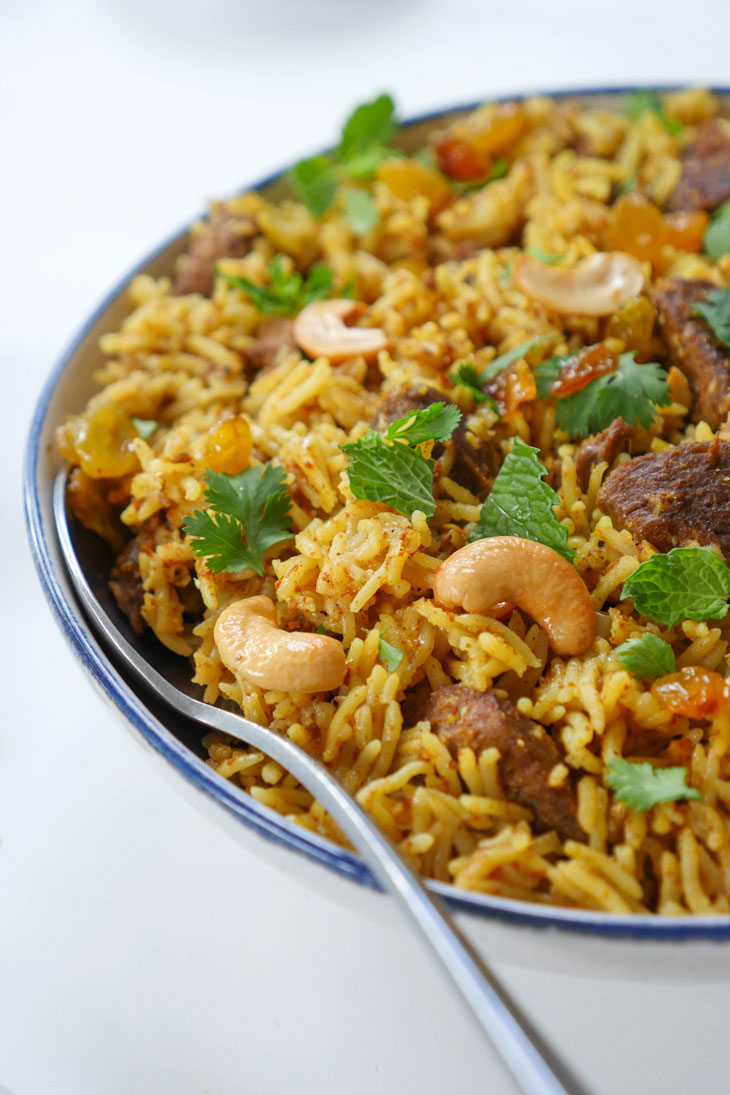 Hard
📜 Story
Hard
📜 Story
Biryani
Biryani
Lunch or dinner, celebrations and Fridays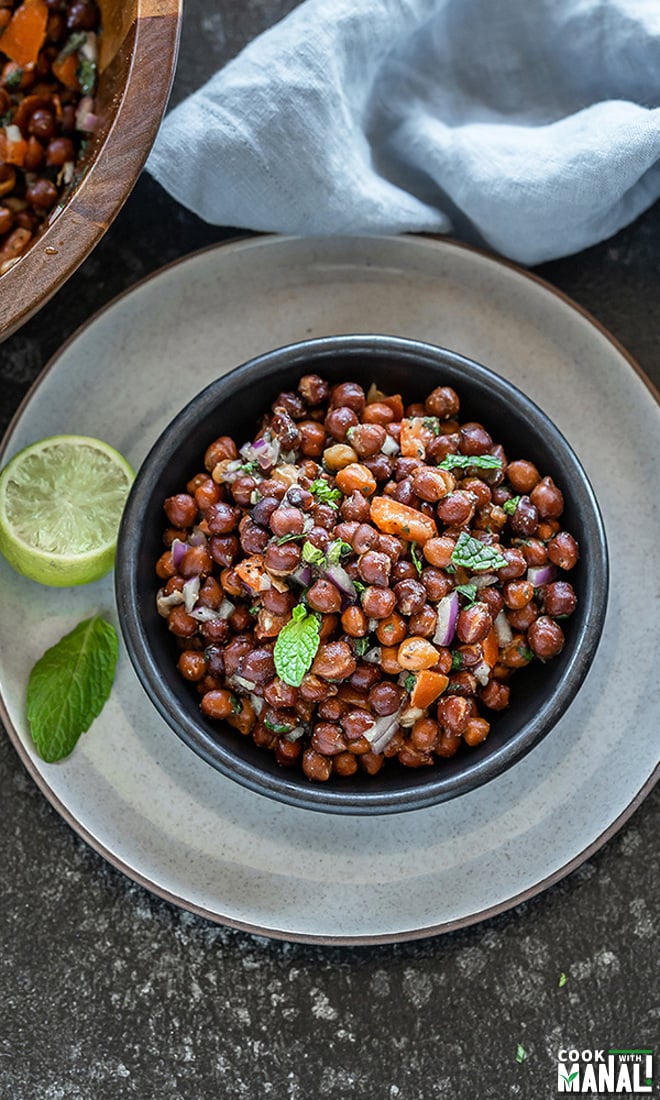 Easy
📜 Story
Easy
📜 Story
Chana Chaat
Spiced Chickpea Salad
Afternoon snack, iftar during Ramadan Medium
📜 Story
Medium
📜 Story
Chapli Kabab
Chapli Kabab
Dinner, celebrations and guest hospitality
Comments (0)
Log in to leave a comment.
No comments yet. Be the first to share your thoughts!