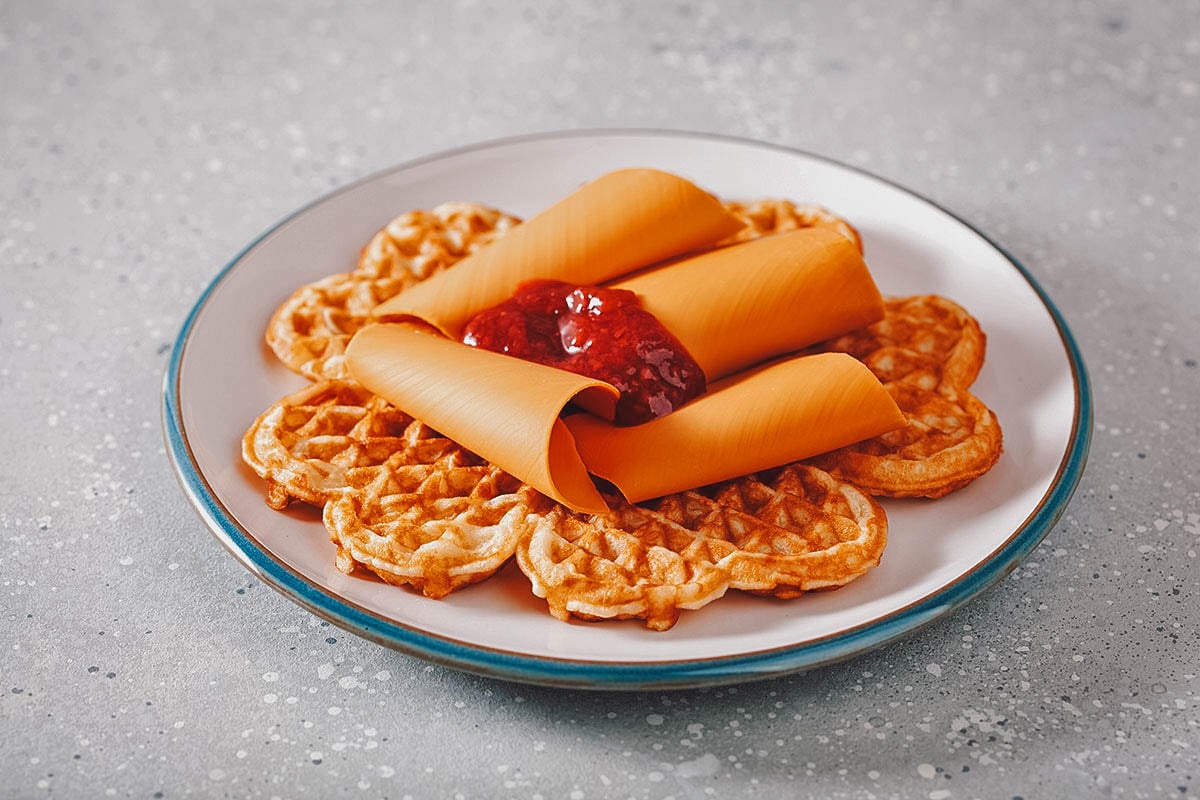
Thick, fluffy pancakes leavened with baking soda, traditionally sold on Norwegian ferries and served folded with butter and sugar.
Instructions
-
1
Beat eggs and sugar until fluffy. Add buttermilk and mix well.
-
2
Combine flour, baking soda, and vanilla sugar. Fold into wet ingredients.
-
3
Heat a griddle or large pan. Pour batter to make thick pancakes about 15cm across. Cook until bubbles appear on surface, then flip.
-
4
Fold in half and serve warm with butter and sugar, or jam.
Did You Know?
Sveler are so associated with Norwegian ferry travel that many people cannot board a ferry without buying one from the onboard cafe.
The Story Behind Svele
Sveler are thick, fluffy Norwegian pancakes most strongly associated with the ferry culture of western Norway's fjord country. The tradition of selling fresh sveler on ferries has made them an iconic travel food.
Originating in western Norway, sveler are distinguished from regular pancakes by their thickness and the use of buttermilk and baking soda, which creates a characteristically fluffy, almost cake-like texture. They are always served folded in half.
The ferry svele tradition dates back decades and remains remarkably persistent even as Norway builds bridges and tunnels to replace ferry crossings. Many Norwegians specifically choose ferry routes partly for the pleasure of eating fresh sveler during the crossing.
Comments (0)
Log in to leave a comment.
No comments yet. Be the first to share your thoughts!