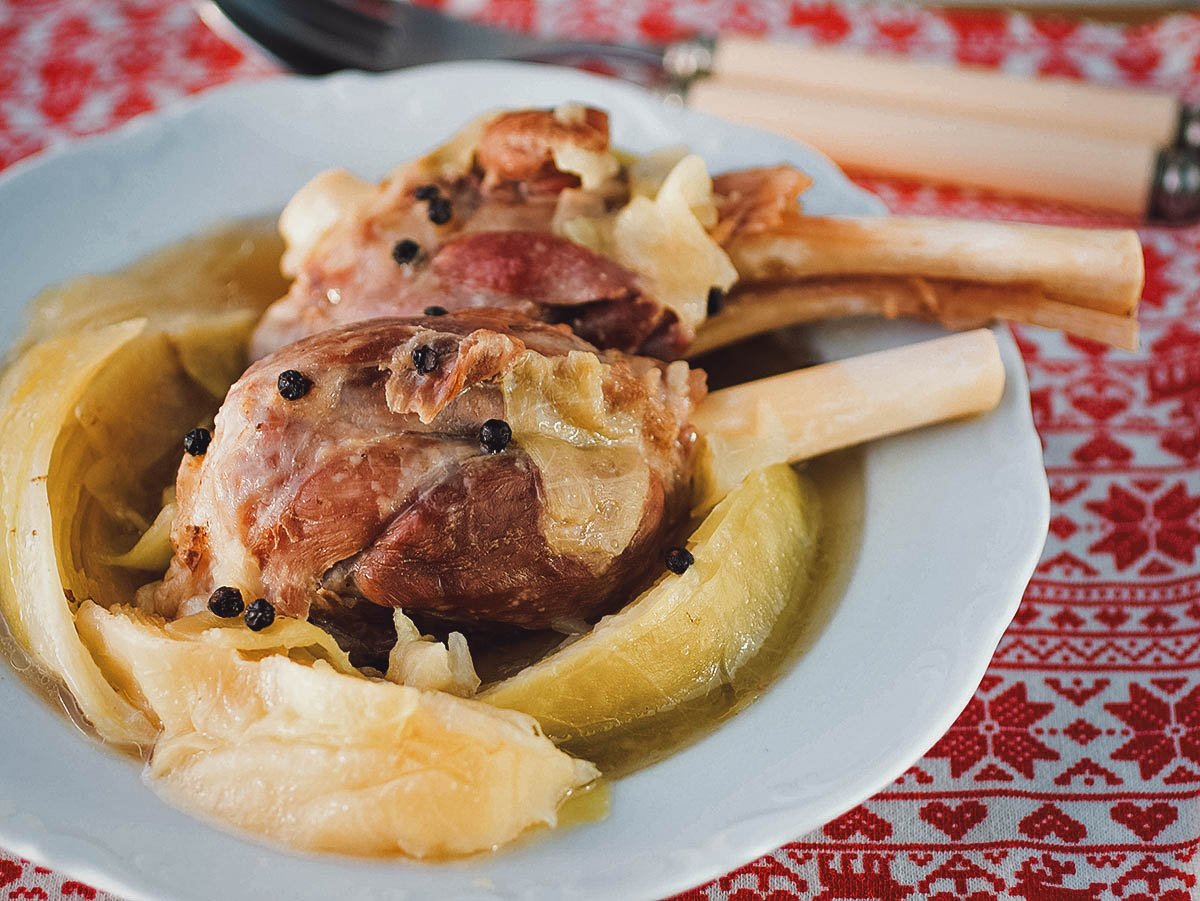
Salted, smoked, and steamed lamb head, a western Norwegian delicacy traditionally eaten before Christmas. A dish for the adventurous.
Nutrition & Info
Equipment Needed
Presentation Guide
Vessel: wooden board
Accompaniments: mashed rutabaga, boiled potatoes
Instructions
-
1
Salt the lamb head thoroughly and let cure for several days.
-
2
Smoke over birch wood for several hours until golden brown.
-
3
Soak in water overnight to remove excess salt.
-
4
Steam or boil for approximately 3 hours until the meat is very tender and falling off the bone. Serve with mashed rutabaga and boiled potatoes.
Did You Know?
Traditionally, the ear and eye are eaten first as they are considered the best parts. Smalahove has become a bucket-list food for adventurous travelers.
Chef's Notes
Equipment Tips
- smoker or smoking setup
- large steaming pot
Accompaniments
mashed rutabaga, boiled potatoes
The Story Behind Smalahove
Smalahove is one of Norway's most dramatic traditional dishes, a whole lamb head that is salted, dried, smoked, and then steamed until tender. It originates from western Norway, particularly the Voss area, where it was practical peasant food using every part of the animal.
The dish was common everyday fare in rural Norway until the mid-20th century but declined as living standards rose. It has since been revived as a cultural delicacy and tourist attraction, served in restaurants during the autumn season.
Smalahove is now protected as a traditional food product and has gained international fame as one of the world's most visually striking dishes. It is served with simple accompaniments that complement the rich, smoky lamb flavor.
Comments (0)
Log in to leave a comment.
No comments yet. Be the first to share your thoughts!