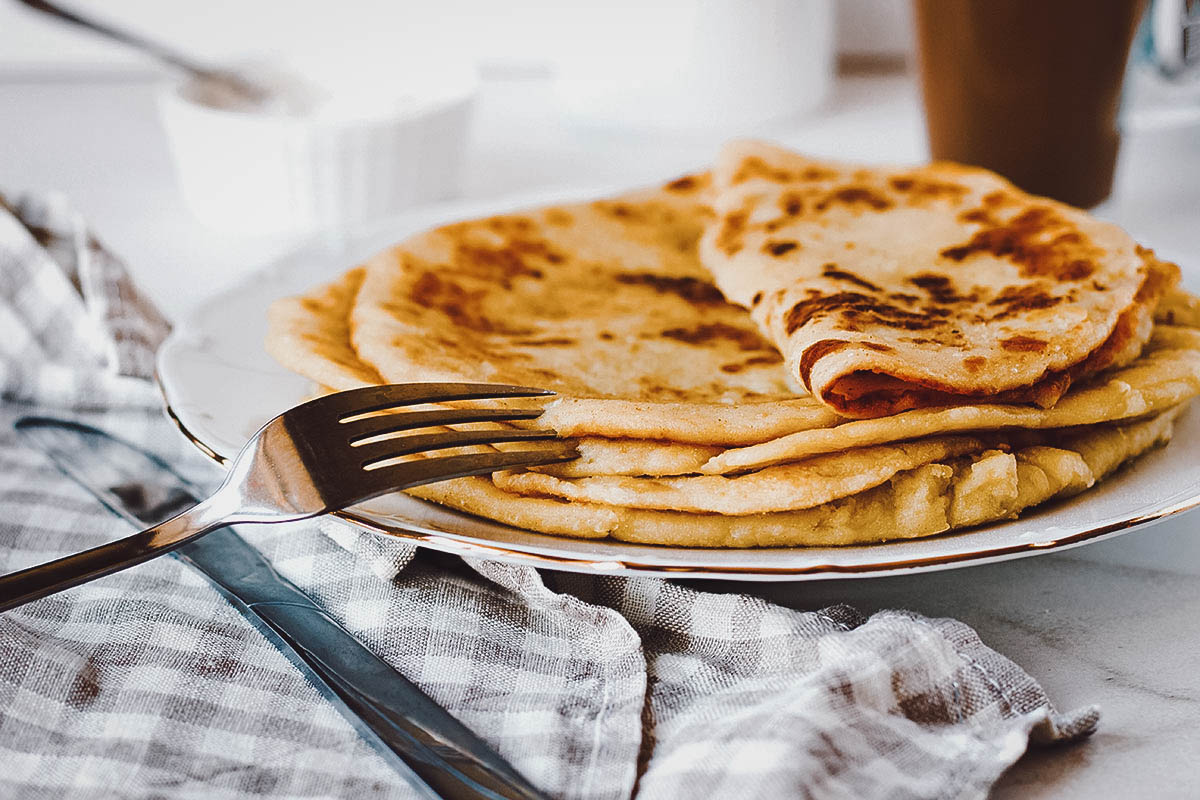
Thin, soft flatbread made from potatoes, flour, and butter, rolled paper-thin and cooked on a griddle. Served with butter and sugar or as a wrap.
Nutrition & Info
Allergen Warnings
Equipment Needed
Presentation Guide
Vessel: folded on plate
Garnishes: butter, sugar or cinnamon
Instructions
-
1
Boil potatoes until tender, drain well, and rice them. Mix with melted butter, cream, salt, and sugar while still warm. Cool completely.
-
2
Add flour gradually, mixing until a soft dough forms. Do not overwork.
-
3
Divide dough into golf-ball portions. Roll each paper-thin on a floured surface using a grooved rolling pin.
-
4
Cook on a dry, hot griddle for about 30 seconds per side until light brown spots appear. Stack and cover with a towel to keep soft.
Did You Know?
Lefse-making is a social tradition where families gather to make hundreds of rounds before Christmas, storing them for the holiday season.
Chef's Notes
Equipment Tips
- potato ricer
- grooved rolling pin
- flat griddle
- lefse stick
Garnishing
butter, sugar or cinnamon
The Story Behind Lefse
Lefse is one of Norway's most beloved traditional breads, with roots in the rural farming communities where potatoes became a staple crop in the 18th century. Before potatoes, similar flatbreads were made with barley or oat flour.
The art of rolling lefse paper-thin requires considerable skill, traditionally passed from mother to daughter. Special grooved rolling pins create the characteristic pattern, and dedicated lefse griddles remain essential equipment in Norwegian kitchens.
Lefse holds deep emotional significance for Norwegian Americans, who brought the tradition to the American Midwest where it remains a cherished holiday food. In Norway, lefse is eaten year-round but production peaks dramatically before Christmas.
Comments (0)
Log in to leave a comment.
No comments yet. Be the first to share your thoughts!