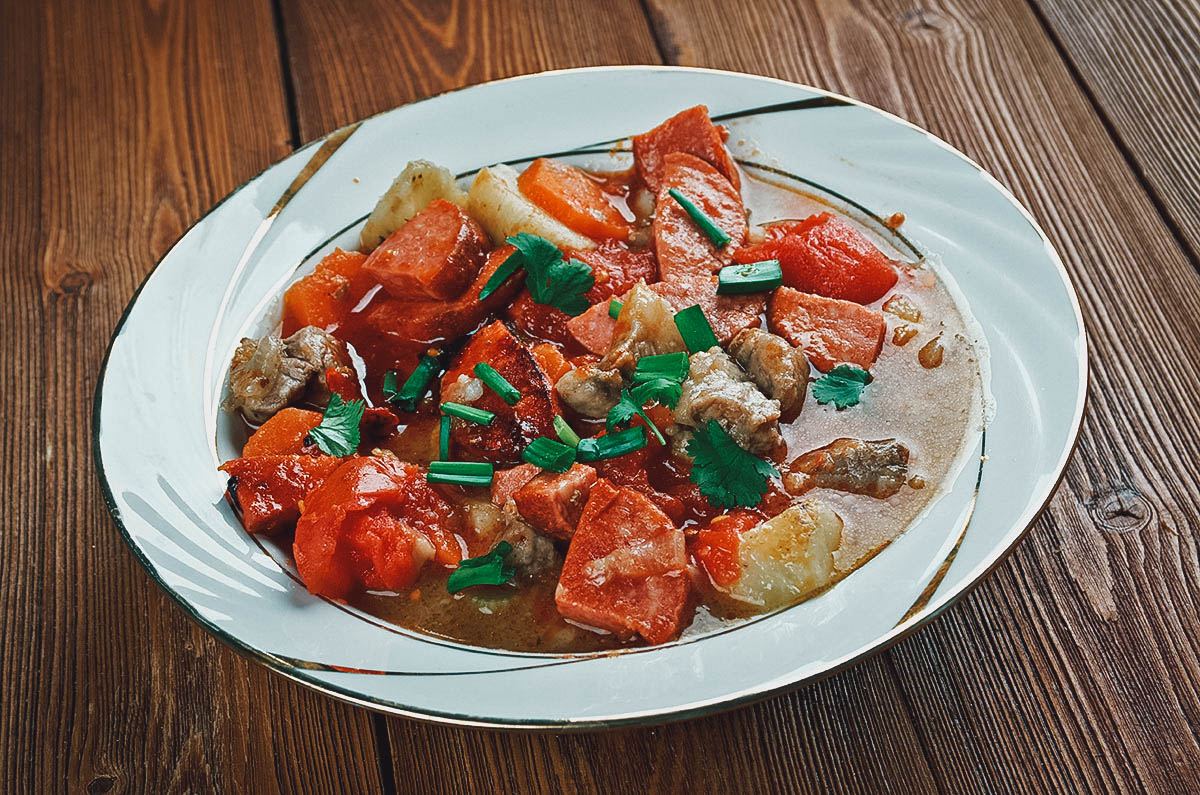
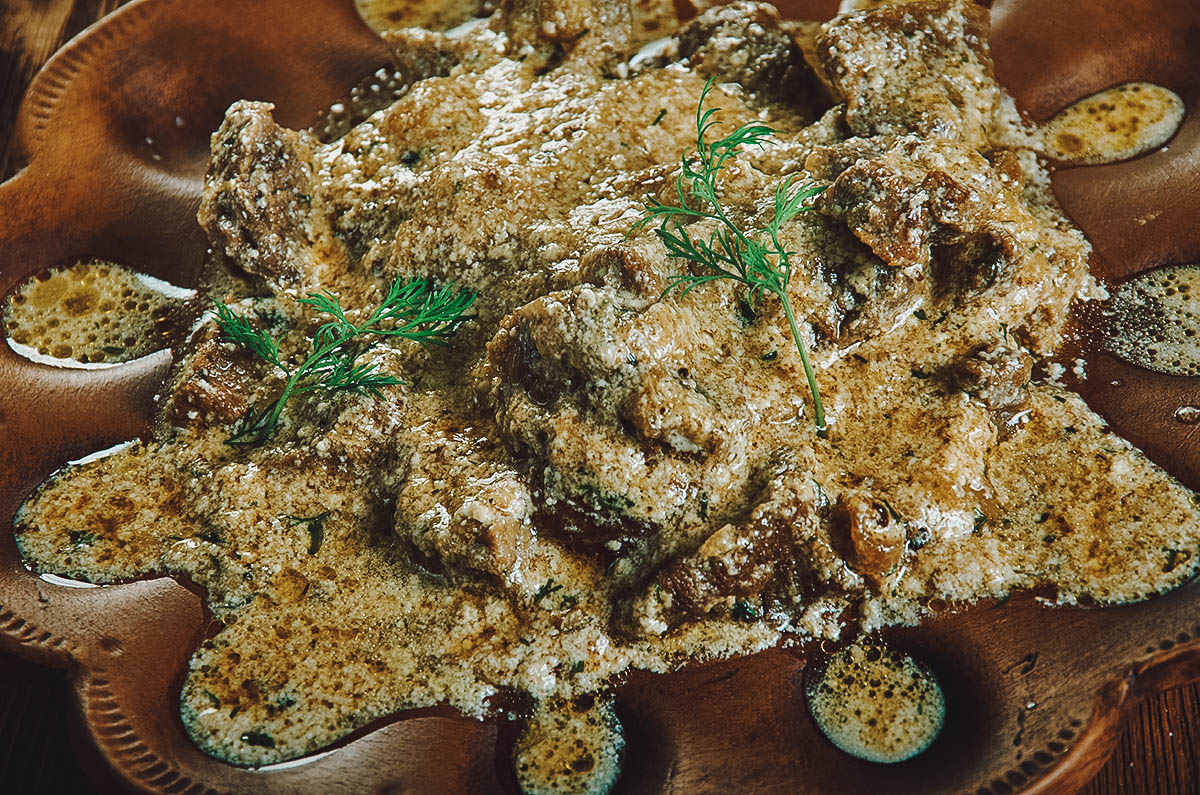
Hearty one-pot stew of beef, root vegetables, and potatoes, slowly simmered until thick. A comforting everyday Norwegian classic.
Nutrition & Info
Allergen Warnings
Equipment Needed
Presentation Guide
Vessel: deep bowl
Garnishes: fresh parsley
Accompaniments: flatbread
Instructions
-
1
Brown beef cubes in butter in a large heavy pot. Remove and set aside.
-
2
Add onion to pot, cook until softened. Return beef to pot with broth.
-
3
Simmer covered for 45 minutes. Add potatoes, carrots, and rutabaga.
-
4
Continue simmering 30-40 minutes until vegetables are very tender and stew is thick. Some versions mash partially for a chunkier texture. Season and serve with flatbread.
Did You Know?
There are two Norwegian lapskaus camps: those who make it brown (with browned meat) and those who make it light (without browning). The debate is endless.
Chef's Notes
Equipment Tips
- large heavy pot or dutch oven
- cutting board
- sharp knife
Garnishing
fresh parsley
Accompaniments
flatbread
The Story Behind Lapskaus
Lapskaus is Norwegian comfort food at its most fundamental: a thick stew of meat and root vegetables simmered until everything melds together. The dish has working-class origins and was historically a way to make tough cuts of meat tender and stretch them with abundant vegetables.
The name is related to the English word lobscouse, connecting it to a family of sailors' stews found across northern Europe. Norwegian lapskaus is distinguished by its use of rutabaga and the preference for a very thick, almost mash-like consistency.
Every Norwegian household has a lapskaus recipe, and it remains one of the most commonly cooked weeknight dinners. The dish improves with reheating, making it ideal for cooking in large batches.
Comments (0)
Log in to leave a comment.
No comments yet. Be the first to share your thoughts!