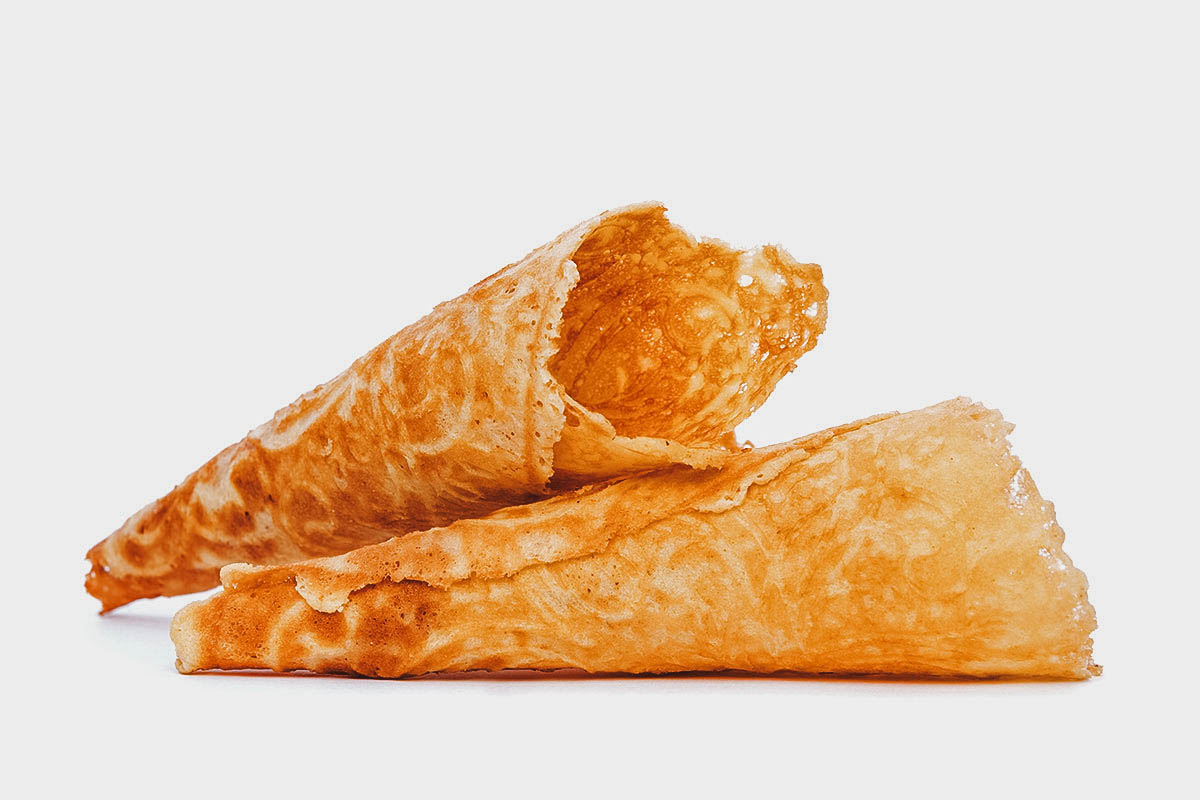
Thin, crispy cone-shaped cookies baked in a decorative iron, filled with whipped cream and berries.
Nutrition & Info
Allergen Warnings
Equipment Needed
Presentation Guide
Vessel: serving platter
Garnishes: powdered sugar
Accompaniments: whipped cream, fresh berries
Instructions
-
1
Beat eggs and sugar until light and fluffy. Stir in melted butter and cream.
-
2
Fold in flour and cardamom until smooth. Let batter rest 30 minutes.
-
3
Heat krumkake iron. Place 1 tablespoon batter in center, close and cook 30-45 seconds per side until golden.
-
4
Immediately roll hot cookie around a cone form. Cool on rack. Fill with whipped cream and berries before serving.
Did You Know?
Krumkaker irons are often family heirlooms passed down through generations, with some dating back over a century.
Chef's Notes
Equipment Tips
- krumkake iron
- cone form
- mixing bowl
- whisk
Garnishing
powdered sugar
Accompaniments
whipped cream, fresh berries
The Story Behind Krumkaker
Krumkaker are among the seven traditional cookie varieties that Norwegian families bake for Christmas, a tradition known as syv slag or seven sorts. The decorative iron press creates intricate patterns on each thin wafer.
The tradition of baking krumkaker dates to at least the 18th century, when decorated iron presses were prized possessions. Many families still use antique irons that produce unique patterns identifying which family baked them.
While krumkaker are primarily associated with Christmas, they appear at celebrations year-round. The delicate cardamom-scented cones filled with cream represent the festive elegance of Norwegian baking traditions.
Comments (0)
Log in to leave a comment.
No comments yet. Be the first to share your thoughts!