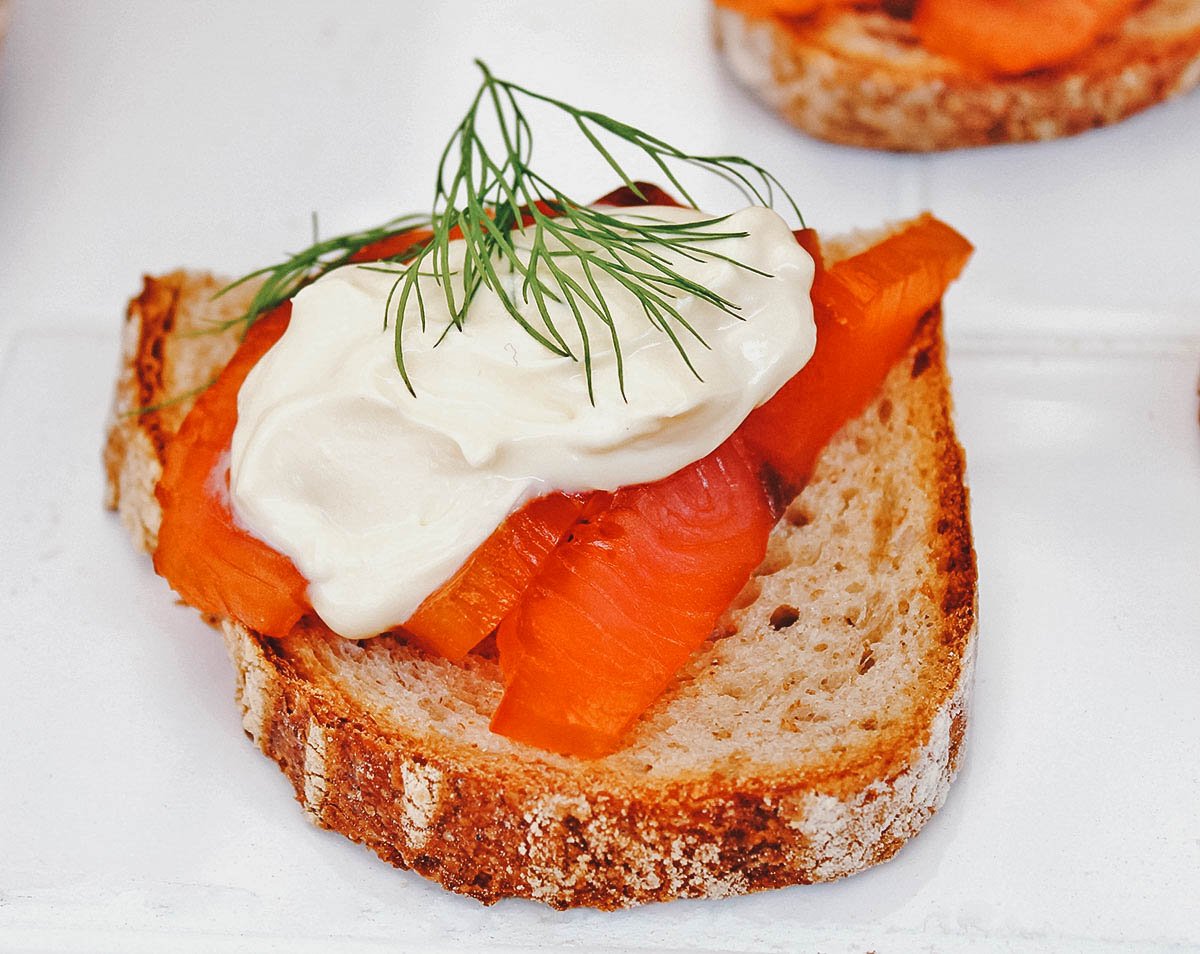
Salmon cured in sugar, salt, and dill for days, sliced paper-thin and served with mustard-dill sauce. Norway's elegant classic.
Nutrition & Info
Allergen Warnings
Equipment Needed
Presentation Guide
Vessel: wooden board or chilled plate
Garnishes: fresh dill, lemon wedges
Accompaniments: hovmästarsås (mustard-dill sauce), dark rye bread
Instructions
-
1
Run your fingers along the salmon fillet to find and remove any remaining pin bones using tweezers. Place the fillet skin-side down on a large piece of plastic wrap. Splash the aquavit over the flesh if using and rub it in gently over the entire surface.
-
2
Mix the coarse salt, sugar, and cracked black pepper together in a bowl. Spread this cure mixture evenly over the flesh side of the salmon, pressing it firmly into the surface. Cover the entire area with a thick layer of the chopped fresh dill.
-
3
Wrap the salmon tightly in the plastic wrap, then wrap again in a second layer. Place in a shallow dish to catch any liquid that seeps out. Set a cutting board or plate on top of the wrapped salmon and weight it down with heavy cans or a cast-iron pan.
-
4
Refrigerate the weighted salmon for forty-eight to seventy-two hours, turning the packet over every twelve hours. The cure draws moisture from the fish through osmosis while the sugar and salt penetrate the flesh, transforming the raw texture to silky and firm.
-
5
Make the mustard-dill sauce by whisking together both mustards, sugar, and vinegar until the sugar dissolves. Slowly drizzle in the oil while whisking to create a creamy emulsion. Fold in the chopped fresh dill. Refrigerate until serving.
-
6
Unwrap the cured salmon and scrape off the dill and remaining cure with the back of a knife. Pat dry with paper towels. Using a long, sharp knife held at a thirty-degree angle, slice the gravlaks into paper-thin slices, cutting away from the skin.
-
7
Arrange the translucent salmon slices on a serving platter. Serve with the mustard-dill sauce, dark rye bread, and lemon wedges. The gravlaks should be silky, rich, and intensely flavoured from the cure, requiring no cooking whatsoever.
Did You Know?
Gravlaks literally means 'buried salmon' — Vikings originally cured fish by burying it in sand above the high tide line.
Chef's Notes
Equipment Tips
- sharp knife
- cling wrap
- baking dish
- weight
Garnishing
fresh dill, lemon wedges
Accompaniments
hovmästarsås (mustard-dill sauce), dark rye bread
The Story Behind Gravlaks
The Story: Gravlaks (graved salmon) is salmon cured with a mixture of salt, sugar, and fresh dill, pressed under weight for two to three days until the flesh becomes silky, translucent, and intensely flavored. The name means buried salmon, referencing the medieval Scandinavian practice of burying salted salmon in the ground to ferment. The modern version, which cures rather than ferments the fish, emerged in the eighteenth century and has become one of Scandinavia's most celebrated culinary exports. Norwegian gravlaks is distinguished by the quality of the salmon, drawn from the cold, clear fjords and rivers.
On the Calendar: Gravlaks is served at celebrations, Christmas (as part of the julebord feast), Constitution Day (May 17), and at special family meals. It is also available year-round in restaurants and as part of the traditional cold table (koldtbord).
Then & Now: The curing technique has evolved from the fermented medieval original to the refined sugar-salt-dill cure used today. Norwegian salmon farming has made high-quality salmon widely available, though wild-caught salmon remains the premium choice. Gravlaks is typically served thinly sliced with a sweet mustard-dill sauce (hovmestersaus) and bread.
Legacy: Gravlaks is the Norwegian art of restraint: transforming the finest salmon through salt, sugar, and dill into something that tastes like the cold, clean waters from which it came.
Comments (0)
Log in to leave a comment.
No comments yet. Be the first to share your thoughts!