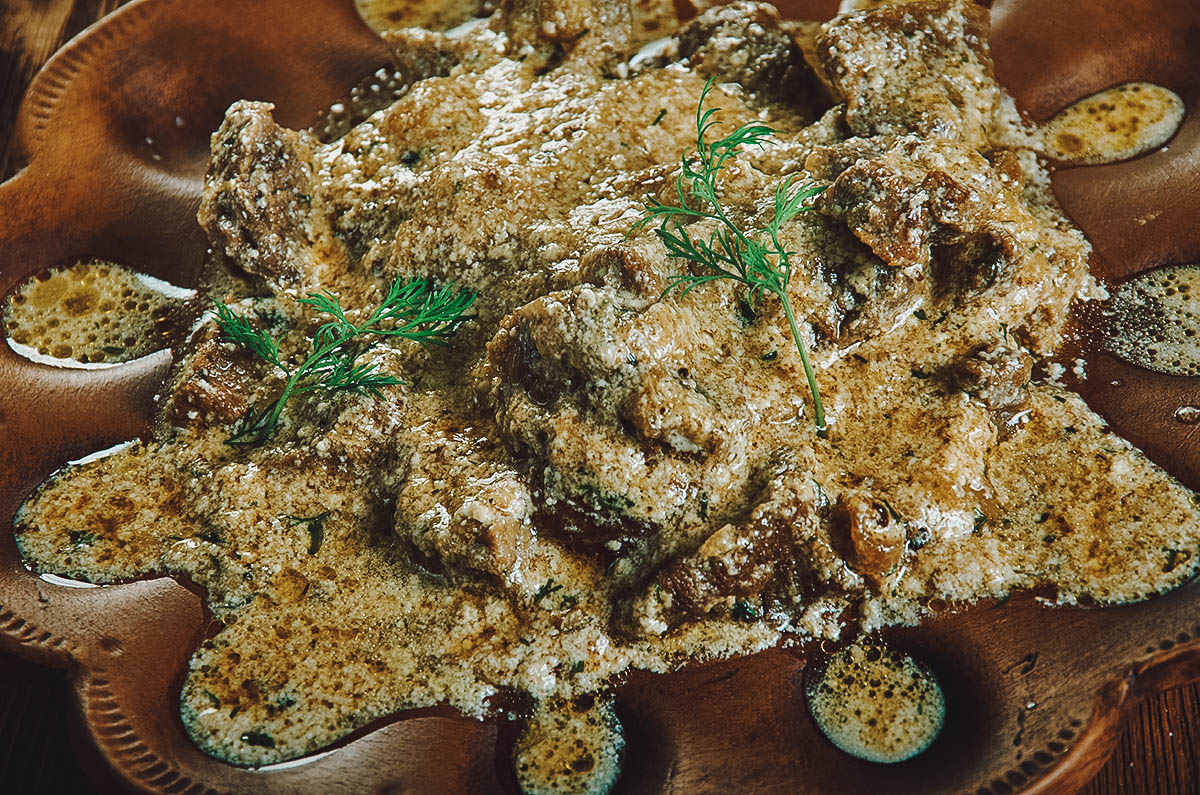
Dry-cured and smoked lamb leg, thinly sliced and served as a delicacy. Norway's answer to turkey, made with lamb instead.
Nutrition & Info
Equipment Needed
Presentation Guide
Vessel: wooden board
Garnishes: juniper sprigs
Accompaniments: flatbread, sour cream
Instructions
-
1
Rub lamb leg thoroughly with mixture of salt, sugar, juniper berries, and pepper. Place in a container and refrigerate.
-
2
Turn and re-rub every few days for 3-4 weeks during the salt-curing phase.
-
3
Rinse off salt cure. Hang in a cool, well-ventilated space with temperatures between 5-15C for 2-3 months.
-
4
When fully cured, the leg will have lost about 35% of its weight. Slice paper-thin to serve.
Did You Know?
Fenalar from the Valdres valley has EU Protected Geographical Indication status, similar to Parma ham.
Chef's Notes
Equipment Tips
- sharp knife or meat slicer
- curing container
Garnishing
juniper sprigs
Accompaniments
flatbread, sour cream
The Story Behind Fenalar
Fenalar is Norway's premier cured meat, a lamb leg that is salted, sometimes smoked, and air-dried for months. The tradition of curing lamb in this way dates back to Viking times when preservation was essential for surviving long winters.
The most prized fenalar comes from the Valdres valley in central Norway, where the cool mountain air and specific humidity create ideal drying conditions. Valdres fenalar received Protected Geographical Indication from the EU in 2012.
Fenalar is served thinly sliced as a premium appetizer at celebrations, particularly Christmas. The long curing process concentrates the lamb's flavor into an intensely savory, slightly sweet delicacy.
Comments (0)
Log in to leave a comment.
No comments yet. Be the first to share your thoughts!