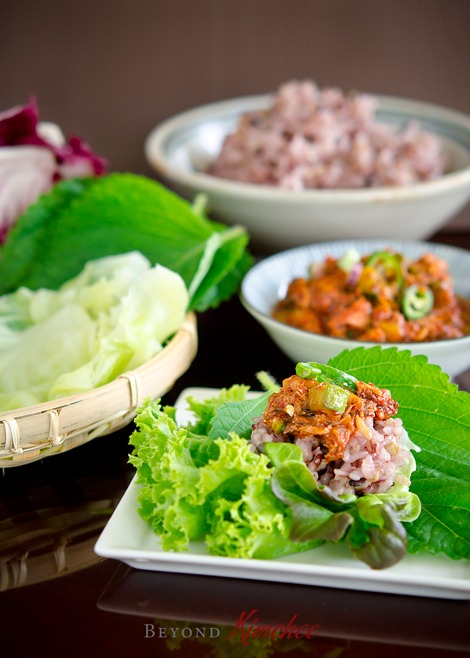
Steamed rice and savory accompaniments wrapped in fresh lettuce or perilla leaves with ssamjang sauce, a communal North Korean dining tradition celebrating fresh vegetables and bold flavors.
Nutrition & Info
Allergen Warnings
Equipment Needed
Presentation Guide
Vessel: large communal platter
Garnishes: sesame seeds, raw garlic, chili slices
Accompaniments: ssamjang, doenjang-jjigae
Instructions
-
1
Cook rice and keep warm. Season beef with soy sauce and sesame oil, then grill or stir-fry until cooked.
-
2
Prepare ssamjang by mixing doenjang, gochujang, sesame oil, sugar, and minced garlic.
-
3
Wash and dry lettuce and perilla leaves. Arrange on a large platter.
-
4
Place a spoonful of rice on a leaf, add a piece of meat, a dab of ssamjang, a slice of raw garlic, and a chili slice.
-
5
Wrap the leaf around the filling and eat in one satisfying bite.
-
6
Repeat with different combinations, enjoying the communal, interactive meal.
Did You Know?
The Korean word ssam means "wrapped," and the tradition of wrapping food in leaves predates written Korean culinary history, making it one of the oldest Korean dining customs.
Chef's Notes
Equipment Tips
- rice cooker
- serving platters
Garnishing
sesame seeds, raw garlic, chili slices
Accompaniments
ssamjang, doenjang-jjigae
The Story Behind 쌈밥
Ssam (wrapping) culture is one of the most ancient Korean food traditions, with roots stretching back thousands of years. In northern Korea, ssam-bap is particularly associated with summer dining when fresh greens are abundant. The communal nature of ssam-bap, where everyone wraps their own, reflects the Korean emphasis on shared meals and togetherness.

Comments (0)
Log in to leave a comment.
No comments yet. Be the first to share your thoughts!