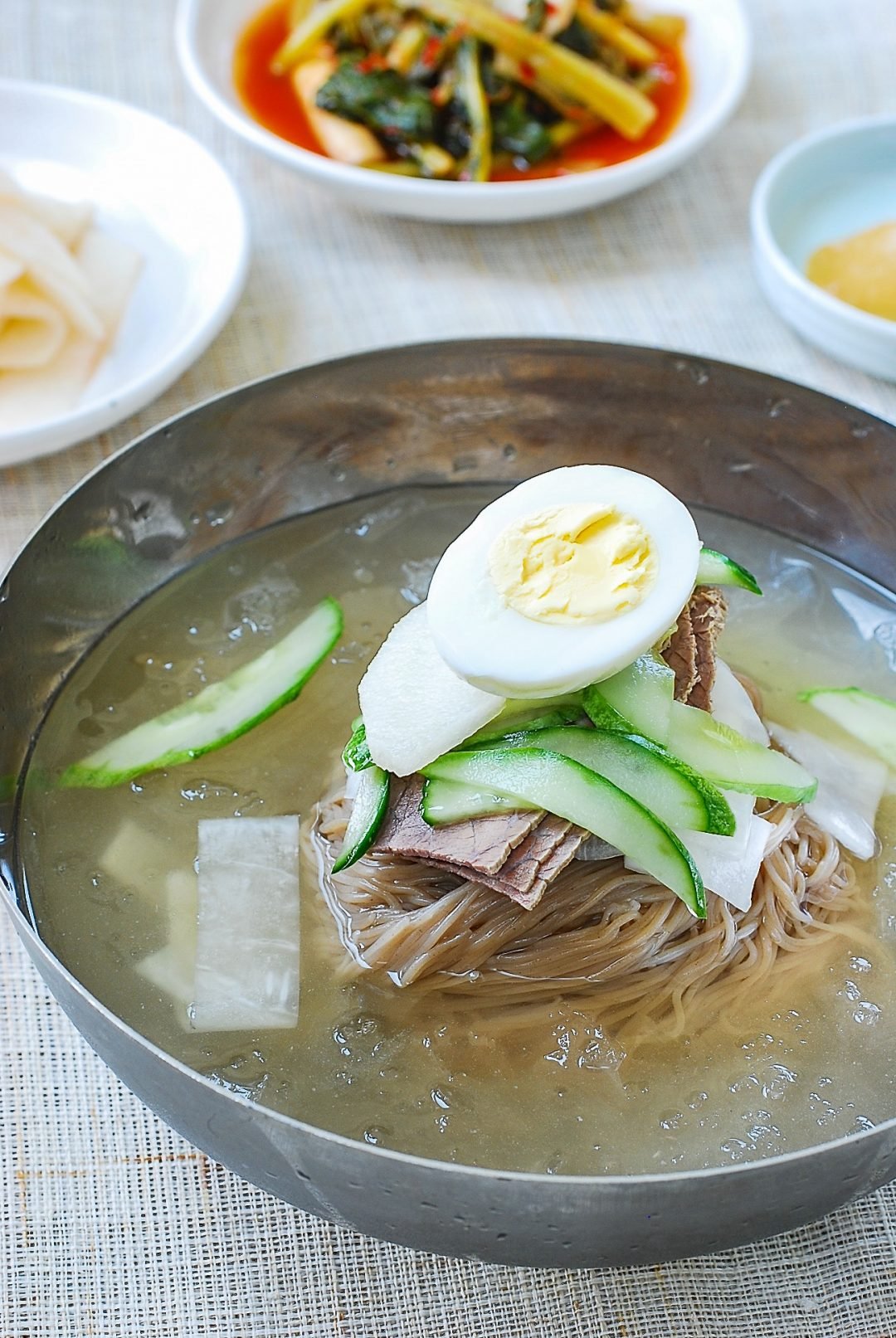
Chewy buckwheat noodles served in an ice-cold beef broth, topped with sliced beef, pickled radish, and a halved egg. Pyongyang's signature dish.
Nutrition & Info
Allergen Warnings
Equipment Needed
Presentation Guide
Vessel: stainless steel or brass bowl
Garnishes: half boiled egg, sliced cucumber, sliced Asian pear, pickled radish
Accompaniments: vinegar, mustard
Instructions
-
1
Prepare the beef broth by simmering beef brisket with onion, garlic, and ginger for two hours until richly flavoured. Strain, season with soy sauce and salt, then chill in the refrigerator until ice-cold and slightly slushy. The broth must be cold enough to form tiny ice crystals.
-
2
Cook the dried buckwheat noodles in a large pot of vigorously boiling water for three to four minutes, stirring immediately after adding to prevent clumping. The noodles cook very quickly and should be chewy and slightly translucent when done.
-
3
Drain the cooked noodles and immediately plunge them into a bowl of ice water. Rub and wash the noodles vigorously between your hands under the cold water to remove all surface starch, which would otherwise make the broth cloudy and the noodles gummy.
-
4
Divide the rinsed, drained noodles between deep serving bowls, arranging them in neat coils. The noodles should be very cold and slightly springy. Traditional naengmyeon noodles are famously chewy and are typically cut with scissors at the table.
-
5
Mix the rice vinegar and sugar into the ice-cold broth along with the dongchimi brine if using. Ladle the freezing cold broth over the noodles, filling each bowl about two-thirds full. Add a few ice cubes to keep the broth frigid throughout the meal.
-
6
Arrange the thinly sliced beef brisket, Korean pear slices, julienned cucumber, and a halved hard-boiled egg on top of the noodles. Serve immediately with Korean hot mustard and vinegar on the side for diners to adjust the heat and acidity to taste.
Did You Know?
Pyongyang naengmyeon was served at the 2018 inter-Korean summit, becoming a symbol of diplomacy.
Chef's Notes
Equipment Tips
- large pot
- noodle press or rolling pin
- mixing bowl
Garnishing
half boiled egg, sliced cucumber, sliced Asian pear, pickled radish
Accompaniments
vinegar, mustard
The Story Behind Pyongyang Naengmyeon
The Story: Naengmyeon, cold buckwheat noodles, is Pyongyang's most famous culinary contribution and one of Korea's great dishes. Thin, chewy noodles made from buckwheat flour (or a buckwheat and potato starch blend) are served in an ice-cold beef or dongchimi (radish water kimchi) broth, topped with thin slices of beef, half a hard-boiled egg, sliced Korean pear, pickled radish, and a smear of mustard. Pyongyang naengmyeon (mul-naengmyeon) is distinguished by its clear, clean, and subtly tangy broth, in contrast to the spicy bibim-naengmyeon of Hamhung. The dish originated as a winter food, eaten in the freezing northern Korean winters.
On the Calendar: Naengmyeon was traditionally a winter dish, counterintuitively consumed in the coldest months when the broth could be chilled naturally outdoors. In modern practice, it has become a summer refreshment as well, though Pyongyang purists maintain the winter tradition.
Then & Now: Naengmyeon achieved global diplomatic significance when it was served at the 2018 inter-Korean summit. The Okryu Restaurant in Pyongyang is considered the definitive source. South Korean versions have diverged, often using different starch ratios and broth preparations, making the Pyongyang original a distinct and increasingly documented culinary artifact.
Legacy: Naengmyeon is Pyongyang's gift to world cuisine: a dish of crystalline purity and subtle complexity that represents the refined, restrained philosophy of northern Korean cooking at its finest.

Comments (0)
Log in to leave a comment.
No comments yet. Be the first to share your thoughts!