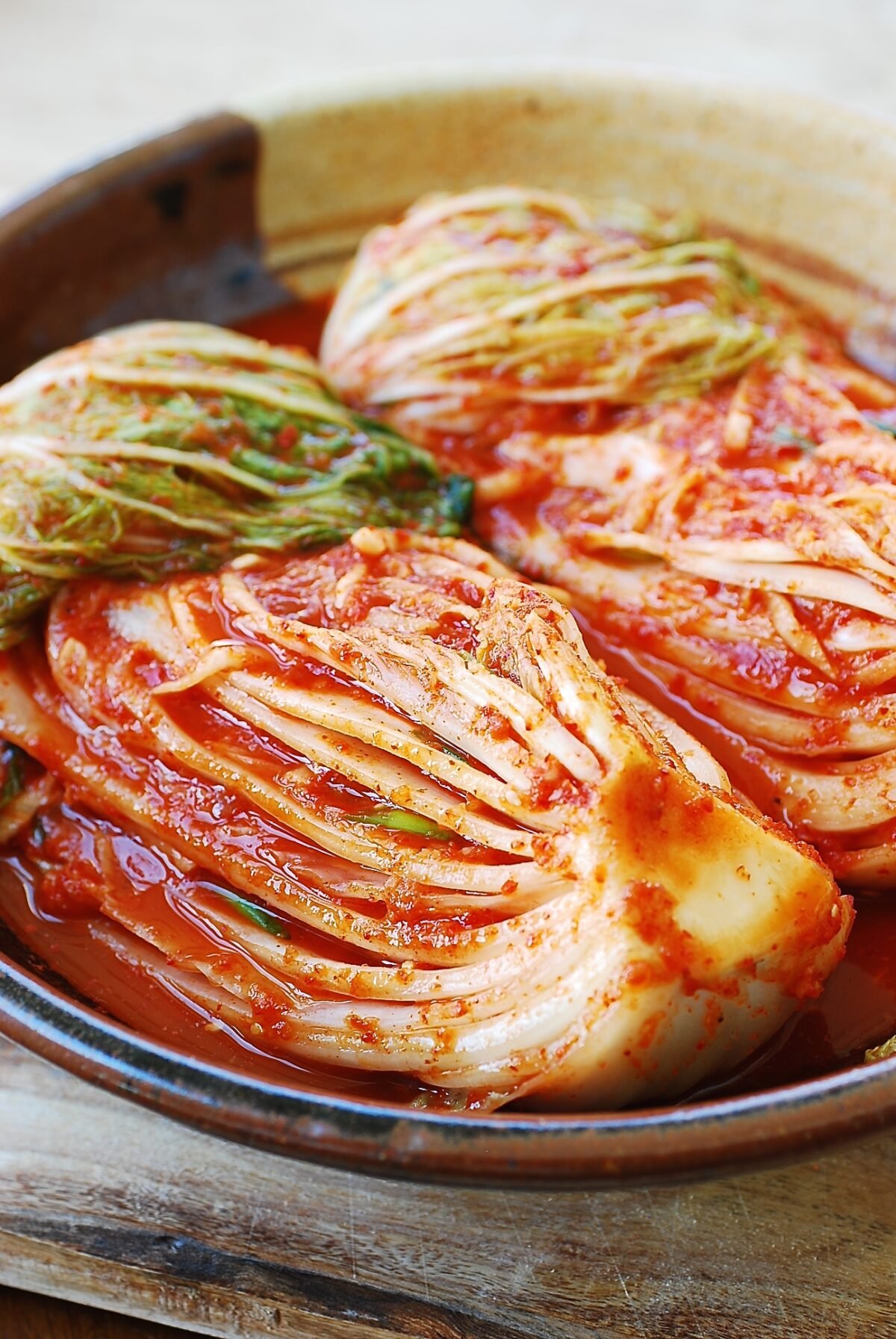
Napa cabbage fermented with chili, garlic, ginger, and salted seafood. The foundation of every Korean meal, north and south.
Nutrition & Info
Allergen Warnings
Equipment Needed
Presentation Guide
Vessel: small ceramic dish
Garnishes: sesame seeds
Accompaniments: steamed rice, any Korean meal
Instructions
-
1
Cut the napa cabbage lengthwise into quarters, keeping the core intact so the leaves stay attached. Dissolve the coarse salt in a large basin of cold water, then submerge the cabbage and rub additional dry salt between each individual leaf, concentrating on the thick white stems.
-
2
Let the salted cabbage soak for six to eight hours or overnight, turning once halfway through. The cabbage is ready when the thick white stems bend without snapping, indicating they have softened and released enough moisture for proper fermentation.
-
3
Rinse the wilted cabbage thoroughly under cold running water three times to remove excess salt. Squeeze gently to extract as much water as possible, then set cut-side down in a colander for thirty minutes to drain completely before applying the paste.
-
4
Make the kimchi paste by combining the gochugaru, fish sauce, shrimp paste, minced garlic, grated ginger, and sugar in a bowl. Add the julienned radish and scallion pieces, mixing thoroughly. The paste should be thick, vibrant red, and pungent.
-
5
Working with one cabbage quarter at a time, spread the red pepper paste between every leaf, coating each one from base to tip. Start with the outermost leaves and work inward, ensuring thorough coverage while wearing gloves to protect your hands from the chili.
-
6
Fold each seasoned cabbage quarter in half, wrapping the outer leaf around the whole bundle, and pack tightly into a clean fermentation jar or crock. Press down firmly to eliminate air pockets and submerge the cabbage in its own emerging juices.
-
7
Leave the jar at room temperature for one to three days depending on the season and desired sourness, then refrigerate. The kimchi will continue to ferment slowly in the cold, developing deeper complexity over the following weeks. It keeps for months refrigerated.
Did You Know?
North Korean kimchi tends to be milder and less spicy than its southern counterpart.
Chef's Notes
Equipment Tips
- large basin
- fermentation crock or jar
- gloves
Garnishing
sesame seeds
Accompaniments
steamed rice, any Korean meal
The Story Behind Kimchi
The Story: North Korean kimchi reflects the historical northern Korean preference for milder, more delicately flavored fermented vegetables compared to the fiery southern varieties. Northern-style kimchi traditionally uses less red pepper and more subtle seasonings, producing a tangier, more vegetable-forward fermentation. White kimchi (baek-kimchi), made without red pepper, and watery kimchi (mul-kimchi), a refreshing cold soup, are particularly associated with the northern provinces. The annual kimjang (kimchi-making) season remains a critical cultural event, when families prepare enormous quantities for winter storage.
On the Calendar: Kimchi is eaten at every meal throughout the year. The kimjang season in late autumn, when families gather to prepare winter kimchi in large earthenware crocks, is the most important food preparation event in the annual calendar.
Then & Now: While the basic fermentation techniques have remained consistent for centuries, food scarcity in North Korea has at times limited the ingredients available for kimchi production. State-run media promotes kimchi as a symbol of Korean cultural superiority. The northern style, with its emphasis on clean, mild flavors, preserves a pre-modern approach to fermentation that has been partially lost in the South's embrace of intensely spicy preparations.
Legacy: North Korean kimchi preserves an older, gentler tradition of Korean fermentation, a reminder that the fiery kimchi known worldwide represents only one branch of a diverse and ancient food preservation practice.

Comments (0)
Log in to leave a comment.
No comments yet. Be the first to share your thoughts!