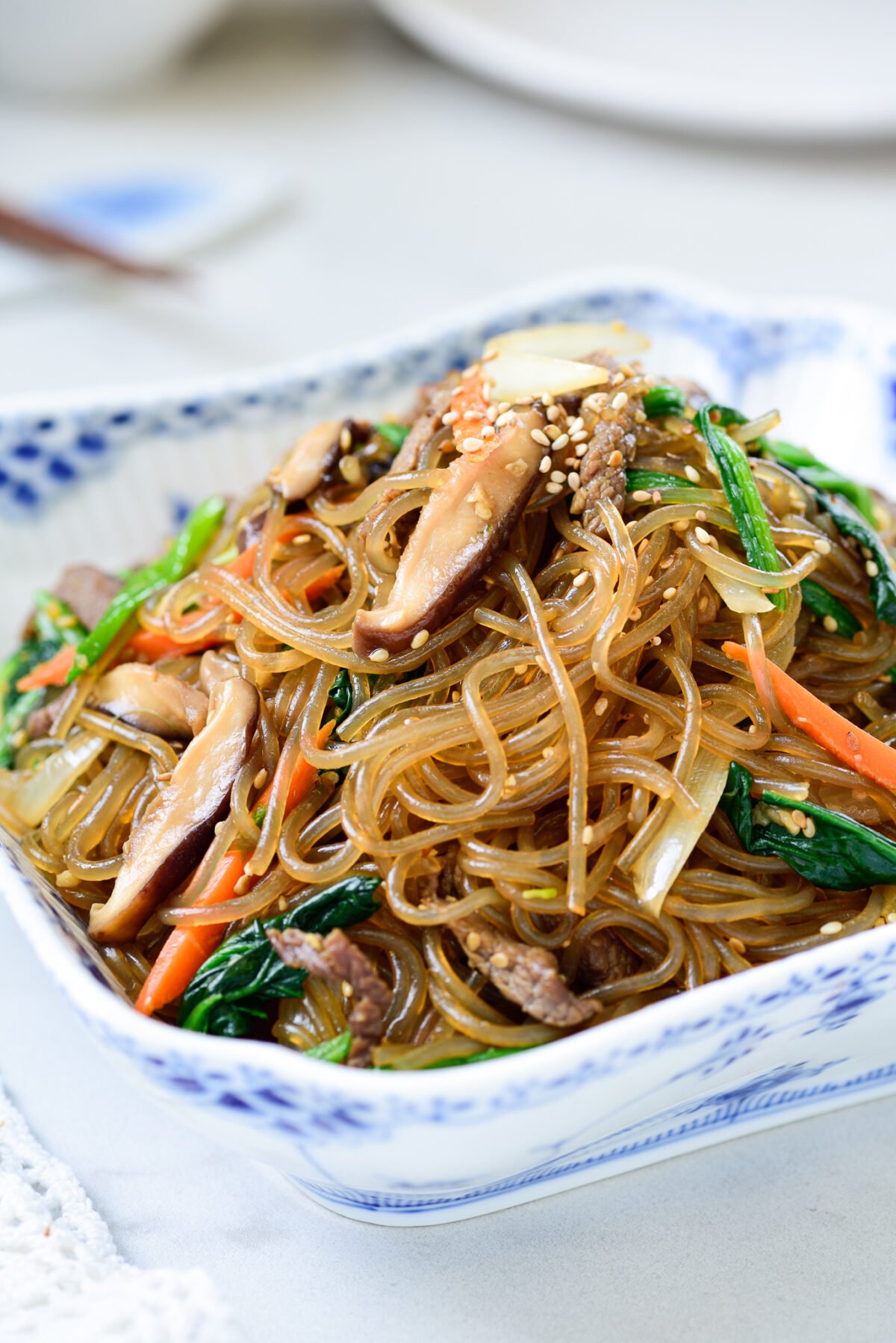
Sweet potato glass noodles stir-fried with colorful vegetables and beef in a savory-sweet soy and sesame sauce, the North Korean version featuring heartier portions and bolder seasoning.
Nutrition & Info
Allergen Warnings
Equipment Needed
Presentation Guide
Vessel: large round platter
Garnishes: sesame seeds, egg strips
Accompaniments: steamed rice, kimchi
Instructions
-
1
Cook glass noodles in boiling water for 6 minutes until tender. Drain and cut into manageable lengths. Toss with 1 tbsp soy sauce and 1 tbsp sesame oil.
-
2
Marinate beef in 1 tbsp soy sauce, 1 tbsp sugar, garlic, and pepper for 15 minutes.
-
3
Stir-fry each vegetable separately in a hot wok with a touch of oil and salt: carrots, onion, mushrooms, bell pepper, and spinach. Set aside.
-
4
Stir-fry marinated beef over high heat for 2 minutes until just cooked.
-
5
Combine all components in the wok: noodles, beef, and all vegetables. Add remaining soy sauce, sugar, and sesame oil.
-
6
Toss everything together over medium heat for 2 minutes until well combined. Garnish with sesame seeds.
Did You Know?
Japchae was originally a vegetable dish without noodles, first created for a royal banquet during the Joseon Dynasty. Sweet potato noodles were added centuries later.
Chef's Notes
Equipment Tips
- large wok
- multiple small bowls
- pot
Garnishing
sesame seeds, egg strips
Accompaniments
steamed rice, kimchi
The Story Behind 잡채
Japchae's origins trace to the Joseon Dynasty when it was prepared as a vegetable medley for King Gwanghaegun. The northern Korean version maintains a heartier, more robust character compared to southern variations, with generous portions reflecting the northern culinary style. It remains a must-have dish at celebrations on both sides of the Korean peninsula.

Comments (0)
Log in to leave a comment.
No comments yet. Be the first to share your thoughts!