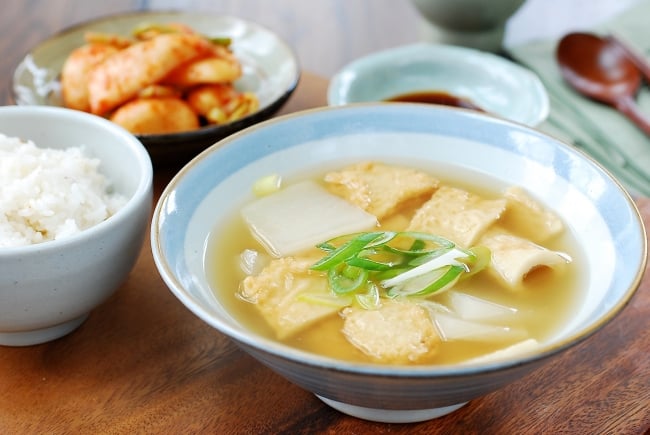
A comforting, clear broth studded with bouncy fish cakes, radish, and scallions, served piping hot as a warming street food or home-cooked side dish during cold northern Korean winters.
Nutrition & Info
Allergen Warnings
Equipment Needed
Presentation Guide
Vessel: large communal pot or individual bowls
Garnishes: green onion, chili
Accompaniments: soy-mustard dipping sauce, tteokbokki
Instructions
-
1
Thread fish cakes onto wooden skewers in a zigzag pattern if desired, or leave as flat pieces.
-
2
Bring anchovy-kelp broth to a boil in a large pot. Add radish slices and dried chili.
-
3
Simmer for 10 minutes until radish is translucent.
-
4
Add fish cake skewers or pieces and garlic. Simmer for 5 more minutes.
-
5
Season with soy sauce and salt. Add green onions in the last minute.
-
6
Serve hot in bowls with broth, or keep simmering in the pot for self-service. Provide soy-mustard dipping sauce on the side.
Did You Know?
In Korean street food culture, fish cake soup broth is often served free alongside other purchased snacks, as vendors keep a pot of eomuk-tang simmering all day for customers to warm themselves.
Chef's Notes
Equipment Tips
- large pot
- skewers
- ladle
Garnishing
green onion, chili
Accompaniments
soy-mustard dipping sauce, tteokbokki
The Story Behind 어묵탕
Fish cake soup became a ubiquitous comfort food across the Korean peninsula in the 20th century. In North Korea, where winters are particularly harsh, eomuk-tang serves as an essential warming food. The simple anchovy-kelp broth with bouncy fish cakes represents the Korean talent for creating deeply satisfying food from humble ingredients.

Comments (0)
Log in to leave a comment.
No comments yet. Be the first to share your thoughts!