
A rich, thick soup made from ground melon seeds cooked with leafy greens, palm oil, and assorted proteins. Served with pounded yam, this is Nigerian comfort food at its finest.
Nutrition & Info
Allergen Warnings
Equipment Needed
Presentation Guide
Instructions
-
1
Season the beef chunks with salt and one bouillon cube. Place in a pot with one diced onion and two cups of water. Bring to a boil, then simmer for forty-five minutes until the beef is tender. Reserve the broth and set the cooked beef aside.
-
2
Mix the ground egusi seeds with a small amount of water to form a thick paste. Some cooks prefer to fry the egusi paste first, while others add it directly to the soup. For best results, form it into small balls or leave as a paste for adding later.
-
3
Heat the palm oil in a large pot over medium heat until it becomes clear and shimmering but not smoking. Add the remaining diced onion and cook for three minutes, then add the blended scotch bonnet peppers and cook for five more minutes.
-
4
Add the egusi paste to the hot oil and fry, stirring constantly, for ten minutes. The egusi should absorb the oil and begin to look curdled and dry before you add any liquid. This frying step develops the nutty, rich flavour of the soup.
-
5
Pour in the reserved beef broth, add the remaining bouillon cube and ground crayfish, then bring to a simmer. Add the cooked beef pieces and smoked dried fish. Cook for fifteen minutes, stirring occasionally, until the soup thickens to a stew-like consistency.
-
6
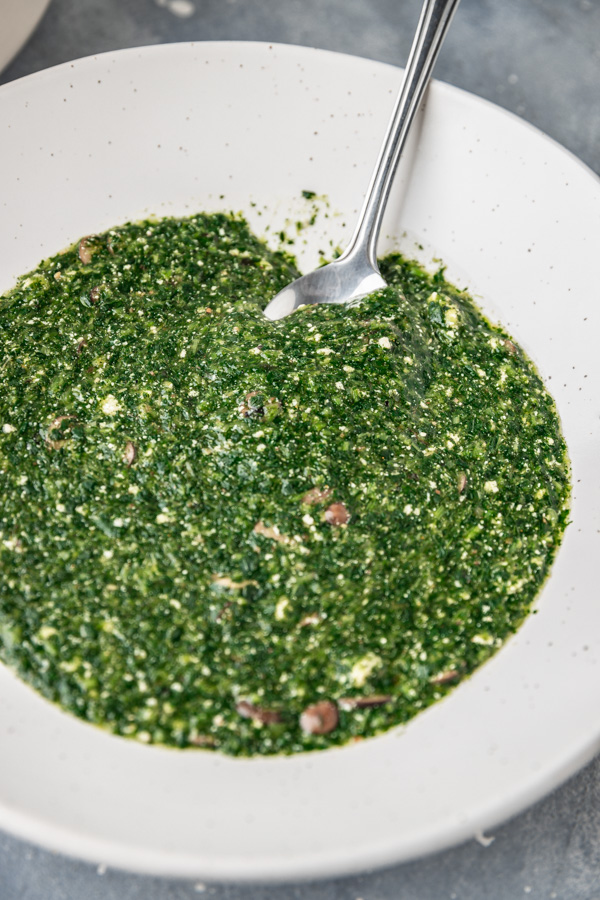
Add the chopped spinach or bitter leaf during the last five minutes of cooking, stirring until the greens wilt into the soup but still retain their bright green colour. The soup should be thick and rich enough to cling to a piece of pounded yam.
-
7
Taste and adjust seasoning with salt as needed. Serve the egusi soup hot in deep bowls alongside smooth, stretchy pounded yam or fufu. Diners pinch off pieces of the starch and use them to scoop up the thick, nutty, meaty soup.
Did You Know?
Egusi soup is so central to Nigerian weddings that a bride's cooking skill is often judged by how well she prepares it.
Chef's Notes
Equipment Tips
- large pot
- blender or mortar
- wooden spoon
Garnishing
palm oil drizzle
Accompaniments
pounded yam, fufu, garri
The Story Behind Egusi Soup
Egusi soup originated with the Yoruba people of western Nigeria, where the word 'egusi' derives from Yoruba: 'e' (to), 'gun' (pound/grind), and 'si' (to open), describing the process of preparing the melon seeds. The cultivation and culinary use of melon seeds in West Africa predates written records, with the Yoruba people having a long history of growing and using these seeds. The Igbo people adopted the dish (calling it 'egwusi'), as did Hausa communities ('agushi'). Over centuries, each ethnic group developed distinct preparation methods: the Yoruba often add ground crayfish, while the Igbo may incorporate okra for additional body.
Egusi soup is one of the most universally beloved dishes across Nigeria's ethnic groups, representing a rare point of culinary consensus in a gastronomically diverse nation. The quality of a cook's egusi soup is often used as a measure of their skill, particularly among the Yoruba and Igbo. The soup reflects the ingenuity of West African cooking: melon seeds, which might be discarded elsewhere, are transformed into a protein-rich, deeply satisfying base. The communal act of eating egusi soup with swallow, using only the right hand to tear and dip, is a fundamental Nigerian dining experience that connects people to ancestral tradition.

Comments (0)
Log in to leave a comment.
No comments yet. Be the first to share your thoughts!