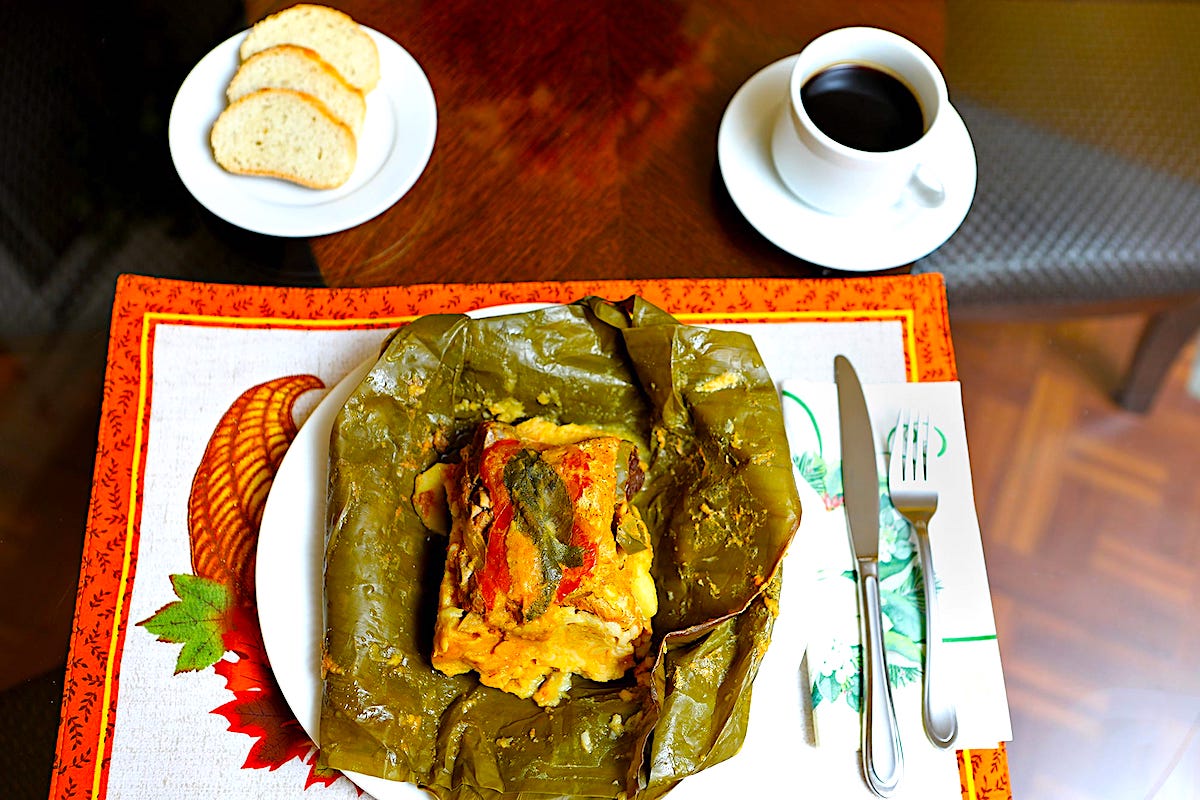
A massive banana-leaf wrapped tamale filled with seasoned masa, chicken, potatoes, olives, and rice. Nicaragua's festive centerpiece.
Instructions
-
1
Beat the softened butter with the masa harina, annatto water, chicken broth, and salt until you have a smooth, spreadable dough. The dough should be soft enough to spread easily but firm enough to hold its shape. Add more broth if too dry.
-
2
Season the chicken thighs with salt and partially cook them by simmering in salted water for fifteen minutes. Remove and let cool. The chicken will finish cooking inside the banana leaf wrapper during the long steaming process.
-
3
Soften the banana leaves by passing them over an open flame or dipping in boiling water for ten seconds until they become pliable and slightly darkened. Cut into large squares about forty centimetres across, doubling up if the leaves have tears.
-
4
Spread a generous portion of the corn dough (about three-quarters of a cup) into a thick rectangle on the centre of each banana leaf square. Layer a piece of chicken, sliced potato, a spoonful of rice, tomato slice, bell pepper, onion ring, olives, and mint leaves.
-
5
Fold the banana leaf from all four sides to completely enclose the filling in a tight, rectangular package. Wrap in a second banana leaf for security, then tie firmly with kitchen twine in three directions to prevent opening during the long cooking.
-
6
Place the wrapped nacatamales in a large pot fitted with a rack above simmering water. Steam for three to four hours, checking the water level every hour and adding more as needed. The long steaming time is essential for the masa to cook through completely.
-
7
Remove the nacatamales from the steamer and rest for ten minutes. Unwrap at the table, revealing the golden corn dough with its layers of filling inside. Serve with hot coffee for a traditional Nicaraguan Saturday morning breakfast.
Did You Know?
Nacatamales are traditionally made the Saturday before Christmas, with the whole family participating.
The Story Behind Nacatamal
The Story: Nacatamal is Nicaragua's grand tamale, a large, elaborate preparation of corn masa dough filled with seasoned chicken or beef, rice, potatoes, tomatoes, olives, sweet peppers, mint, and achiote, wrapped in banana leaves and slow-steamed for several hours. The result is a hefty, self-contained meal weighing as much as a kilogram. The nacatamal traces its origins to pre-Columbian Mesoamerican tamale traditions, with the name likely deriving from the Nahuatl nacatl (meat) and tamalli (wrapped). Spanish colonization added ingredients like olives, rice, and certain seasonings to the indigenous base.
On the Calendar: Nacatamales are traditionally a weekend dish, prepared on Saturday for consumption on Sunday morning. They are also essential at Christmas, New Year's, baptisms, weddings, and other celebrations. The labor-intensive preparation, which can take an entire day, makes nacatamales a communal family activity.
Then & Now: Nacatamales remain deeply embedded in Nicaraguan life, with families maintaining proprietary recipes passed through generations. Saturday nacatamal preparation is a ritual that brings families together. Street vendors and market stalls sell nacatamales throughout the week, but homemade versions for Sunday breakfast remain the gold standard.
Legacy: Nacatamal is Nicaragua's most magnificent wrapped food, a banana-leaf parcel that contains the entire history of the nation: indigenous corn, Spanish ingredients, and the communal spirit that defines Nicaraguan family life.


Comments (0)
Log in to leave a comment.
No comments yet. Be the first to share your thoughts!