Laplap stuffed with a filling of coconut cream and island cabbage, wrapped and baked. The premium version of Vanuatu's national dish.
Nutrition & Info
Allergen Warnings
Equipment Needed
Presentation Guide
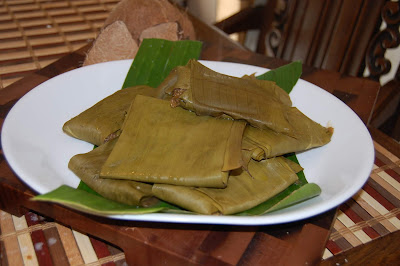
Vessel: banana leaf wrapping
Garnishes: coconut cream drizzle
Accompaniments: island cabbage, sliced tomato
Instructions
-
1
Finely grate the peeled taro or yam using the smallest holes of a box grater to create a starchy, paste-like pulp. Season with salt and pepper. This grated root forms the starchy wrapper that encases the filling, similar to a dumpling dough.
-
2
Prepare the filling by combining the shredded chicken or tuna with the diced onion, minced garlic, and a quarter cup of coconut cream. Mix well and season with salt and pepper. The filling should be moist but not dripping wet.
-
3
Soften the banana leaves over a flame or in boiling water until pliable. Cut into rectangles about twenty centimetres long. Lay a leaf rectangle flat and spread a thin layer of the grated root paste over the centre, about five millimetres thick.
-
4
Place two tablespoons of the filling in the centre of the root paste layer. Fold the root paste over the filling from both sides, then pour a tablespoon of coconut cream over the top before wrapping the banana leaf tightly around everything.
-
5
Fold the banana leaf into a compact parcel and tie securely with kitchen twine at both ends and across the middle. Each tuluk should be about the size of a large sausage. Repeat with the remaining ingredients to make eight to ten parcels.
-
6
Steam the wrapped tuluk over boiling water for forty-five minutes to one hour, or cook in an earth oven on hot stones. The root paste cooks into a firm, starchy shell around the tender, flavourful filling inside.
-
7
Unwrap the banana leaves to reveal the cooked tuluk. The exterior should be firm and slightly translucent, encasing the moist, savoury filling. Serve hot as a main course, with extra coconut cream for drizzling. This is Vanuatu's most celebrated traditional dish.
Did You Know?
Tuluk is the festive version of laplap, reserved for important celebrations and honored guests.
Chef's Notes
Equipment Tips
- grater
- banana leaves
- stone oven or oven
Garnishing
coconut cream drizzle
Accompaniments
island cabbage, sliced tomato
The Story Behind Tuluk
The Story: Tuluk is a Ni-Vanuatu preparation often described as the Pacific Island tamale: a filling of seasoned meat (typically beef or chicken) and coconut cream is wrapped in a casing of grated and pounded root vegetable (usually manioc or taro), formed into a cylindrical shape, wrapped in banana leaves, and cooked in an earth oven or boiled until the starchy casing firms around the flavorful filling. The result is a portable, self-contained meal with a starchy exterior and savory interior.
On the Calendar: Tuluk is prepared for celebrations, community feasts, and special occasions. It is also sold at markets and roadside stalls in Port Vila and other towns as a popular takeaway food. The labor involved in grating and preparing the root vegetable casing makes it more of a special-occasion item than daily fare.
Then & Now: Tuluk has evolved from a purely traditional preparation to become one of Vanuatu's most popular market foods. Urban versions may be boiled rather than earth-oven cooked, and beef (introduced by Europeans) has become the most common filling. The dish represents the successful adaptation of traditional techniques to modern tastes.
Legacy: Tuluk demonstrates the Ni-Vanuatu gift for wrapping flavors in starch, creating portable, satisfying parcels that carry the taste of the islands in every bite.
Comments (0)
Log in to leave a comment.
No comments yet. Be the first to share your thoughts!